














In a climate of recovery from the crisis, 2010 remains a mixed year for business travel. This is one of the findings of the 20th Business Travel Barometer, presented by American Express Business Travel in Paris on 15 and 16 November. This barometer was prepared by Concomitance on the basis of a telephone survey carried out between 5 and 29 September 2010 among people in charge of travel budgets ranging from €400,000 to over €50 million - financial directors, purchasing directors and travel managers - in 296 European companies based in the main countries: Germany, Great Britain, France, Belgium, Luxembourg, the Netherlands, Spain, Italy, Denmark, Sweden and Norway.
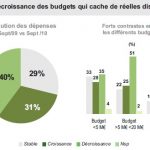 According to the EVP 2010 barometer, 40 % of companies are once again showing a decline in their travel budgets this year (compared with 66 % in 2009), while 29 % are stable and 31 % are increasing (three times more than last year). The French business travel market is expected to be worth around €15 billion in 2010, marking a slight upturn on last year," notes Éric Audoin, Vice-Chairman and Managing Director France of American Express Business Travel. For 2011, the European companies surveyed as part of the barometer are forecasting growth in this market of around 3 %", and for 2011 we can expect to see a probable increase in fares in Europe, both for air (between 4 and 9 %) and hotel (1 to 6 %). On average, 34 % of the companies surveyed expect their travel budgets to increase, 65 % to remain stable and 11 % to decrease. Key accounts (61 %) plan to increase their travel budget in order to develop their international business (63 % outside Europe). There are major differences between countries. More than 50 % of German and Scandinavian companies anticipate an increase in their budget, followed by Belgium (41 %) and Great Britain (38 %), more optimistic than France (24 %) or Spain (13 %).
On the supplier side, there has been a clear upturn in the airline market, especially in Asia. The recent merger of United Airlines and Continental Airlines is a perfect illustration of the sector's consolidation. In all cases, whether the airlines are scheduled or low-cost, they are seeking additional revenue by introducing new levies. For example, low-cost carriers do not hesitate to levy charges for payment by credit card, for seat selection, for hold baggage, etc. These are all costs that put a strain on travellers' budgets and are not necessarily taken into account in their company's travel policy. GDSs (global distribution systems) are currently working to ensure that these additional costs are taken into account at the time of booking.
Resumption of rail operations
For its part, the rail market, which is benefiting from a recovery in traffic, is significantly increasing its prices and services. Eurostar and Thalys are now offering a first-class ticket including a meal or snack on certain routes. From mid-December, Lyria will be launching Lyria Première, a completely new service for car hire customers, who are also looking for additional revenue by deducting charges for fuel, cancellations, etc.
As for the hotel market, it is restructuring, with prices falling slightly in the first half. Ancillary costs include parking and Internet use. In this sector, destinations continue to be affected to varying degrees by the economic slowdown. Here again, emerging countries such as China and India are benefiting from the recovery and attracting investment.
The decline in travel budgets conceals real disparities. Between September 2009 and September 2010, among the companies surveyed for this barometer, 40 % of budgets fell, 31 % rose and 29 % remained stable. Better still, 52 % of budgets of at least 20 million in annual expenditure are on the increase, proving that key accounts are the architects of economic growth. Whatever the size of the company, 63 % of travel expenditure is devoted to maintaining and developing business.
When employees travel for business, they do so for a variety of purposes: to travel within the organisation (31 %), to retain customers, to win new markets (30 %), to find new customers and/or markets (19 %), to visit suppliers (7 %), to attend conferences and congresses (7 %), events and incentives (6 %).
When employees make business trips, their companies wonder whether the travel budget is a cost or an investment. In the case of key accounts with a travel budget in excess of €20 million, it is an important contribution to the group's development (29 %), compared with only 20 % in other companies. Also among key accounts, the travel budget is a necessary cost for the group (64 %). In terms of countries, the travel budget is seen as an investment in Scandinavia (40 %), Germany (39 %) and Spain (31 %). In France, on the other hand, it is seen as an investment in only 7 % of cases. In 51 % of cases, it represents a necessary cost for the company.
Stricter application of travel policy
In terms of practices, as we see a refocusing of the role of the TMC (Travel Management Company), travellers are even more encouraged to respect all the contracts signed by their company with their suppliers: airlines, rail companies, hotel groups, car hire companies," continues Éric Audoin. In addition to this strict application of the travel policy, there has also been an increase in the number of requests for prior authorisation for business travel". In practice, these upstream requests are now processed by the online booking tool, for 9% of expenditure. For example, if a French company has signed a contract with Air France for air transport, the company will ensure that its employees use this preferred supplier in particular.
These applications for prior authorisation are among the levers for optimising the 2010 budgets. In order of priority, after the increase in the use of first class between Paris and Switzerland. In a market that is increasing slightly, the TMC (Travel Management Company) is looking to use the best fare available at the time of booking, what professionals call the "best buy", renegotiate agreements with suppliers, maximise the use of preferred suppliers, tighten up the application of travel policy and finally increase the use of fares with less flexibility. For travellers, this may also mean booking their flights or train journeys earlier. Ideally, last-minute bookings and itinerary changes are not recommended. This can lead to a certain lack of flexibility when it comes to touring.
"Always with a view to optimising savings, companies are tending to standardise their travel policy across all their entities and subsidiaries", emphasises Éric Audoin. As a result, the differentiation of travel policies according to the divisions or departments of a group is tending to disappear. At the same time, companies can distinguish between different traveller profiles: occasional or frequent travellers. Similarly, special conditions, in terms of travel class and hotel categories, can be granted to employees depending on their status.
Another trend is that company travel policies are becoming increasingly comprehensive, and now include business meetings such as seminars, conferences and incentives in more than half of all cases. This is a good way of controlling expenditure and making use of suppliers approved by the company.
Depending on the company, as soon as a journey in France or Europe does not exceed three hours, rail transport can be given priority over air transport", notes Éric Audoin. The crisis has changed travellers' behaviour, and business travel operators have also adapted to new expectations by proposing new offers such as Air France's Premium class". For flights to European destinations, employees are allowed to use scheduled airlines, some of whose fare offers have enabled them to catch up with low-cost airlines serving major airports.
The new rules for travelling in Europe
In an increasingly competitive environment, and in an economic climate lacking in visibility, companies are tightening up their travel policies. This is having a significant impact on employees travelling on business.Their employers are focusing in particular on travel rules within Europe (95 % in 2010, compared with 91 % in 2009), expense control (93 % in 2010, compared with 91 % in 2009), travel rules outside Europe (91 % in 2010, compared with 90 % in 2009), rules on hotel accommodation (89 % in 2010, compared with 87 % in 2009), online booking using specific tools (88 % in 2010, compared with 89 % in 2009).With the increasing risk of people being kidnapped abroad, particularly in Africa, employee security has also been stepped up (85 % in 2010 compared with 83 % in 2009). And despite the Grenelle Environment Round Table, CO2 emissions are still a minor criterion (34 % in 2010 compared with 32 % in 2009).
Between meals, taxis and sometimes hotel costs, employees are faced with expenses when travelling on business. In 49 % of the companies surveyed for this barometer, they have a limited budget and must obtain prior authorisation from a line manager. When their company grants them a large budget and only requires a green light above a certain amount, they have a high degree of autonomy when it comes to spending on business travel. This is the case for 17 % of the companies surveyed. For only 6 % of them, business travellers have total autonomy, i.e. an unlimited budget without authorisation.
Whether or not expenses fall within a specific financial envelope, they still need to be paid for. Three years ago, six out of ten travellers used their personal payment card to pay for business travel expenses, but now more of them have corporate cards issued by their company," notes Éric Audoin. With these deferred debit cards, employees are reimbursed for their expenses even before the corporate card is debited". Among the payment methods used by business travellers, the corporate card is the most popular, with cardholders invoiced and reimbursed by their company (49 % in 2010 compared with 48 % in 2009). This solution is followed by reimbursement on expense claims (47 % in 2010, compared with 53 % in 2009), the hosted card (47 % in 2010, compared with 49 % in 2009), and the corporate card combined with invoicing to the company (45 % in 2010, compared with 47 % in 2009). Reimbursement based on the employee's personal card statement is losing ground (39 % in 2010 compared with 44 % in 2009). The same is true of cash advances (31 % in 2010, compared with 26 % in 2009). To track down excesses, companies are increasing reporting on all travel expenditure (64 % in 2010, compared with 61 % in 2009), for car hire (50 % in 2010, compared with 39 % in 2009), for hotels (49 % in 2010, compared with 38 % in 2009) and for air travel (67 % in 2010, compared with 58 % in 2009).
With the risks inherent in the climate - everyone remembers the eruption of the Icelandic volcano - but also the dangers linked to political or health insecurity... 74 % of companies are concerned about complying with the provisions of their social responsibility linked to the safety of their employees. Better still, they say they have put in place measures to stay in touch with their employees. 87 % of large groups spending more than €20 million on their annual travel budget say it is important to be able to keep in touch with their employees at all times. The same is true of companies with a travel budget of between 5 and 20 million euros (73 %). Groups with a worldwide presence through their subsidiaries are even subscribing to geolocation programmes for their employees.
The efficiency of an online booking tool
At the same time, this year more than 50 % of companies are equipping their travellers with mobile phones, particularly smartphones. This trend will even become a regular practice within two years (28 %). It used to be that you received instructions on your desk," says one observer. Now you receive them in your hand". Via their smartphone, travellers can book or modify their journey at any time. And they can do all this while using the online booking tool set up by their company.
According to the 20th Barometer, 57 % of companies use the online booking tool and 96 % measure its effectiveness. In addition to the central function of booking travel (91 %), there is the upstream function of entering and/or approving travel orders (32 %), and the downstream function of entering and/or approving expense claims (15 % in 2010, compared with 7 % in 2009). Another function is the payment of expense claims (15 % in 2010, compared with 7 % in 2009). The rate of application of the travel policy (61 %) and the percentage of bookings made via the tool as a proportion of all bookings (74 %) are the main criteria for measuring the effectiveness of an online booking tool. In this environment, companies mainly ask their travel agency for 24-hour assistance for their employees (70 % in 2010, compared with 65 % in 2009), online booking solutions (64 % in 2010, compared with 60 % in 2009) and integration of the travel policy into their information systems (42 % in 2010, compared with 39 % in 2009).
Over the past two years, the crisis has accelerated the development of alternatives to travel, such as web conferencing, videoconferencing and telepresence, particularly for internal meetings. Expenditure on business travel represents around 30 % of travel budgets. In fact, there's nothing to stop you starting to prepare a meeting remotely, then holding it in person around a real table. On the advice of their TMC, companies make particular use of videoconferencing for conversations with their European subsidiaries, and telepresence for discussions with subsidiaries outside Europe. But almost all of them really prefer real contact in commercial relations, which they consider to be more effective than virtual relations in developing new customers or new markets.


Special report - New trends in business travel
- New trends in business travel
Two decades of business travel under the microscope