




















Cluj-Napoca is Romania's second-largest metropolitan area, with a population of almost 700,000. In the heart of the Carpathian Mountains, it is considered to be the "capital" of Transylvania. The region, whose mythical name conjures up images of vampires, represents much more than the character of Dracula. Cluj-Napoca is in fact the city Romania's richest city after Bucharest. For a long time, its economy was based on mineral resources. But with Romania's entry into the European Union in 2004, it has become a champion of the automotive, agricultural, financial and IT industries.
Centre for high-tech, science and knowledge
Today, Cluj is where some of the European Union's software and IT programmes are developed. The city is home to more than 15,000 people and 1,300 companies in the IT sector. This has earned it the nickname "Eastern Europe's "Silicon Valley. It was also in Cluj that Germany's Bosch invested more than €50 million to set up a research and engineering centre and a mobility solutions factory.
The self-proclaimed capital of Transylvania is one of the most dynamic cities in Central Europe and the Balkans. Its GDP reached almost 25,000 euros per capita in 2023, more than double that of Romania (around 10,250 euros). According to the World Bank, Cluj is one of the fastest-growing cities in the European Union over the last decade.

Cluj is emerging as one of Europe's leading university centres, with 80,000 students at a dozen institutions. The city benefits in particular from the presence of Babeș-Bolyai University, Romania's oldest university and a real economic heavyweight. It has 45,000 students, 21 faculties and official teaching in three languages (Romanian, Hungarian and German), helping to attract students from all over Europe. The University of Medicine and Pharmacy in Cluj is particularly popular with French students.
France remains an important partner for Romania. According to figures from the French embassy in Bucharest, France is Romania's 3rd biggest trading partner.e foreign investor with more than 4,100 companies. It is also the third-largest customer and 9e supplier to Romania, with bilateral trade worth 11.6 billion euros. The most visible emblem of the French presence in Cluj-Napoca These include the Auchan and Carrefour banners and the local bank BRD, whose logo is similar to that of its shareholder, Société Générale.

In terms of tourism, Cluj Napoca is now seeking to position itself more as a business destination. "At the moment, we have a mixture of leisure and business tourism. But the arrival of international chains and the construction of infrastructures capable of accommodating conferences and congresses such as the BTArena, the largest multi-purpose hall in Romania with a capacity of 10,000 people, make Cluj a good alternative to other cities in the region." says Marius Oprea, who runs the municipal tourist office.
The international hotel industry arrives
Over the last ten years, the Cluj-Napoca hotel market has recorded the biggest increase in Romania in the '5 star' category, with 613 new rooms (+411%), according to tourism consultancy Est Hospitality. In total, the capital of Transylvania saw a 36% increase in its hotel capacity. In addition to the 5-star category, Cluj saw the number of rooms in the 4-star category increase by 31%, equivalent to 221 new units.

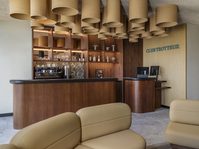
Cluj's economic appeal is reflected in the presence of several international chain hotels. Double Tree by Hilton, Radisson Blu, Ramada, Golden Tulip Ana Dome and Hampton by Hilton account for more than 20% of the city's hotel capacity. This capacity is set to increase further over the next three years. While the Radisson Blu, Cluj's most luxurious hotel, has launched work on a new wing that will include 20 rooms and flats as well as 3 conference rooms, due to open in 2025, new hotels are also being built.
This was the case last March with a brand new 114-room Courtyard by Marriott. This will also be the case in April 2025 for the Accor group's first hotel in Cluj, a 110-room Ibis Styles located 7 km from the historic centre. Two other hotel projects are also in the pipeline, with openings scheduled for 2026. All in all, some 600 additional rooms.

The charm of Central Europe
Visitors to Cluj will discover a city that has preserved the charm of the former Austro-Hungarian Empire. Imposing buildings evoking the grandeur of the former Dual Monarchy alternate with Gothic and Baroque churches. While in the historic city, a maze of ancient streets is home to trendy bars and restaurants. There are also cafés and old-fashioned bookshops, again a legacy of the old empire. All this is surrounded by the magnificent Transylvanian landscape, dotted with historic towns that make this region a perfect 'bleisure' destination.
Unbeatable air travel to Cluj-NapocaWith the partial integration of Romania in the Schengen area at the end of March 2024, Cluj should attract even more interest from the business community. " Cluj will benefit greatly from this integration. Our airport should see an increase in the number of destinations and attract new airlines. This should lead to new traffic records." says David Ciceo, Managing Director of the airport. Since Romania joined the European Union in December 2004, Cluj has moved closer to the rest of Europe. In particular, with the modernisation of its road infrastructure. The city has recently been linked to Bucharest by motorway. By early 2026, the motorway should finally reach the Hungarian border via Cluj. The weakest link is rail. The proportion of journeys made by train is in freefall due to its obsolescence. Today, it accounts for 20% of domestic travel. There have been successive modernisation plans to electrify the network and enable trains to reach speeds of 160 kph. But they are moving at the speed of "twisters", just like today's trains. 60 km on average across the entire network. Just like the Cluj-Bucharest route. It takes almost 9 hours on the fastest trains to cover the 450 km between the two cities. This factor, among others, explains the success of Romanian airports. And Cluj is no exception. It is the country's second busiest airport, with traffic set to exceed 3 million passengers in 2023 for the first time in its history. " We are now in the process of extending the terminal. It will open at the end of the first half of this year with a capacity of 4.5 million passengers. But we are also preparing for the future of the airport with the extension of the runway and an estimated 7 million passengers by 2040." says David Ciceo. The airport is linked to 50 destinations in 20 countries. Including Paris Beauvais, where Ryanair and Wizz Air. As well as Nice during the summer. |
GUIDE TO CLUJ-NAPOCA

How to get there
Cluj Napoca is linked to Paris Beauvais by Wizz Air (one daily flight) and Ryanair (three times a week). There are also flights to Brussels-Charleroi (Ryanair and Wizz Air) and Nice (Wizz Air). Since April, Swiss has also been flying three times a week from Zurich to Cluj. You can also fly to Cluj via Munich with Lufthansa or via Bucharest with Tarom.
The airport is 10 km from the city centre and easily accessible by express bus or taxi.
Stay
– Radisson Blu is the city's most luxurious hotel opposite the BTArena. 149 rooms, conference centre, fitness centre as well as two restaurants, a bar and a café (https://www.radissonhotels.com/en-us/hotels/radisson-blu-cluj?)
– Hampton by Hilton is a new hotel, opened in 2013. It has 109 rooms, a bar and a restaurant (https://www.hilton.com/en/hotels/cljhxhx-hampton-cluj-napoca/hotel-info/).
- The last of the chain hotels to open, Courtyard By Marriott Cluj-Napoca is a contemporary hotel with 114 rooms. It has two restaurants and a bar (https://www.marriott.com/en-us/hotels/cljcy-courtyard-cluj-napoca-downtown/overview/).

Eat
– Roataa restaurant renowned for its Romanian specialities, particularly from the Transylvanian region (tel : +40 264 592 022- https://www.facebook.com/RestaurantRoataCluj).
– ZamaAnother Romanian speciality restaurant, but with a more contemporary approach and reasonable prices (tel: +40 755 080 777-https://zamabistro.ro/).
Find out more
The historic centre of Cluj looks like a small Budapest, a reminder that the city was for a long time Hungary's second-largest city until it officially became part of Romania in 1920. Don't miss the beautiful Place Unirii, with its Church of St Michael and imposing houses housing cafés and restaurants. On this square, the Bánffy Palace, considered to be one of the most beautiful Baroque structures in Transylvania, is now the National Art Museum. The Central Park in the heart of the city is also a pleasant place to run or simply relax (www.visitcluj.ro).
Finally, for a weekend away, you can visit the city of Sibiu, a treasure trove of medieval, Renaissance and Baroque architecture. Sibiu is a UNESCO World Heritage Site. Or explore the imposing castles and traditional villages in the heart of the deep forests of the Carpathians.

Find out more
The French Institute in Clujstr I.C.Bratianu, nr. 22, 400079, also serves as an honorary consulate (Agenceconsulaire.cluj@gmail.com). However, for economic information on Romania and Franco-Romanian relations, please contact Bucharest Economic Department of the French Embassy, str Biserica Amzei, nr 13-15 (Tel: +40 21 305 67 70 or bucarest@dgtresor.gouv.fr).


