






















As CEO and co-founder of Naboo, how do you see the future of event booking?
Maxime Eduardo - Artificial intelligence is changing the game - a real game changer. The events industry is one of the last to undergo its digital revolution. All of them have gone through it: the cinema with Netflix, music with Spotify, taxis with Uber, supermarkets with Amazon, and in the end it all resulted in a giant that dominates the sector. And this trend extends to business travel, where, even if they're still small, they're still big players, Navan 6 to 7 billion a year. The same thing is going to happen in the events sector.
And who could come out on top?
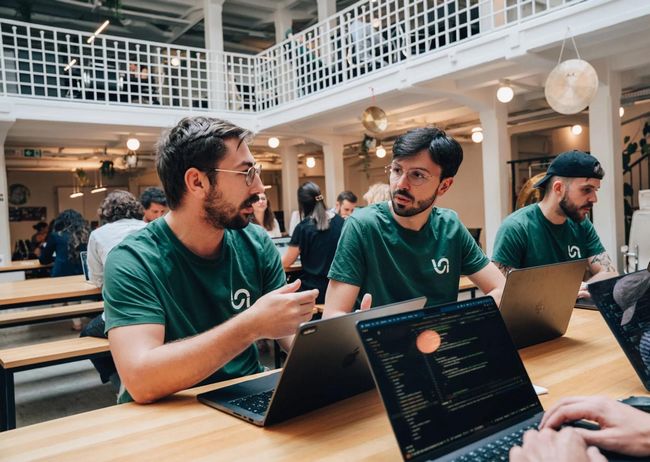
MR E. - I think it's going to be us! With sales of over €10 million a month and growth of over 260% this year, Naboo is now the world's biggest digital events company. In just three years of existence. Everything can happen very quickly. In North America, you're seeing the emergence of other players like Planned and Boompop. In any case, one thing is certain: there's going to be a big phase of digitalisation and consolidation over the next five years. The next few years are going to be decisive. And only those who are investing heavily in AI today will prevail. By way of example, half of our workforce is made up of developers, more than fifty in total.
Why hasn't the events industry undergone a digital revolution until now, unlike traditional business travel?
MR E. - When it comes to travel, digitalisation has already gone a long way. Everyone is used to booking travel, whether for personal or business reasons, via applications. It's become almost a commodity, whereas events management is still fundamentally a service business. Even we still have a lot of agents to respond to customer requests. The purely digital solutions that emerged between 2010 and 2015, such as Bird Office in France (editor's note: acquired by Kactus) or VenueScanner in the UK, didn't really catch on, precisely because software couldn't replace service.
How is AI changing the game now?
MR E. - AI is going to make events digital. It is already beginning to respond to more than half, sometimes even 70%-80%, of the cases handled by humans. Take complex events: you have to find the venue, the caterer, the transport, the DJ and the ancillary activities all at the same time. You have to do research for each element. With artificial intelligence, you give it your brief and it sources everything, prepares baskets with several choices of service providers, checking availability and requesting quotes. What takes a human two to three days is done in about ten minutes.
Where does Naboo stand today with AI?
MR E. - The front door for our customers is always very human. It's even compulsory, given that the average age of our customers is around 50. Our advisers always spend a lot of time on the phone to understand their expectations in detail, for example to find out what kind of atmosphere they want for their event, whether they need to organise transport from the airport or what kind of activities they want to organise. But, in the back office, the brief is sent directly to our AI software, which then builds the solutions. Today, less than half the work is done by a human being, whereas a year ago we were still at 90%. And in three or four years' time, I think we'll be down to almost 0%. Take the analysis of hotel terms and conditions: AI does this much better than a human. And you can superimpose AI agents with one that proofreads the contract and another that checks the proofreader. If it detects a potential error, a human will then enter the loop.
Do you plan to go further?
MR E. - We have created software which will be released very soon and will be able to analyse all unstructured data. It's a sort of ChatGPT, ultra-specialised in events, which is connected to all the PDF files we receive, to all the emails or WhatsApp messages, but also to the transcripts of all the calls, in addition to our database. For example, if a customer is looking for a room for a cocktail party for 45 people in the Paris region, the tool will be able to find the venues that have sent us a PDF mentioning such a room, as well as looking in a conversation with one of our advisers to see if availability has been mentioned. The amount of information processed is absolutely mind-boggling. With no loss of information, this AI agent feeds our other search agents.
Aren't you afraid of competition from the MICE departments of the big business travel agencies or from other players more specialised in online bookings?
MR E. - Agencies like American Express GBT and BCD Travel, which have major international contracts, particularly in pharmaceuticals, are obviously much bigger than us. But not when it comes to digital. Another player like Cvent is certainly focused on technology, but it's technology that dates back 25 years. They are in a very aggressive phase of external growth, but they are not in a phase of renewal. They are becoming what we call legacy software.
And an actor like Kactus?
MR E. - We don't have the same angle of attack as they do. For Kactus, the market is driven by supply, by hotels and the booking of their meeting rooms in particular. Personally, I think that demand drives the market, and that's the basis on which we've built our business. The result is that in 2025, we are showing growth of almost 270% and we should be growing at least 250% next year. I think the figures show that this approach is well-founded.
How do you capture this demand?
MR E. - Firstly, thanks to our software, which makes everything so much simpler. And because AI replaces some of the human work, we cost three times less than a traditional agency. At the same time, our strength also lies in our ability to sign exclusive framework agreements all over the world. This year, we signed agreements with ten CAC 40 companies, including Veolia, Thales, Axa and Société Générale. In Germany, we have a contract of this type with Allianz, as well as with PG&E in the United States, a major Californian energy company. Naboo centralises all their requests, so nobody can sign a quote without going through us. Which, once again, leads me to believe that this market is driven by demand.
So you're capturing 100% of event spending on these accounts?
MR E. - There is always about 10% of leakage. It's inherent to the business. But it's mainly small expenses, paid by personal card, which then end up in expense accounts.
No doubt this is why Naboo recently launched a payment card to consolidate these flows?
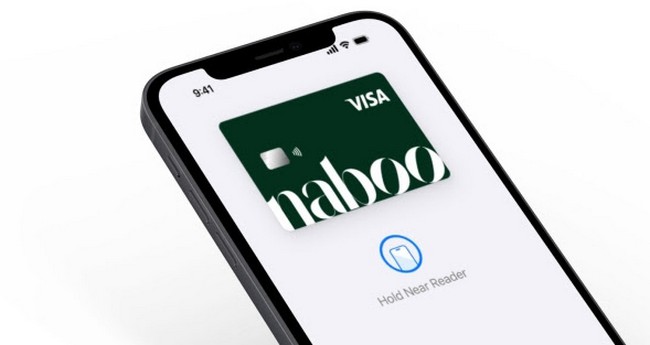
MR E. - Yes, we do. For very large events, we still use bank transfers, but we are pushing for payment by card. With this card, payment can now be completely centralised, which has required huge investment in technology. For example, if a customer goes to a restaurant, they will receive a text message from Naboo to generate a card to pay the bill, all connected directly to the order form and the invoice. We also generate virtual cards that are sent directly to hoteliers on receipt of the customer's order form.
As far as the hotel industry is concerned, most of the major groups have accelerated the digitisation of meeting room reservations. How do you see this trend developing?
M. E. - Hoteliers have realised that they are in the process of losing their direct relationship with their customers and are all trying to set up their own reservation centres in the face of fears of a "Booking.com for events". Although I don't think the same thing will happen as with room reservations. Direct MICE distribution is likely to remain strong. Nevertheless, we can see that hotel groups are making progress in booking meeting rooms online, notably through initiatives such as MeetingPackage and GroupCorner. This enables them to reduce the number of requests for quotes received by their sales departments. But this concerns simple events, which are certainly important in terms of the number of bookings, whereas in terms of the value of the booking, we find it in complex events. Events for 50 to 150 people, with rooms and meeting rooms, catering, team-building activities and transport. And this is not something that can be handled by MeetingPackage and others, but by artificial intelligence.
Coming back to Naboo, what else is missing from your offer?
M. E. - A solution for handling group travel, with nine or more people taking the same train or plane. A big stone in the shoe. We'd already aggregated ground transport - taxis and coaches - but I'd like to have a software interface that lets you book group travel by plane and train online. Everything is still done over the phone. Trying to book 30 tickets on a plane today is hellish... Some airlines like Vueling give us quotes almost the same day, but getting a quote from Air France for 30 people is often very complicated. The same goes for trains: you can do simulations for up to 30 people on the SNCF website, but not for more. In this context, the question could arise of buying a travel agent or software that would provide us with this specific know-how.
Is this on the agenda for the coming year? What are your ambitions for 2026?
M. E. - Buying the venue finding agency BizMeeting was the best decision of 2024. In 2025, it was the opening of the United States. And for 2026, my bet is group transport. At the same time, I'm aiming to equip our customers with our artificial agent for booking complex events.
Naboo set up in the United States a few months ago. Has this move been a success?
M. E. - In three months, we've already achieved a good turnover there. That's impressive. Our customers include all the big names in tech, including Meta, Google, Microsoft, Amazon, Uber and HubSpot, as well as McKinsey in consulting. In 2026, we're going to be looking at exclusive contracts. As I said, we've already got one with the energy company PG&E in California, and now we're going to take on the others. To give you an idea: Meta spends 150 million a year on events and Salesforce 200 million. With artificial intelligence, we have the capacity to absorb these volumes.
An essential question: what will be the place of the human element in the ultra-digitalised world of events?
M. E. - I'm convinced that the last link in the chain will remain the human being. We are going to arrive at a world of ultra-services. Where, on the one hand, everything that can be automated will be automated, but on the other, with connections between humans that will still be very strong. I believe in augmented human beings, freed from all the thankless back-office tasks so that they can concentrate solely on service. Today, an agent spends less than 10% of his time on the telephone with his customers. I believe in a world where this trend would be reversed, with 10% of back-office work and 90% of time spent dealing with customers. That's why I'm a great believer in concierge services. For example, sending a little WhatsApp message the day before the event: "I'll remind you that your taxi will be here at such and such a time" or "if you have any questions, just give me a call". It's very reassuring. A lot of people are afraid of AI, but it's coming to save us from repetitive tasks and offer us more human relationships.
