


















Alice Mafaity, who now oversees the 13 Hyatt hotels in France as Vice President France and also manages the Hyatt Regency Paris Etoile hotel at Porte Maillot, travelled the world before returning to France to join the American group. Her international career, always within major groups, has given substance to her desire to see the world, first as head of catering at the Hilton Tokyo Shinjuku, then within the hotels of the Jumeirah group in Dubai before returning to Asia to become number 2 at the Jumeirah Shanghai, before moving on to Hong Kong and the InterContinental hotel. Here we take a look at what it's like to be an expatriate, as well as the latest news from the Hyatt group in France.
What have you learnt from your international experience?
Alice Mafaity - That you shouldn't arrive with your European culture and want to revolutionise everything. You have to step back and understand the local culture. In Japan, even if you've seen Lost in Translation, you're still lost. In this country, where modernism is mixed with a deep respect for tradition, people don't talk in groups like in Europe. You have to favour one-to-one exchanges, value the individual, and often push employees to take a day off. In China, at the Jumeirah Shanghai, I discovered a new culture, where young people are more interested in being paid than in being loyal to a group, and are looking to move up quickly. This helps me today, because we saw something of this trend in France after Covid.
What made you decide to return to France?
A. M. - Expat life is the stuff of dreams. There are a lot of advantages. But it's also a life where there are new cycles every two or three years, where people come and go. You're always rebuilding your social ecosystem. And you're far from your roots. After more than 15 years abroad, my husband and I felt the need to pass on these roots to our children. The Hyatt group gave me the opportunity to return to France, first at the Hyatt Regency Paris Etoile in 2018, then by taking over the management of the Hyatt Paris Madeleine and then the Hôtel du Louvre, an incredible establishment, both in terms of its location and its history. All this before returning to manage the 995-room Hyatt Regency Paris Etoile in 2024.

(During the interview in this hotel, a robot passes by us, loaded with trays).
In the middle of the last decade, robots began to appear here and there in hotels. Are they now a reality? What can they do?
A. M. - In a hotel with almost 1,000 rooms dedicated to conferences and groups, innovation is essential. My aim is to reduce tedious and time-consuming tasks to give our teams time to connect with our customers. The main aim of innovation is to personalise the service in an establishment where we manage a huge volume, with an average of 700 breakfasts a day. We use six robots to clear the restaurant. Once they have been filled by the teams, they automatically go to the washing-up area thanks to a mapping system. We also have two robots on the floors to clean the corridors. What's remarkable is that the technology has evolved: today, the robots take the lift on their own and are allocated five floors to cover. This allows us to keep a space as clean as possible in a hotel as vast as ours.
Is this part of a wider approach at Hyatt?
A. M. - Absolutely. At Hyatt, we have always had this culture of 'care' to reduce the drudgery of work, particularly that of chambermaids, with tools such as bed lifts and duvet pullers or electric trolleys. Robotisation is part of this continuity, saving hotel staff from having to carry very heavy trays over long distances, with all the trauma that can entail. In addition to robotisation, we are also working on artificial intelligence to eliminate tasks where teams are obliged to work in Excel. Here too, we want to be able to devote more time to our customers.
Tell us about the clientele of your hotel, one of the most important in Paris for MICE groups.
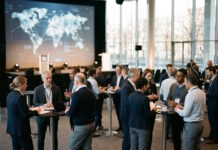
A. M. - With our 995 rooms and 35 meeting rooms, we are fortunate to be able to host major events such as the recent ADF international dental congress. Being attached to the Palais des Congrès gives us an incredible dynamic, with synergies in terms of accommodation and meeting venues. This huge capacity also means we can host a wide range of events, such as gaming events. Coming up this year is the PokerStars EPT event, which didn't take place last year, and which generates 6,000 overnight stays over the course of a week. Airline crews also form a strong customer base.

Will the transformation of the Porte Maillot, which has been undergoing extensive works in the run-up to the Olympic Games, enhance the appeal of the Hyatt Regency Paris Etoile?
A. M. - This transformation has created a whole new dynamic around the Palais des Congrès and the Porte Maillot district. The area is incredibly accessible, with the RER E taking you to both Saint-Lazare and La Défense in just a few minutes. The tram is right next door, as is the bus station serving Beauvais airport. Thanks to this renovation, our hotel has a real appeal for leisure guests. Of course, we won't become a leisure hotel - our base remains MICE and groups - but we do have an attractive product, with exceptional views from the rooms on the upper floors. The Regency Club at 34e floor, reserved for members of certain statuses of the World of Hyatt programme, offers a unique experience. When a guest arrives, they are looked after by the concierge, by our hosts in the lobby, to ensure that they have a personalised stay. This is in line with the bleisure trend. Since Covid, personalising the experience has become even more important. As a result, we have reworked our value propositions in all our hotels, with distinctive codes and experiences. This is what sets us apart and ensures that we continue to have hotels that are recognised both for their products and services and for their brands.

How does the Hyatt group stand out in the French market today?
A. M. - We have 13 hotels in France, under eight different brands. This multi-brand portfolio is a real strength and enables us to cater for all segments: leisure, business travel, MICE. Especially as our presence has been strengthened in secondary French cities with two great openings last year in Reims and Toulouse, following Bordeaux and Rouen. These cities are experiencing growing demand, particularly from Americans visiting these regions. At the same time, on the Côte d'Azur, driven by the dynamic that the region is experiencing, we are continuing to invest in hotels. In Cannes, the Martinez is benefiting from an excellent renovation project that will continue over the coming years. In Nice, we are working on the renovation of the Palais de la Méditerranée in Nice, which will reopen in spring 2026. A very fine five-star hotel that we are going to pamper.
What does 2026 look like?
A. M. - The outlook is good. For the start of the year, we have good demand from business groups, continuing the growth we have seen in recent years in the MICE segment. This is despite the fact that the calendar of events in Paris is not as strong as it was in 2025, with the Paris Air Show, for example. With bleisure also continuing to grow, we can only remain optimistic.
