















Beyond ROI. More than return on investment, the predominant evaluation criterion for decades, Accor sees other elements in assessing the value of business travel. The French hotel group recently published its vision of a profound transformation underway in the business travel industry, drawing from this evolution the concept of a "triple return".
This new rule of three is defined by the "Return on Time" - thanks to the effectiveness of meetings on collaboration and decision-making - but also by the "Return on Experience" - with a view to a better work/life balance - and, finally, the "Return on Carbon", where the need to travel is assessed in the light of the environmental as well as strategic impact of a trip. This new triptych did not emerge from nowhere, but from discussions held by the Global Leadership Council (GLC), a advisory board bringing together the management of the French group and travel managers and buyers from 17 multinationals.
Driven by a new generation of professionals and driven by companies looking for the right balance between cost, productivity and eco-responsibility, the business travel industry is in " a period of great change It's all part of the solution," says Julien Houdebine, Accor's Managing Director of Sales and Revenue. And, in this context, hoteliers, and Accor in particular, have their say as well as their proof to prove. " Whether for group meetings or individual business trips, hotels can take the lead in demonstrating how we can address the triple bottom line of business travel in innovative and measurable ways "adds Julien Houdebine.
According to Accor, the question is not, for example, whether to travel at all, but "how to get there". but if every journey brings measurable value that justifies hours away from home, routines and personal priorities ". A value that is determined not only by the number of zeros lined up at the end of contracts signed during a trip, but also by the effectiveness of face-to-face interactions. " A two-day seminar compresses weeks of virtual exchanges, a customer meeting unlocks a multi-year partnership, a mentoring lunch accelerates a promising career... "The Accor Group's study backs up its argument with concrete, albeit less directly quantifiable, examples.
According to a survey carried out by the Global Business Travel Association in 2025, 86 % of business travellers believe that their trips are worthwhile. A figure that argues in favour of human relations in the face of Teams, Zoom, ChatGPT and other digital tools, however sophisticated they may be. " Nothing matches the impact of meeting face-to-face. It's through face-to-face interaction that trust is built more quickly, creativity flows more freely and complex decisions are made more effectively. "says Emmanuel Ebray, who recently became Senior Vice President MICE & Airlines for the French group, after a long spell at HRS.
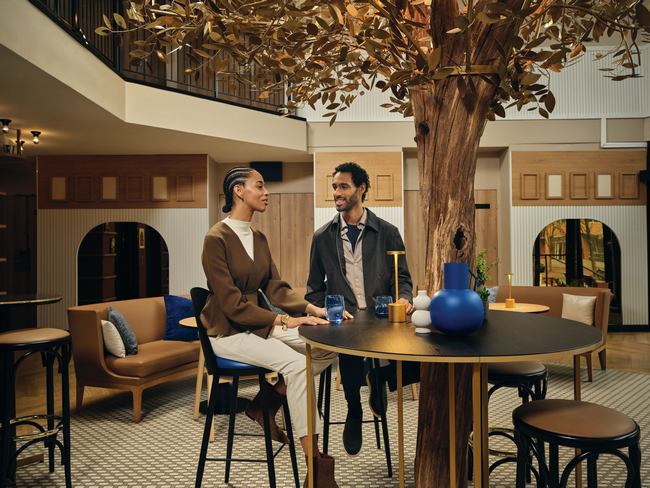
A few ideas exchanged over breakfast before a meeting, moments of shared work in the lobby, an impromptu meeting with a future client over a drink: hotels are by their very nature places where connections are made. But they are also places of experience, and the Pullman brand's approach, with its series of Pullman xChange events that transform hotels into real places of exchange and creativity, fits into this framework.
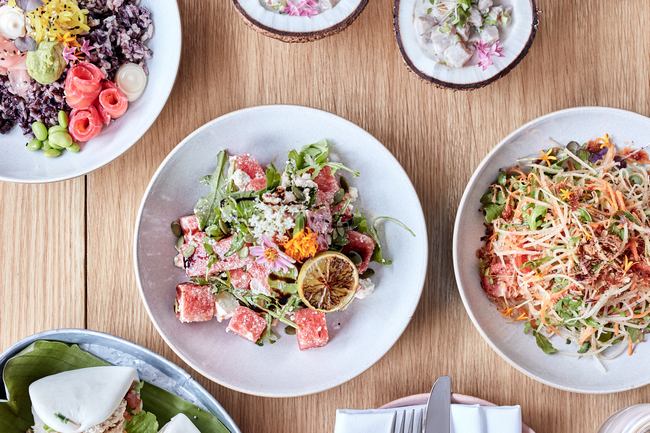
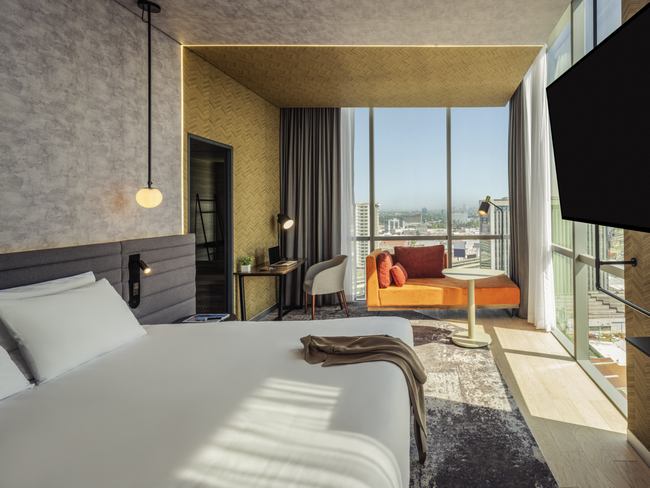
The second 'return' envisaged by Accor, ROX - for Return on Experience - moves away from a purely utilitarian conception of business travel and focuses on its intimate and personal value. Business travellers, particularly the new generations, are no longer content to simply carry out their missions: they want to recharge their batteries, discover new things and return enriched by their trips.
The bleisure trend is well established in people's minds, with weekends extending business trips with a leisure and cultural break. But it is also the whole well-being dimension which, according to Accor, is no longer a peripheral luxury, but is now at the heart of the value proposition of hotels. " Business travel must offer more than just efficiency: it must create value for both the traveller and the company. Increasingly, business travellers are prioritising their well-being, their energy and their performance. "As Jean-Yves Minet, Global President of Accor's economy and mid-range brands, points out.
The recent presentation of Novotel's new longevity credo is part of this trend. Eat better, sleep better, exercise more, even when on the move: the brand wants to take good care of "corporate athletes". " They travel with focus and determination, and we need to support them, not just to save time, but to help them stay energetic, resilient and ready to perform. "says Jean-Yves Minet. Another example is Sofitel's The Art of Sleep programme, based on scientific research to counter " the effect of the first night "It's the kind of thing that disrupts sleep when you're on the move.
Lastly, the Return On Carbon (ROC), which is more analysable and quantifiable, meets the expectations of mobile professionals and their companies alike. While carbon budgets are emerging as genuine planning tools, " For companies, particularly in Europe, the question is no longer just "how much does this trip cost? but also "what is its carbon footprint? "says the study.
As well as offering an ever-increasing number of labelled hotels, a hotel group like Accor has a number of solutions to offer travel managers. These include its carbontracker.accor.com solution for analysing the carbon footprint of stays and meetings, and its Carbon Reduction Charter for events, which imposes priority actions such as recycling, waste management and vegetarian menu options in the group's 18,500 meeting and event venues around the world.