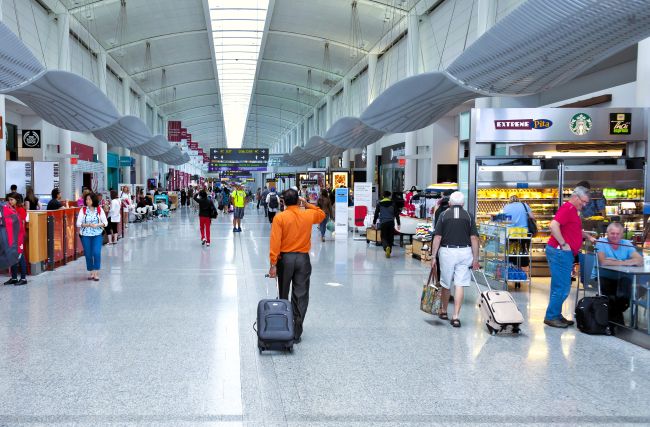
The device allows international travellers transiting to another country to no longer have to present themselves physically at border control during their stopover in Canada. Passengers thus save time and the anxiety of missing a connection by going directly to their second flight.
Instead of controlling the individual, it is now the airlines that transmit the necessary information on travellers to the CBSA, including their final destination and the planned departure time of their flight. This data helps to confirm that passengers are indeed leaving Canada, while maintaining border security.
How does the new system work?
- Transit passengers travelling between two international destinations no longer need to see a border services officer or use a control booth.
- Airlines are responsible for collecting and transmitting travel information to the CBSA.
- However, passengers must retain all documents required for their final destination, including a valid passport, a visa if necessary, and a confirmed ticket for an international flight departing Canada within 24 hours of their arrival.
- The device is currently available atVancouver International Airportat Terminal 1 of the international airport Toronto Pearson and theinternational airport of Montréal-Trudeau, where it has already been tested successfully.
According to the CBSA, this new procedure is part of a strategy to facilitate travel for travellers authorised to pass through Canada. This will allow the agency to focus its resources on individuals or activities that pose a risk to the country's security.
" The new procedure is one of the initiatives that improve the traveller experience while maintaining the security of Canadian borders. We are working with our airport partners to provide a simpler and more efficient journey for international passengers. The CBSA is implementing new tools, new technologies and modernising its procedures to build the border of tomorrow. ", said Rob Chambers, Vice-President of the Canada Border Services Agency's Traveller Operations Directorate."
Following these regulatory changes, other Canadian airports will also be able to adopt this system by submitting an application to the CBSA.
Travellers will nevertheless need to continue to meet all applicable entry and transit requirements, including holding, where required, a Temporary Resident Visa (TRV) or an Electronic Travel Authorisation (eTA).