











Meininger has resumed its investment policy. Have the group's development priorities changed? Are you targeting business destinations more?
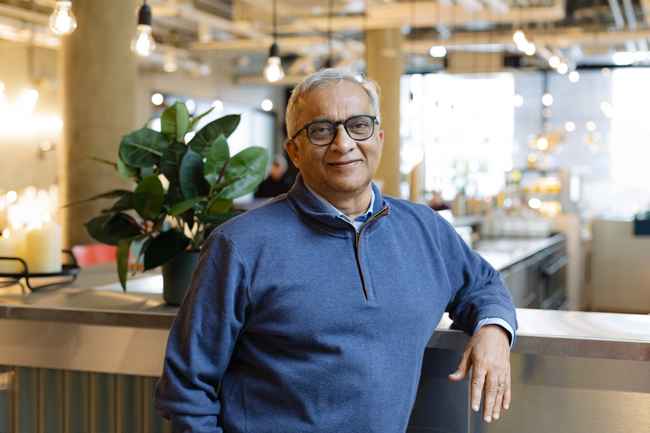
Ajit Menon – In reality, we maintained our investment momentum during the pandemic, opening ten hotels in three years. However, the subsequent economic context presented significant challenges: the surge in construction and financing costs post-pandemic disrupted the entire market and considerably hampered our ability to pursue new development opportunities. Since then, markets have stabilised, and we are again identifying interesting opportunities to continue our growth in our main European markets.
Our development priorities have not fundamentally changed. We continue to favour locations where our hybrid hospitality concept can meet the expectations of a diverse clientele, comprising leisure travellers, families, groups, and business travellers. While business-oriented destinations, as well as locations near transport hubs or event venues, offer interesting opportunities, we are not shifting towards a model exclusively dedicated to business travel.
One of the strengths of our model lies in its resilience: by combining different customer segments, we create a balanced demand base throughout the year, without relying on a single source of business. This allows us to adapt to changing market conditions and benefit from different demand drivers according to the seasons.
Is the inauguration of a hotel next to the Barcelona Conference Centre a message to the MICE clientèle? What are your ambitions for this market? Do you plan to integrate meeting spaces?
Ajit Menon – The Meininger Barcelona Fira Gran Via hotel is expected to attract a higher proportion of business travellers and MICE-related guests than many of our other properties, thanks to its immediate proximity to the Fira Gran Via, one of Europe’s leading exhibition and conference centres. This location also reflects our broader development strategy, which involves identifying attractive growth opportunities that are consistent with local urban planning policies, at a time when the development of new hotels in Barcelona city centre is becoming increasingly restricted.
However, we remain committed to the diversity of our clientele. Dedicated meeting rooms and co-working spaces are not a standard feature of the Meininger concept and are only offered in a few establishments, such as the Meininger Hotel Berlin Airport or the Meininger Budapest Great Market Hall. Our priority is to offer flexible and welcoming spaces that can be used in different ways by all our guests, whether they are travelling for business, leisure or as a group.

Meininger positions itself as a ‘hybrid’ hotel, combining elements of a youth hostel and a traditional hotel: how does this model meet the specific needs of business travellers?
Ajit Menon – The needs of business travellers are changing, particularly amongst young professionals. The trend towards more flexible ways of working, including workations and travel bleisurefits very naturally with the Meininger concept. Our establishments are generally centrally located or well-connected, allowing guests to easily reach their appointments, events and business districts, while also enjoying the destination outside of their working hours. Our flexible spaces and private rooms allow everyone to adapt their stay to their needs, whether they wish to concentrate or socialise with other travellers.
Business travellers are often associated with business class flights and four-star hotels. Doesn't your hybrid concept suffer from an image deficit?
Ajit Menon – We do not see this as a challenge, as guests who choose Meininger understand and appreciate our concept. Our strength lies in our ability to combine the best aspects of a hotel and a youth hostel. Our guests stay with us precisely because they are looking for this combination: a place that offers the comfort, quality and reliability of hotel service, whilst allowing them to meet other travellers and enjoy a friendly atmosphere.
The hybrid concept often involves shared or multi-bed rooms: how do you reconcile this approach with the expectations of privacy and comfort held by business travellers?
Ajit Menon – Our hybrid concept is based on freedom of choice: no one has to compromise on their privacy or comfort. Business travellers who wish to have their own space can book a private room offering all the comfort and quality they’d expect, whilst those looking for a more sociable experience can opt for a shared room.
Where possible, flexibility in room allocation also allows us to accommodate individual and business travellers on different floors from larger groups, ensuring a quieter environment and greater privacy for them. It is this flexibility that allows us to host such a diverse clientele under one roof, without imposing a format that would not suit their travel style on anyone.
20% for B2B clients
What has been the evolution of the business client share in recent years? And what are your objectives for 2030?
Ajit Menon – Our B2B segment comprises both corporate clients and group-related activities, covering negotiated corporate accounts, group bookings, tour operators and indirect business partners. This segment has recorded steady growth in recent years, with the B2B share of our turnover exceeding 20 % during the 2026 financial year.
Looking ahead, we plan to continue developing our B2B business by strengthening our offering for corporate clients, improving our digital booking and self-service solutions, and consolidating our partnerships with business travel providers. Whilst we expect the corporate segment to remain relatively stable, our overall growth strategy will continue to focus on strengthening our position in the group travel market.
Do you have any concrete examples of the announced improvements for business customers?
Ajit Menon – We are introducing a number of improvements to make it easier for corporate clients and our partners to book and manage their stays. For business clients, we are developing our corporate booking portal, which will enable companies to manage, view and amend their bookings more independently, whilst offering more flexible corporate discount options.
We are also improving the self-service tools available to our group and travel partners, so that they can manage their bookings more easily – in particular by amending the number of rooms, group sizes, dates and other details – without the need for manual intervention. At the same time, we are optimising pre-arrival processes through automated communications, enabling us, for example, to collect information in advance regarding dietary requirements or special requests.
Apart from Strasbourg, which other destinations in France might soon be home to a Meininger hotel?
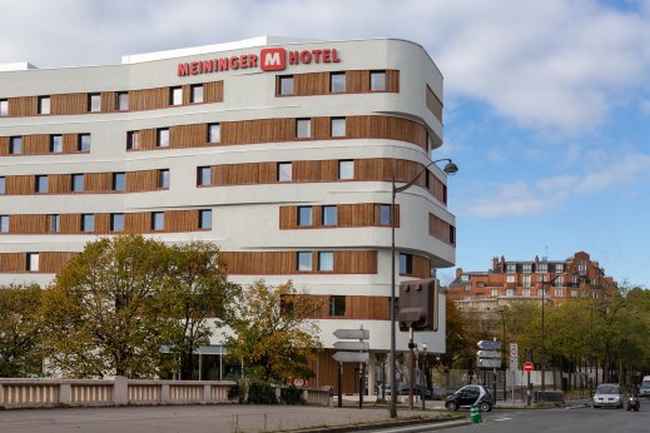
Ajit Menon – La France is one of our key growth markets. With the opening of Strasbourg By 2027, it will become our second-largest market after Germany, with five hotels. Our experience shows that once the Meininger concept is firmly established in a country, it becomes much easier to continue our expansion, drawing on our brand recognition, our operational expertise and our knowledge of the local market.
Our French portfolio currently comprises hotels in Paris, Lyon, Bordeaux and Marseille. We continue to identify attractive opportunities in France. Opening a second, or even a third, hotel in Paris would certainly be of interest, whilst cities such as Nice, Grenoble and Toulouse also form part of our long-term growth strategy. As always, however, any expansion remains contingent on identifying the right property in the right location.
Priority for Europe
What is the current status of plans for expansion outside Europe, particularly in North America?
Ajit Menon – Although we are opening our first hotel outside Europe this year, in Tel Aviv, we currently have no other expansion plans beyond the European continent. Europe will clearly remain our priority over the coming years. We see particularly significant potential in Southern and Eastern Europe, as well as in established markets such as Spain, Scandinavia and the United Kingdom.
We have recently expanded our portfolio with the opening of our Barcelona hotel and are preparing to open a property in Edinburgh, followed by one in Tel Aviv later this year. Our pipeline also includes Strasbourg in 2027, followed by Madrid, Porto and Dublin in 2028. Our ambition is to operate 50 hotels across Europe by 2030.