















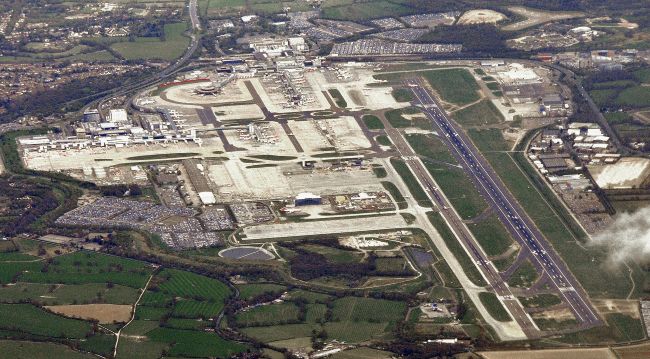
London Gatwick Airport will be able to launch its ambitious second runway project following the rejection of a final legal appeal filed by environmental associations and local residents.
The British Court of Appeal has indeed ruled inadmissible the applications seeking to overturn the government's approval of the £2.2 billion extension project. This decision brings an end to eight years of administrative and legal proceedings and -at last- paves the way for construction to begin.
In fact, there is no question of building a new runway from scratch. The project actually relies on the current emergency runway, located to the north of the airport. Moved by a few metres, it will become fully operational as it will be able to function simultaneously with the main runway.
For the business travel sector, this decision is of major importance. As the UK's second-largest airport and one of the main international gateways to London, Gatwick will significantly strengthen the British capital's aviation capacity, making it one of the world's largest inbound and outbound traveller markets.
From 2030 – the scheduled date for its opening – the extension will indeed make it possible to handle around 13 million additional passengers a year, bringing the airport's annual capacity to over 80 million travellers. It will also permit nearly 100,000 additional aircraft movements each year, offering new development opportunities for airlines. This year, London Gatwick is expected to welcome close to 47 million passengers, confirming its position as the UK's second busiest airport behind Heathrow.
This additional capacity should naturally encourage the opening of new international routes, particularly long-haul ones, and increase competition between carriers.
Beyond the new runway, the programme also includes the creation of new taxiways, aircraft parking stands, the extension of terminals, as well as the improvement of road access and support infrastructure.
Gatwick's Chief Executive, Stewart Wingate, has welcomed a decision that finally brings visibility to one of the UK's most important aviation infrastructure projects. According to him, this expansion will generate over one billion pounds in annual economic benefits.
At a time when major European hubs are facing severe congestion, increasing Gatwick's capacity will reinforce the competitiveness of London's airport system. Alongside Heathrow, London will have an increased supply of slots, encouraging the arrival of new airlines and the opening of new destinations. The commencement of construction on the second runway supports the British Government's vision of equipping the country with airport infrastructure capable of coping with growing traffic. In London, this translates not only into a second runway at Gatwick but also a third runway at Heathrow and a major expansion project at Luton.