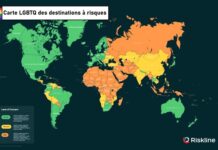
The study carried out by Professor Lisbeth Claus in 628 organisations worldwide highlights the importance of the risk factor in business travel. Almost all of the companies surveyed (95 %) sent one of their employees to a country considered to be 'high-risk' during 2010. The attractiveness of emerging countries, which often correspond to sensitive zones, is no stranger to this trend: "As the main high-growth emerging markets are also perceived as high-risk, there is an urgent need to highlight the best practices that should be adopted by companies to protect their mobile employees and their activities abroad", points out Arnaud Vaissié, Chairman and CEO and co-founder of International SOS. The need is all the more important in that companies have a legal responsibility towards their business travellers, through the "Duty of Protection".
The study also ranks the major threats identified by the organisations surveyed, and shows that health is the area most feared by professionals: diseases are at the top of the ranking, with 3 other health-related threats in the top ten. Crime, road accidents, travel delays and pickpockets round out the top 5. However, the fears vary according to sector of activity: the energy sector cites the isolation of operating locations, language and cultural differences, followed by road accidents as the main threats to their business travellers, while the construction sector mentions public disorder, violent crime and organised crime. According to International SOS, these fears are not enough to make companies sufficiently aware of their responsibilities: "on the whole, companies' awareness remains relatively low, and there are major disparities depending on the areas of responsibility and expertise within the company itself", says the study.