
















83% flights have been cancelled today; the same number for arrivals. This is the statistic produced this Monday morning (French time) by the online site flightradar24.com, which tracks the movements of aircraft around the world for the’Riyadh airport in Saudi Arabia.
The situation has effectively become unpredictable for Saudi air traffic, which is now the target of missiles fired by the Houthi armed groups from Yemen. Last week, the armed group warned international civil aviation authorities that it considered the Saudi skies a target of war and that planes flying into the country were not immune from attacks. Proof of this was the three consecutive attacks in a week on the capital’s airport, Riyadh, as well as the missile that hit the north of Dammam airport, near Bahrain.
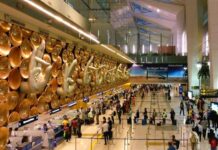
Contrary to the announcements, it seems that the Riyadh airport was operational but with a very limited number of flights, just to ensure connections mainly to Dubai, Cairo and Istanbul. As well as for domestic connections.
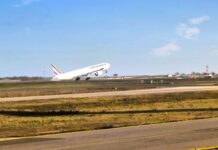
However, air traffic was normally operating towards Jeddah, Saudi Arabia’s other major international airport. Flightradar.com reported the cancellation of 23% of the departing flights; and in Dammam, 39%. Most international airlines thus cancelled their flights to the kingdom until October 19. European airlines such as Air France and Lufthansa cancelled their flights to Riyadh, the former until October 31, the latter until June 16.
But this also concerns the region’s major carriers. Qatar Airways has temporarily suspended its flights except to Jeddah, without giving a date for resumption. Etihad has also cancelled its connections to Damman and Riyadh at least until the 19th, but also to Jeddah until the 15th, while Gulf Air is no longer serving the Saudi capital until October 17th. The low-cost airline Air Arabia from Sharjah, as well as Emirates, are implementing a reduced program.
The two international airlines Saudia and Riyadh Air have also cancelled their flights, but some low-cost carriers like Flynas are ensuring a minimal flight schedule.
Meanwhile, the Saudi authorities have opened an investigation to understand why the country’s air defenses failed to stop the barrage, according to two regional officials who spoke to the Associated Press on condition of anonymity.