















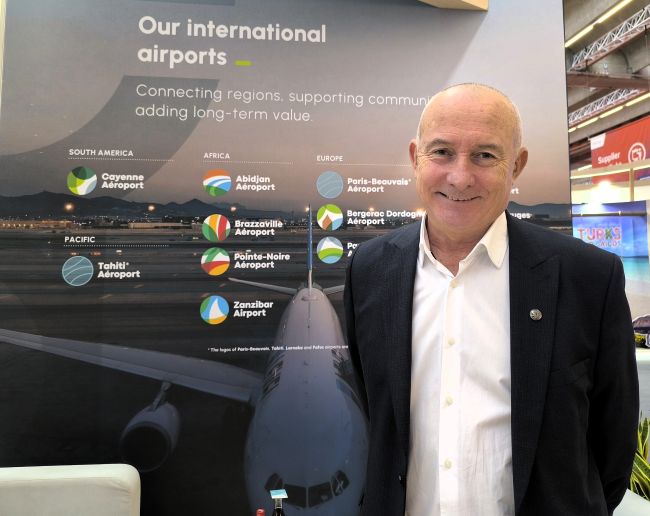
How are you currently analyzing the situation of the regional airport market, especially in France, in a difficult economic context?
Eric Dumas- The situations are very contrasting. Regional airports perform unevenly, depending on their competitive environment. Those that have a strong market, a sufficiently rich catchment area and an attractive territory for airlines are doing rather well. Paris-Beauvais, the third airport in the Paris region, This illustrates the company’s ability to stand out in the market. Despite the general slowdown and the increase in taxes, the platform maintains relatively satisfactory activity. However, its dependence on Ryanair, which accounts for about 80% % of traffic, constitutes a vulnerability factor. This is particularly sensitive to costs and tends to prioritize destinations where the tax environment is more favorable.
Conversely, some smaller airports are facing real difficulties. This is particularly the case in Pau and Bergerac in the Southwest. The competition with Tarbes-Lourdes is direct, but the two platforms do not benefit from the same support and subsidy schemes. Thus, Tarbes has more favorable support.
A comparable situation can be found in Belgium, between the Walloon airports of Charleroi and Liège and the Flemish platforms. The differences in public policies and regional support have a real impact on their competitiveness.
Does French taxation currently constitute a barrier to the development of airports? Do you expect a change in policy after the upcoming elections?
Eric Dumas- The differences in public policies and regional support have a real impact on their competitiveness. We are indeed suffering the consequences of national taxation and we await to see what direction the next term will take. We hope for a more flexible policy, based more on understanding the economic issues of air transport.
It should not be forgotten that an aircraft primarily carries passengers who, in most cases for our destinations, contribute to the local economy. The economic impact generated by these visitors is substantial. This aspect is too often forgotten when decisions are made to increase taxes on air transport.
Since regional airports are often owned by local authorities, these authorities can put in place incentive schemes that are more or less favorable to airlines. This directly affects their attractiveness.
Which airports do you identify as particularly promising for the coming years?
Eric Dumas- Cayenne It is one of our priorities. When we took over this airport, its commercial development was relatively neglected. Since then, we have mobilized our sales teams to better promote the destination and its potential for connections with South America.
Cayenne has interesting assets for airlines and we are confident in the prospect of several line openings in the coming months. These could truly change the airport’s dimension.
We also place great hope in Ostend-Bruges in Belgium. Bruges is the country’s top tourist destination, with more than eight million visitors a year, but none of them come directly by plane via Ostend-Bruges.
Let’s talk about Paris-Beauvais. The project for a new airport terminal is set to fundamentally change the image of the airport. Where are we at?
Eric Dumas- The project is still in a consultation and public inquiry phase. We have been running behind, mainly due to discussions with the local residents. We need to present the project to them, explain the implementation methods and the reasons for this change.
Our goal is to grow the airport in terms of traffic, but with controlled growth. It is not about becoming bigger than the territory can handle.
The priority is mainly to improve the passenger experience. Today, we are not at the level we want to reach. Being a low-cost airport does not mean that comfort and the quality of the passenger journey must be neglected.
The project includes significant expansion and a connection between the two terminals. This connection is particularly important to simplify travel and avoid the orientation difficulties that travelers may encounter.
Does Tahiti still constitute a strategic asset for Egis, despite the uncertainties surrounding the concession?
Eric Dumas- Tahiti is clearly a flagship for us. We have been operating this airport since 2010 and it represents an important asset. The difficulty lies in the legal status of the concession, which has been considered terminated since 2017. In these circumstances, it is difficult to commit significant investments on a platform that we are theoretically supposed to return.
The history is quite long. A first tender was launched in 2019. We submitted an offer and won the procedure, but a complaint from another candidate eventually led to a statement without any follow-up. The state recently relaunched the process and the submission of offers is now expected at the end of 2026, or early 2027.
Nevertheless, we have carried out certain works, notably the renovation of the domestic boarding area. These investments were carried out with the agreement of the concessionaire and according to specific financial terms that ensure the security of the expenses.
The Polynesian government also wants the situation to be resolved quickly. It is the first to want the airport to finally benefit from modernization commensurate with its role as the gateway to the territory. The airport was rebuilt after the 1992 fire and then renovated over time. We are now able to operate it, but its structure remains old and poorly adapted to current needs.
Of course, I cannot reveal the content of our future proposal, but I can assure you that Egis, like our competitor Vinci Airports, should present a very attractive offer.
A word on the evolution of your African platforms?
Eric Dumas- Our African airports are doing well. Zanzibar in particular has considerable potential. The destination is attracting a great deal of interest from airlines and the traffic growth is very strong. We believe that this platform could become one of the most important in our portfolio, with an objective of three million passengers.
Abidjan also shows good prospects. We are receiving interest from airlines that are sometimes unexpected, which shows the growing attractiveness of the destination. The modernization project for the airport is currently being finalized and the first works are expected to begin in the coming months.
Does Egis intend to continue its international expansion despite the economic and geopolitical uncertainties?
Eric Dumas- Absolutely. We are very active in development, particularly internationally. Egis is strongly established in France and in French-speaking countries. We have won several tenders, notably in Cayenne and Beauvais.
Our international presence remains, however, less developed, except in Belgium and Cyprus. We therefore have a genuine ambition to expand, particularly in the Middle East and Asia-Pacific and in Africa. However, we are also following opportunities in Canada, which is considering changing the management model of its airports in the coming years.
Our specialty mainly focuses on medium-sized airports that welcome between one and ten million passengers per year. It is in this segment that we have the best references.
What ultimately distinguishes the Egis model from those of its competitors?
Eric Dumas- Our special feature lies in a dual model: we are both an airport operator, an engineer and a consultant. Approximately 80% % of Egis’s activity involves engineering and consulting. This expertise directly complements our operational activities.
When we take over an airport, we can therefore offer technical assistance covering a wide range of areas: commercial development, works engineering, terminal and infrastructure design.
This is a rather unique model that appeals to our clients. When they entrust an airport to Egis, they know that they benefit from expertise ranging from commercial strategy to the design of future facilities.
Another element is important: we design the works but do not carry out the construction ourselves. Therefore, we are not interested in the volume of concrete poured. This allows us to manage investments with an independent approach, prioritizing cost control and the interests of the concessionaire.