


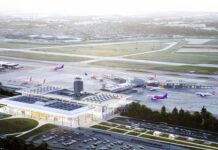
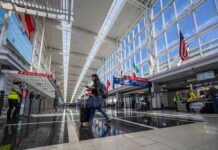





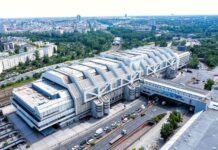



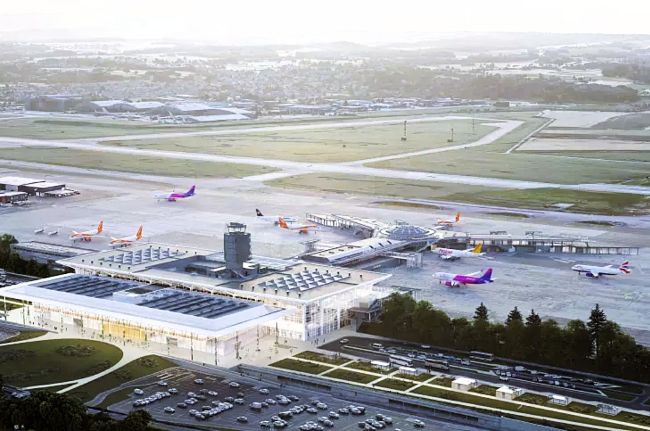
The EuroAirport of Basel-Mulhouse It has just taken a new step in its modernization. The competent authorities of the cantons of Basel-Ville and Basel-Campagne, as well as the Directorate General of Civil Aviation (DGAC), have indeed approved the extension of the terminal towards the city, a project representing an investment of more than 157 million euros.
This operation is the main component of a investment program worth more than 600 million euros over seven years, entirely financed by the airport. Nearly half of this budget is dedicated to improving the quality of service and the passenger experience.
The project involves the construction of a new 14,000 m² building on the terminal’s east façade, as well as the renovation of approximately 15,000 m² of existing space. The goal is to streamline the routes, centralize security controls in a single facility, and modernize the commercial spaces, including the restaurant and duty-free area. Access to the terminal will also be redesigned.
This extension is intended to improve the comfort of passengers and the efficiency of operations, but it will not result in any increase in aircraft processing capacity. Work is scheduled to begin in the third quarter of 2027, with delivery expected at the end of 2031. It will enable the airport to handle more than 10 million passengers per year in more pleasant conditions for passengers.
The project also incorporates environmental objectives, with ambitions to achieve a BREEAM «Excellent» certification, better energy efficiency and a reduction in the building’s carbon footprint.
While it is gratifying to see a remarkable increase in the airport’s capacity, there is still a major weakness in the airport’s ground accessibility: the lack of a direct rail connection between Basel, the airport, and Mulhouse.
A project This project has been dragging on for several decades and, despite the discussions and plans mentioned for many years, it still remains elusive. The inability of the French and Swiss partners to bring this project to fruition contrasts with the investments made in the modernization of the terminal. For travelers and tourism professionals alike, access to the airport will remain dependent on the road and public bus transport for a long time to come. Not very «world class» and far from the quality of the public transport offering in Geneva and Zurich.
