














Air - Hôtellerie
Airlines have been quick to take advantage of the rise of the smartphone to offer technological boarding solutions. Hoteliers are also getting in on the act, by dematerialising check-in.
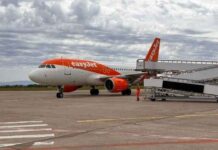
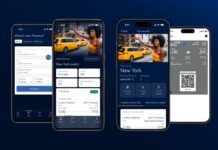
Book your ticket, find out the latest flight information, receive your boarding pass directly on your smartphone: all the major airlines offer this type of solution to their passengers. Even the low-cost carriers are getting in on the act, Ryanair being the latest. At the same time, some pioneering airlines are experimenting with new areas of development, such as the Qantas which has recently incorporated a 'door-to-door' approach, calculating the journey time to the airport on the basis of real-time traffic information. The world of travel is becoming increasingly high-tech, and hoteliers are in turn starting to offer innovative applications for check-in and check-out via a telephone, while waiting for the virtual room key.
Marriott and Accor have recently revealed innovative solutions of this kind, with the Hilton group going even further. Members of the HHonors loyalty programme will be able to check in from 6am the day before their arrival and choose their room based on photos and floor plans. Meanwhile, regular Hyatt hotel guests will find a new feature when they update the group's application: the ability to book a vehicle with Uber. The American group is integrating the solution provided by the VTC (chauffeur-driven car) booking platform. In more than 100 cities around the world, travellers simply press the Uber button in the "my reservations" section to order a car.
Travel management
The traditional networks and online agencies have converged on the mobile file. The online shift has standardised the functionalities of the applications developed by the big names in travel management. Here's an overview of what's new.
Carlson Wagonlit claimed to have almost 270,000 users of the CWT To Go application by the end of July. The business travel agency is now banking on the integration of a gamification component into its application, ahead of hotel reservations, which were announced for June but finally postponed. This fun approach to travel policy will also be part of the Enterprise version of the application that BCD Travel is due to launch at the end of 2014 or early 2015, aimed at travel managers. For the time being, TripSource, BCD Travel's application for French business travellers, made its appearance in June, but is limited to itinerary management and real-time flight information. In short, its functionalities are similar to those offered by TripCase, the Sabre application adopted last spring by American Express Business Travel.
In addition to the "click to call" function, which allows you to contact Amex advisers, the application stands out for its integration of the Uber service, which became official in August. Egencia, a specialist in this field, still has a slight head start with its TripNavigator application. Already available in the hotel sector, mobile booking will soon be available in the airline industry. Its arrival in France is scheduled for the first half of 2015, in the wake of a tablet version that will make its debut on the US market by the end of 2014.
Mobility
If there's one sector where the arrival of mobile applications is profoundly reorganising the offering, it's urban mobility, which is in the midst of a revolution.
A behemoth backed by the strike force of Google, Uber offers a real alternative to taxis thanks to its user-friendly applications that make it easy to book at attractive prices. This pioneer is gradually integrating into the business travel ecosystem through strategic partnerships with Concur, TripCase and United. In its wake, chauffeur-driven vehicle (VTC) solutions are flourishing, such as SnapCar, Le Cab and, more recently, Marcel for the French market alone. At the same time, the world of car-sharing is also turning its attention to business customers, like the IDVroom platform unveiled by the SNCF in September, which is preparing to launch its application targeting home-office journeys.
For motorists travelling around Paris, the PMobile application developed by the Paris City Council could well become an indispensable ally. This nomadic solution, which is due to be rolled out across Paris in 2015, will enable drivers to check their parking ticket remotely, increasing or reducing the time paid to the nearest quarter of an hour. Paris surveillance officers (ASP) will be able to use their terminals to consult the database where virtual parking tickets will be centralised.
Practice
In addition to the applications approved by the company as part of its travel policy, the business traveller's smartphone is often home to other useful applications for the duration of the trip.
Before their departure, less experienced travellers, or those who are just a little dizzy, can rely on an application such as PackPointThe aim is to help you put together a suitcase that's right for your destination, the local weather and the length of your stay.
When they arrive at their destination, travellers will usually turn to a guide such as CityMapperwhich is gaining ground in the travel community by combining efficiency, readability and humour. But you still need access to a free wireless network to avoid the costly roaming charges applied abroad. Two options: an application like CityMaps 2GBwhich offers the advantage of operating without an Internet connection, or for a solution like Business Traveler 2.0, which provides secure access to over 2.7 million Wi-Fi hotspots worldwide, in airports, planes, hotels and public places.
When you arrive at your hotel after a tiring flight, you might be tempted to collapse on your bed in the middle of the day. Fortunately - or not - there's an app for that too. As its name might not suggest, Entrain monitors travellers' sleep patterns. This tool, developed by researchers at the University of Michigan, records data relating to the destination and the user's daily routine (waking and sleeping times, light environment) to recommend the optimum sleeping and waking schedule to adapt the user's internal clock. Fresh and available, the business traveller will be all the more efficient for his meeting on the other side of the world...


