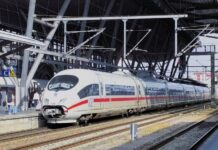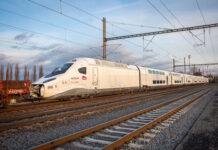



















Thalys has been offering WiFi on its lines since 2008. In 2014, the company counted 450,000 users in Comfort 2 Pro class and 700,000 in Comfort 1. At the end of the year, Thalys will be stepping up this service even further to offer passengers more bandwidth, and therefore faster usage.
The railway world has embarked on a resolutely technological path. Each company in turn has developed mobile applications that have rapidly become popular with customers on the move. These virtual assistants are proving to be extremely useful, both in preparing for journeys and on the day, complementing the services provided by travel agencies or station ticket offices.
To make life easier for business travellers, the SNCF has been using the TGV Pro application, accessible from any mobile device connected to the iOs, Android and Windows Phone platforms, since the beginning of 2015. This app provides a whole range of services for passengers travelling on Pro fares, from making reservations to consulting personal travel data, receiving information in the event of disruption or ordering taxis. But the SNCF's main aim is to provide maximum flexibility, with the app enabling the exchange of e-tickets - i.e. the dematerialised ticket to be printed at home - and m-tickets, so called when they are downloaded in barcode form onto a smartphone or tablet. Since summer 2014, Pro tickets can be changed via this application up to one hour after the train's departure. This means that business travellers can easily make last-minute changes, depending on their commitments and changes to their diaries. This service makes it possible to book m-tickets for Thalys and Eurostar international services alongside the companies' own technological solutions.
In fact, all transport operators have embarked on a digital shift. Lyria, which operates the high-speed lines between France and Switzerland, recently improved its offer with the launch in February of a new version of its mobile application, available on Apple Store and Google Play Store. "This application is designed for frequent travellers. We've had 20,000 downloads in the space of a year, and it's still being downloaded at a rate of around a hundred a day."says Émilie Perrot, Lyria's Marketing and Sales Director. As usual, the application offers the full range of essential services, such as consulting timetables, managing bookings and receiving travel information... But there are also a number of new features. "In particular, we have added the display of correspondence in Switzerland, adds Émilie Perrot. This is important, because some business customers use both networks."
For its part, Deutsche Bahn has launched the m-ticket in France, enabling passengers to collect their ticket at www.bahn.com/fr, both for cross-border journeys and journeys from Paris to German stations, and also for train journeys within Germany. They can also receive the ticket directly on their smartphone. The m-ticket is also available in English from the free DB Navigator application. At a time when companies are looking to optimise their rail spending, business travel is no longer necessarily done at the highest fares. So for all users, whether company executives or just ordinary people, the SNCF is making available the plethora of services offered by the SNCF Direct application: loading the m-ticket and travel file, receiving alerts, information about shops in stations, etc. The mobile application of the voyages-sncf. com booking site is another example of a general public service used by individual business travellers, consultants, lawyers and SME-SMI executives. "Our business travellers are big users of this mobile app, as they are frequently on the move."explains Jérôme Lafon, Director France, who notes that "their purchases are mostly made at the last minute, i.e. the day before or the same day in two-thirds of cases."
As well as providing access to paperless tickets, the mobile version of voyages-sncf.com has been enhanced with new features such as "express booking". "In less than 10 secondsJérôme Lafon explains: "If the traveller has recorded all their information, their usual itineraries, their means of payment, etc.".These travellers are looking for speed and simplicity"he continues. For this reason, exchange and refund procedures have been simplified. It is now possible to buy a ticket on the website, then change it using the on-board application on a mobile phone or tablet. "This is particularly useful if a meeting is cancelled at the last minute or if it drags on for too long."adds Jérôme Lafon.

Digital control socket
As business travellers adopt new habits, airlines are innovating by adding original services. Thalys, for example, has introduced "e-Press&More" so that Comfort 1 travellers can download digital versions of newspapers and magazines from thalysthecard.com. On the Paris-Brussels route, passengers can also choose their breakfast or meal. The SNCF is not to be outdone, offering passengers the option of downloading digital versions of newspapers via the TGV Pro app to make their journey more enjoyable. The company has also just introduced advance meal ordering on the Paris-Bordeaux and Paris-Lyon routes. If the test is successful, this service could be extended to other routes heavily used by business customers. Finally, the SNCF is continuing its quest for a 'door-to-door' service by allowing all business travellers to manage their pre- and/or post-transportation between their home or office and the station via their telephone, by booking a taxi, a chauffeur-driven vehicle (VTC) or by reserving a parking space for their vehicle.
Last but not least, Agnès Ogier, then marketing director of the SNCF Voyages branch, announced a "3 in 1" solution for subscribers at the start of the 2014 autumn break, just before taking over as head of Thalys. This should see the light of day next April. "Thanks to the TGV Pro application, their ticket, loyalty card and season ticket will be available on their smartphone."she explains. Another new feature to look forward to, this time on the Voyages-sncf.com app, is the availability of e-tickets for international travel and the possibility for travellers to register several credit cards on their personal account...

Aside from this mobile frenzy, traditional websites have not been forgotten by the rail industry. While Lyria unveiled an overhaul of tgv-lyria.com in early 2015, the SNCF has designed a version of its "mon compte Pro" site specifically for its key account customers. The aim is to provide travel managers with a wealth of essential information, such as consumption reports and the latest commercial news from the rail company. The Voyages-sncf.com site also intends to improve the visibility of its professional offer from the home page in the near future. "The aim is to provide a simpler path that meets the expectations of each customer"explains Jérôme Lafon.

The difficult equation of in-flight WiFi
In line with passengers' need to remain continuously connected to their professional world, another major project is underway: the development of WiFi solutions on board. Thalys was one of the forerunners in this field. All its TGVs have been equipped since 2008, with a free offer in Comfort 1 and a paying offer in Comfort 2 (€6.50 per hour or €13 per journey) for Semi-Flex, BtoB or ThePass tickets. The connection rate for 2014 was 40 % of passengers. The rail operator now intends to go even further by strengthening its Internet offering from the last quarter of 2015, under an agreement with the Swedish company Icomera. "The aim is to provide more bandwidth and more connectivity"explains the company. Another company to offer WiFi on its network is Deutsche Bahn, which has equipped most of its ICE trains and lounges in Germany with hotspots for wireless Internet access.
Eurostar is also preparing for this technological leap forward, with WiFi expected to arrive at the end of 2015 with the arrival of the first Siemens e320 trains. As a special feature, the company has announced that travellers will be able to use the Internet free of charge in both first and second class. A portal will also provide travel information, international news, weather and tourist guides for the destinations served. This should enable Eurostar to stand out from the plane on its future routes to Lyon, Avignon and Amsterdam from London.
On the other side of the Pyrenees, Renfe is testing this service on its AVE trains running on the Madrid-Barcelona line, before possibly extending it to its entire high-speed network.


The SNCF has been lagging behind in this area for a long time, and now intends to catch up. For the time being, WiFi is only available via the TGV Box on the fifty or so high-speed trains - out of a fleet of 450 - running on the Eastern network. The national operator has put forward the financial argument to explain this slow pace of development, given that it originally cost €1 million to equip a TGV (€350,000 today due to technological advances). Questioned last October by the Secretary of State for Digital Affairs Axelle Lemaire - her tweet "toc toc toc, SNCF: can we meet to discuss WiFi on the train? Thanks in advance ;-)" programme, SNCF decided to pull out all the stops by announcing a huge investment plan in February. To hell with spending: the "#digitalSNCF" programme will mobilise 150 million euros each year over a period of three years and is designed to "making SNCF a digital carrier"according to Guillaume Pepy, Chairman of the company.

The SNCF intends to provide a clear response to the problems of on-board connectivity. The priority will not necessarily be WiFi. The rate of use of the TGV Box on the East network is below expectations, with business and leisure passengers tending to use their smartphones connected to a 3G or 4G network. As a result, the company is committed to developing 3G and 4G coverage on all trains and in all stations, with WiFi being "the only option".only in certain specific cases"This means the busiest stations and the TGV, in addition to 4G coverage. Mobile tools have not been left out of this major digital upheaval. A new application will bring together the company's various mobile solutions. Another application, designed to simplify daily urban travel, should soon be available in around ten French cities. Initially, it will allow users to consult itineraries and receive traffic information in real time, before integrating ticket purchasing in the summer, followed by mobile ticketing at the end of the year.
The portrait of the business traveller at Voyages-sncf.com
- 60 % are men.
- 80 % are urban.
- 2/3 are aged between 25 and 49.
- His first areas of residence are the Paris region, the north and the east.
- Most of them make journeys of less than 2 hours and often have a Fréquence season ticket.
- 25 % travel first class.