











10 December 2017. On that day, TGV Lyria business passengers were curious to discover the newly launched Business 1ère class between Paris and Geneva. While the first-class seats have not changed for the time being - the rolling stock is not due for renewal until 2020 - the Franco-Swiss company has undertaken moving upmarket of its services, starting with the introduction of a catering service at the seat. This culinary experience makes it possible to spend a third of the journey at lunchtime in a very pleasant way.
But above all, it intends to give all its letters of nobility to the art of travelling. Even if passengers don't find the old-fashioned charm of the restaurant carriages, the quality of the service offered throughout the journey is one of the keys to this Business 1.eraa top-of-the-range offering that sets itself apart from Standard 1era - corresponding to a classic journey in a first-class car - and even more so in a second-class Standard car.
With this new three-class segmentation, TGV Lyria is simply following in the footsteps of other companies, such as the SNCF, which has launched its Business Première service on the new high-speed line to Bordeaux and Brittany, and Thalys and Eurostar, which were the first to offer a Business Première service. forerunners in this field with their Premium and Business Premier offers.
Introduced in recent months, these offers should enable rail operators to regain control of the 'best buy' policies developed by companies during the crisis years. Tight control over travel budgets in general, and transport expenditure in particular, has resulted in business travellers moving from first to second class. As a result, companies and their employees are now being asked to to board first class with an alternative available to them: either a standard version at an affordable fare, but without services, so that they can enjoy the comfort of the seat, or a full-fare option in exchange for a host of advantages such as access to the lounge, a welcome on the platform, free drinks and press, and even catering at the seat. For business customers, this more expensive fare also means greater flexibility in terms of exchanges and cancellations, with companies benefiting from relevant management solutions such as integrated expense reports and reporting.


Move to three classes
The widespread use of this triple segmentation seems to bear witness to the success of this new formula. "Feedback from professional customers very positiveBusiness Première offers greater fluidity, comfort and assistance"Fabien Soulet, Director of Business, Corporate and Travel Agencies at the SNCF, confirms this. After the Paris-Bordeaux, Paris-Rennes and Paris-Nantes routes, the SNCF will be dedicating a first-class carriage of its inOUI TGVs to this new offer, first on the Paris-Lyon route in early 2018, then on Paris-Lille and Paris-Strasbourg in the course of the year. It should be noted that unlike TGV Lyria, Thalys and Eurostar, meals remain a paying option on SNCF Business Première.
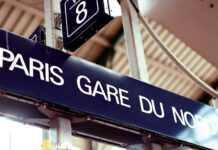
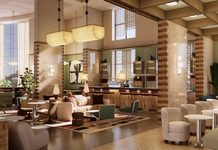
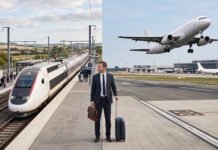
To compete with air travel, high-speed trains have long emphasised the advantages of a city-centre to city-centre journey, as well as the useful time spent on board, whether for work, rest or lunch, enjoying dishes designed by Michelin-starred chefs. In fact, even though rail carriers are fitting out increasingly sophisticated lounges in or near stations to make passengers' waits more pleasant - the Eurostar lounge in Paris-Nord is the finest example of this - business travellers have not had the opportunity to enjoy a more leisurely journey. no need to arrive hours in advance before boarding the train. The only exception is Eurostar, which requires passengers to check in at least 20 minutes before departure. This is reduced to 10 minutes for Business Premier passengers thanks to the use of dedicated gates. It is also advisable to arrive around twenty minutes early for Thalys trains departing from Paris-Nord station, as the security gates create a certain amount of chaos.
The advantage of rail over air travel is even greater when the journey is shorter. For a one-hour flight, you need to add an average of three hours for various operations: transfer to and from the airport, check-in, passing through security checks, boarding, taxiing on the tarmac, etc. The high-speed train, which used to make all the difference for destinations three hours away, now takes up a third of the time. the advantage up to four hours for business travellers. This phenomenon has been exacerbated by the widespread use of WiFi on board, enabling passengers to send emails and work on current projects...

Accelerated WiFi
In place for 10 years on Thalys TGVs, WiFi is in demand by business passengers, with an average connection time of 1.5 hours. However, the speed of the connection varies to justify the price difference between classes. At Thalys, Premium travellers have a capacity of 1 GB for their journey, compared with 100 MB for other carriages. For its part, Eurostar offers this service free of charge in its new e320 trains as well as in its old, renovated TGVs.
With 300 trains soon to be equipped, SNCF catches up. Replacing TGV Connect, its WiFi offer is now available on the main inOUI TGV routes, from Paris to Lyon, Rennes, Bordeaux, Lille and Strasbourg, as well as on the Mediterranean network. "80 % of TGV customers have access to WiFi"confirms Rachel Picard, CEO of Voyages SNCF. Here too, a distinction is being made between Pro customers in first class, who will benefit from a speed of 250 MB, and passengers in second class, who will have a speed of 200 MB.
The portal has also been given a new look and enriched with new content. Rail operators have taken a leaf out of the airlines' book by creating entertainment platforms that provide information about the journey and the destination - stops, weather, and even a bar capacity indicator for inOUI TGVs - as well as music and sometimes a selection of films.
To mitigate the disruption before and after the journey, the rail companies have also developed door-to-door services via taxi transfers or VTC companies, but also a valet service at major stations such as Ector for the SNCF. The sale of public transport tickets is also part of this idea, as are partnerships with self-service bicycle hire companies now present in major European cities.

Working between trains
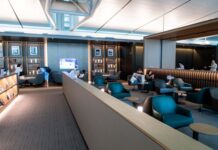
However, is it still necessary to leave stations to hold a business meeting, as they are becoming real living spaces with shops, restaurants, offices and meeting rooms for hire by the hour, day or month? Regus, the world's leading business centre, offers Regus Express spaces at stations in Bordeaux, Paris-Nord, Le Mans, Brussels-Midi, etc. These meeting venues are sometimes even connected to station waiting areas, like the Grand Voyageur lounge at Paris-Nord. The SNCF has 12 lounges of this type in France, offering practical services business travellers in transit: WiFi and USB port for recharging mobile phones, hot and cold drinks, daily newspapers and magazines, etc. Some lounges will be renovated within the next two years, including the one at Lille Europe. At European level, frequent travellers also have access to the forty or so lounges of the Railteam alliance, which brings together high-speed companies with interconnected networks. All they need to do is join one of the loyalty programmes run by these operators: SNCF, DB, SNCB, Eurostar, etc.
Flexibility in ticket management - purchase, exchange, cancellation - and the deployment of these innovative services (traffic alerts, e-press, catering, transfers, etc.) have been facilitated by the rise of new technologiesThese are applications for smartphones and digital tablets. Each carrier attaches the utmost importance to the development of its app and to feedback from users to ensure that it remains easy to use while providing a personalised service. "We need to simplify the customer relationship through digital technology, with a useful and effective application.", sums up Andreas Bergmann, Managing Director of TGV Lyria, a company which launched an upgraded version of its app at the end of 2017 to finally allow people to change their tickets.

Customised services
This option is essential, as a large proportion of business customers exchange their tickets on the day of their trip. "The Eurostar application helps us to provide even more personalised servicesflexibility and fluidity in the customer journey"says Dorothée Mariotte, Senior Director of Customer Knowledge and Loyalty at Eurostar. For its part, the SNCF is making its TGV Pro application available to business customers, enabling them to manage their e-tickets and find their season ticket, loyalty programme and travel documents. It is also the gateway to ancillary services such as taxi and VTC bookings, digital versions of the press, traffic information in the event of disruption, etc. Thanks to geolocation, this data is also increasingly tailored to customers and their travel plans.
Previously focused on on-board comfort, rail operators have had to rethink their offering to include a range of services that meet passengers' expectations. The rise of new technologies has made it easier to respond to these demands, which fluctuate around recognition of their status as frequent travellers, fluidity throughout their journey and flexibility in ticket management.