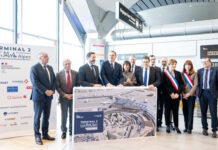
Speaking before a meeting with investors, Benjamin Smith, Chief Executive Officer of the Air France-KLM Group, accompanied by Anne Rigail, Chief Executive Officer of Air France, and Pieter Elbers, Chairman of the KLM Management Board, explained: "We are delighted to be able to offer our customers a wide range of products and services.In a competitive and fast-changing environment, the Air France-KLM Group has all the assets it needs to regain its position as the world's leading airline group. leading position. Since the end of 2018 and thanks to the commitment of our Air France, KLM and Transavia employees, we have implemented the fundamentals of our strategy: simplifying our fleet, clarifying our positioning both in our market segments and in our brand portfolio, gaining significant commercial and operational flexibility thanks to new social agreements".
"This is the starting point that will enable Air France-KLM to reinvent itself, to create a "new Air France". a more virtuous dynamic for its stakeholders. We will optimise our operating model and increase our revenues to significantly improve our margin levels."he added. The CEO acknowledged, however, that Air France's environment remained complex. Since his arrival a year ago, Benjamin Smith has succeeded in calming social relations within the company - notably with the pilots - while rationalising the brands and increasing the group's operational flexibility. Air France and KLM, for example, jointly manage their aircraft fleets, Benjamin Smith having overcome Dutch objections earlier this year. Until recently, the fleets were still managed separately, 15 years after the merger of the two airlines!
According to the company's management, the group's best assets are the strength of its three brands Air France, KLM and Transavia, as well as the excellence of its two global hubs at Paris CDG and Amsterdam Schiphol, and lastly a vast network of its own and with powerful airline commercial partners.
Yet Air France-KLM's operating margin remains low. It stood at 4.8 1TP3Q for the first nine months of 2019, down 1.7 points compared with the same period a year earlier. Benjamin Smith explains this fragility by the unfavourable French environment for air transport. "Operating an airline in France is not easy, and costs are high"he says. The company faces additional costs compared with its competitors, such as airport charges, civil aviation charges, a new environmental tax and a solidarity tax.
Strategy for three brands
The strategic plan announced four key priorities These include optimising the operating model, refocusing revenue growth on the most profitable segments, developing initiatives in data management, the Flying Blue frequent flyer programme, maintenance and cargo, and analysing all opportunities for consolidation.
To capitalise fully on these strengths, the Group needs to simplify and optimise its operations while repositioning itself in the following areas the most profitable market segments. "Significant work has already been undertaken since the end of 2018 to put in place the fundamentals of this strategy. This work will continue and intensify around four main strategic axes, set out in the roadmap for each of the companies"says Benjamin Smith.
The Group is therefore going to further optimise its operating model by increasing the flexibility in fleet management, products and passenger services. Air France-KLM will thus continue to rejuvenate its fleet with more fuel-efficient aircraft, and should announce in a few weeks whether it will opt for theAirbus A350 or the Boeing 787 instead of Airbus A380 on long-haul routes.
The Group's initiatives will also aim to strengthen its brand portfolio around Air France, Transavia and KLM, in order to better focus on the most relevant and profitable market segments. It seems that no other airline is likely to join the current triumvirate in the short term, even if Benjamin Smith does not rule out seizing an opportunity in the face of the air force rationalisation in Europe.
Transavia's assets under pressure
While KLM will continue to strengthen its position to become the benchmark carrier on the correspondence to and from Europe via its Schiphol hub, Air France will be positioning itself more on a "one-stop shop" basis. premium offer - which is linked in particular to the prestige of Paris - as well as on its important local market. At Orly, Air France and Transavia will work together to strengthen their positions, notably by coordinating their slots. Last but not least, Transavia will consolidate its position as low-cost leader in the Netherlands and aims to become the leading low-cost airline in France in terms of the number of aircraft based there.
To achieve this, the company will have to speed up the integration of new aircraft into its fleet and recruit more pilots. Unfortunately, the difficulty of recruiting pilots and finding aircraft is preventing the group from capitalise fully on Transavia and make it a real competitor to easyJet. Commercially, the price and service offer will be better targeted to customers for greater personalisation. The Group will also accelerate the development of Flying Blue.
The financial objectives are to increase the operating margin in the medium term to around 7%-8% with the prospect of a return to the distribution of dividends to shareholders. Air France-KLM has not no further dividend payments since 2008. Finally, Air France-KLM wants to assert its leadership in sustainable aviation. The three airlines have taken major steps to halve their CO2 emissions per passenger by 2030 and to promote the use of sustainable fuels.