





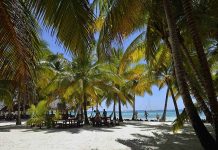
















"Travel is essential. Not just for the change of scenery, or even for discovering different civilisations. For me, travel is first and foremost an opportunity to establish human contacts with colleagues and students from all over the world, an opportunity to learn about different cultures and cultures.exchange and also send. It's fascinating, and I'm passionate about it.
I travel a lot. Mainly to give conferences. And that's the way it's been since the beginning of my university life, because before that, with my parents who came from a very modest background in AlgeriaWithout a car, we could hardly get around.
My very first trip was to sit the orals at theEcole Normalein Paris. Then, during my military service, I went to Colomb-Béchar to join Jacques Blamontwho made space physics experiments firing rockets - not military rockets, mind you. We were both students atAlfred Kastleran exceptional man. At dusk, when the rockets released a cloud of sodium, in this half-sun, half-shade, it was simply magnificent; and also an extraordinary discovery of the desert.
After the Nobel Prize, with six to twelve lectures a year, I did a lot of travelling!
Then, after defending my thesis, I went on to work for scientific conferencesthe very first of which was at United States was done in rather spartan conditions, let's say, as I was flown out in a military plane that took its time crossing the Atlantic. In fact, everything exploded after the Nobel Prizein 1997; and then, with an average of six to twelve conferences a yearI've done a lot! Jerusalem, London, AthensMunich, Moscow, Rio, Seoul... I've been everywhere, but there are three that particularly stand out for me, especially as the people who hosted me had organised some tourist visits in addition to the conferences. One was on theEaster Islandafter a conference in Santiago. You're looking at Easter Island. There are worse things, aren't there? For the other, it was in Indiaat Rajasthanwith a amazing hotelThe Lake Palace, a former maharajah's palace set in the middle of a lake. The marble, the rooms, the gardens... Everything was breathtaking. I still haven't come back from it; a timeless experience, out of everything.
Finally, I also remember a few cruises including one in Antarctica and the other on the Volga and the Neva. I was able to discover the North Cape, Spielberg... And as it was on the occasion of a scientific cruise with the participation of philosophersI met Michel Serresa man of great kindness, immense culture, and also a very great scientific curiosity. Truly an exceptional person. The other cruise was on the Volga and the Neva, with a boat that stopped everywhere, in inaccessible places, small villages, churches and wooden houses that I would never have had the chance to see otherwise.
There are the conferences, of course. But there are also fascinating experiences, such as discovering Einstein's manuscripts at the Hebrew University of Jerusalem moments when I can escapesometimes for half a day. I then take the opportunity to walk through the city streets, sit down at a table in a local restaurant, push open the doors of shops. In a nutshell, watching people live. "
KEY DATES
|
Bibliography : Under the sign of Light. Itinerary of a physicist in a quantum world. Ed. Odile Jacob. 21.90 euros.


