









Faced with persistently high oil prices, what are the cost areas where savings can be made?
Jean-Cyril Spinetta: Our cost-cutting plan is based on four levers: process optimisation and productivity gains, fleet modernisation which generates savings on fuel and maintenance, purchasing and external distribution costs. We also want to enter a new phase in the development of synergies between Air France and KLM, for example in IT. In total, we are aiming for savings of €150 million on top of the €430 million expected for the current financial year.
Doesn't this development call into question the modernisation of fleets?
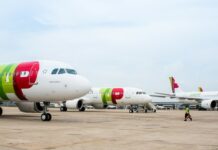
J.-C. S. : No, on the contrary! The massive investments - 14 billion euros - that we will have made between 1998 and 2012 to modernise our fleet have already enabled us to make major progress, both in terms of on-board comfort and fuel consumption. To put things in perspective, without this policy, Air France would have burned 850,000 tonnes more fuel in 2008, for the same volume of activity. As for the new generation aircraft, such as the Airbus A380 and the Boeing 787, they will consume less than three litres per 100 kilometres per passenger.
Will the rise in paraffin prices accelerate partnerships and shareholdings between airlines?
J.-C. S. : Yes, it's very likely. Look at what is already happening in the United States.
Will he also speed up the integration of Air France and KLM, beyond the pace set out in the 'Challenge 10' plan?
J.-C. S.: We are keeping the basic principle of the Group, with two companies and two brands. Within this framework, we are going to look for more synergies and implement parallel actions to reduce our costs.
Air France recently opened a dialogue with Veolia. What would be the logic of Air France's involvement in the rail sector?
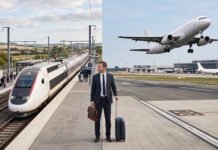
J.-C. S. : Due to competition from the TGV, we have had to suspend our services between Orly, Avignon and Rennes. We have limited the Orly-Lyon route to one flight a day. We have reduced our frequencies between Orly and Strasbourg. We have also stopped services to Brussels. As a result, we feel it is legitimate to want to replace these air services with rail services so that we can continue to offer a comprehensive package to our customers, whether they are travelling short distances or intercontinental journeys. This is why, in the context of the forthcoming liberalisation of passenger transport in Europe, Air France is examining the possibility of entering into a strategic partnership with Veolia Transport, with the aim of creating a new high-speed rail player on the European scene.
Bio express
Jean-Cyril Spinetta was born in Paris in 1943. He is a graduate of IEP Paris and ENA.
1981 Head of the Prime Minister's Information and Broadcasting Service.
1983 Director of Colleges at the Ministry of Education.
1984 Chief of Staff to Michel Delebarre (Minister for Labour, Employment and Vocational Training, then Minister for Social Affairs and Employment, and finally Minister for Infrastructure, Housing, Transport and the Sea).
1990-1993 Chairman of Air Inter.
1994-1995 Industrial Affairs Adviser to the President of the Republic.
1997 CEO of Air France.