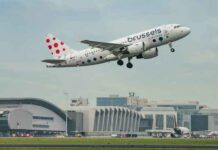


















2020 will go down as one of the most difficult years for Strasbourg airport. After the COVID crisis, which halted all traffic for two months, with the exception of medical, cargo and repatriation flights, Strasbourg is now faced with the restructuring of the Air France group with the cessation in the near future of HOP! flights to Marseille, Nantes, Nice and Toulouse. By 2022, Strasbourg will only have flights to Lyon and Amsterdam operated by the Air France-KLM group.
What are the consequences of Air France-KLM's withdrawal from Strasbourg?
Renaud Paubelle- The contraction in Air France's business is certainly not good news for us, but it's not a total surprise. In fact, the disappearance of four of the group's six routes does not represent a total loss for the airport. In fact, the regional airline Volotea has been developing a substantial service to Strasbourg for a number of years. In particular, it operates routes to Marseille, Nantes, Nice and Toulouse in competition with HOP!
Since 2018, Volotea has become the leading airline in Strasbourg with a market share of 41%.ahead of Air France-KLM with 36%. Twin Jet is also present on the Strasbourg-Lille route, having taken over a route previously operated by the national airline.
What could be done to compensate for the reduction in Air France-KLM's activities?
Renaud Paubelle- We could imagine code-sharing between HOP! and Volotea. This would enable Air France to maintain a commercial presence in Strasbourg and give Volotea the opportunity to strengthen its network with additional frequencies to the four cities I mentioned, as well as to Bordeaux. These routes have significant business and leisure traffic, generally in excess of 50,000 passengers per year.. This traffic can be explained by Strasbourg's outlying position in relation to the rest of France, which is a handicap for fast rail services. Could there also be an alternative with Transavia on routes with high leisure potential? This is a question we need to look into. We are actively looking for alternative solutions and all options remain open.
How did the resumption of traffic in Strasbourg go, and what is the outlook for the rest of the year?
Renaud Paubelle- The airport had no scheduled commercial flights for 88 days. There was a gentle recovery in June, which consolidated in July and became stronger in August. In figures, the airport recorded 10% of movements in June compared with 2019, 38% of movements in July and we are expecting over 50% in August. We still have little visibility for September and October. We're trying to rebuild a future day by day. It's an important issue because it affects our entire ecosystem. Strasbourg-Entzheim generates 1,200 jobs on the platform...
Could Strasbourg capitalise more on neighbouring Germany by attracting more passengers?
Renaud Paubelle- We already have a daily service to Munich operated by Lufthansa, which has been delegated to provide a public service to Strasbourg, a European city. The completion of the motorway bypass to the west of the city, with direct access to the airport, will improve access to the airport. It should reduce journey times to our hub and consequently facilitate passenger flows from Germany.