


















Atmosfair can do better, Transport & Environnement is satisfied with SAF: Air France-KLM has had mixed fortunes when it comes to assessing its environmental efforts. Building on what already exists, around a study based on CO2 emissions per passenger kilometre and airline fleets, the German NGO presented its Atmosfair Airline Index 2024 at COP 29 in Baku. It shows annual growth in energy efficiency of 1.4% emissions since 2019, below the ICAO recommendation of 2% and far from the 4% needed to meet the Paris Agreement targets.
While the Air France-KLM Group's airlines cannot boast as good a ranking as other major carriers such as LATAM, Ethiopian Airlines, Etihad or Iberia, all of which are in the top 15 with an energy class C, they have nothing to be ashamed of when compared with the American airlines or those of the Lufthansa Group. Transavia France on 22e and in class C, 38e rank for KLM - in class D -, 57e place for Air France with a score of 69.5, just a few points short of energy class D: "When I look at myself, I feel sorry; when I compare myself, I feel better".
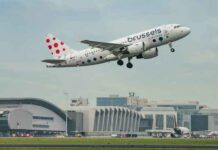
The major US carriers are between the 67e place for United and the 87e for Delta via the 82e for American Airlines. The same goes for in terms of European leaders, the AF-KLM group is doing better overall than ITA (67e), SAS (69e) or British Airways, in 74e position. As for the Lufthansa group, all its airlines have an energy class F rating, with Austrian and Brussels Airlines in 77th position.e and 78e ranks, Lufthansa at 97e and Swiss to the 100e place.
The results for Asian airlines are more disparate between top performers Vietnam Airlines (5th) and Hainan Airlines (20th)e), Cathay Pacific in Air France waters at 56e place, followed by JAL, Korean Air, Air China and ANA between the 70e and the 80e place, well ahead of Singapore Airlines, at 112e rank. The only big-name airline to score below the average - 43 - and to be ranked G. Also of note is the 46e Qatar Airways in this ranking and 88e of Emirates.
Air France-KLM, best rated for SAF
While the decarbonisation of air transport is currently being achieved mainly through a newer fleet and eco-piloting, sustainable air fuel will be an essential element in the energy transition of airlines in the future. With this in mind, the think tank Transport & Environment (T&E) praised Air France-KLM's involvementof the 77 carriers studied by its observatory - which together account for 75% of air fuel consumption - to obtain a grade of B. To reach class A, this additional step could be taken by converting e-kerosene purchase options, in the context of several projects, into firm offers or concrete investments.

Regularly highlighting its position as the world's largest purchaser of Sustainable Air Fuel (SAF), the Franco-Dutch group is reaping the benefits of this policy. Last September, for example, Air France-KLM revised upwards its SAF purchase agreement with TotalEnergies1.5 million tonnes of SAF over 10 years, in addition to its investment in the producer DG Fuels announced in the spring. These large-scale, secure purchases of biofuels made from used oil or agricultural and forestry residues mean that the Group can expect to reduce its emissions by 4% by 2030. In 2023, according to the T&E observatory, the airline group was already the only one to introduce more than 1% of SAF - 1.1% to be precise - in its energy mix. Only DHL (3.3%) did better.
Behind Air France-KLM, other airlines and airline groups stand out. relatively good pupils in the eyes of the think tank. United Airlines in particular, thanks to its agreement with Dimensional Energy, Norwegian, which has become co-owner of Norsk E-fuel, and IAG - the parent company of British Airways, Iberia, Aer Lingus and Vueling - which this year signed an e-SAF supply agreement with the start-up Twelve. Behind this leading quartet, Wizz Air, Air Transat, Southwest Airlines, Jet Blue and Delta also stand out, even if they have not fully secured their supply to achieve the reductions expected by 2035. Hence the overall grade of C.
For the rest, Transport & Environnement highlights the delay in the sectorThis is because 67 of the 77 companies have either not purchased SAF - or have purchased far too little - or have purchased biofuels whose production competes with food crops. When they have simply did not tick the SAF box in their decarbonisation plans. Companies in Asia, Africa and South America are lagging the furthest behind, while US carriers base a large part of their supplies not on biomass, but on food crops, which are not eligible for European incorporation mandates.
However, the sector is not devoid of lofty ambitions, with around twenty companies aiming to incorporate 10% of SAF by 2030, more than the 6 % required by the EU. However, T&E warns that, beyond the hype, " having a goal is not synonymous with adoption. At present, most airlines are a long way from achieving the targets they have set themselves." . In addition, the think tank points out that no company has set a specific target for e-kerosene, which does not compete with food crops and promises emission reductions of 90% compared with aviation fuel. " This fuel will have to be supplied to European airports from 2030, and in 2028 in the United Kingdom." notes T&E.
Whose fault is it?
But they're not the only ones getting a slap on the wrist. Whose fault is it? The companies or their suppliers? Carriers have long criticised the slow introduction of large-scale SAF production, with the prospect of lower prices. " Despite their dominant position in the jet fuel market and their significant investment capacity, the major oil companies are lagging behind in the production of SAF and the establishment of purchasing agreements, particularly in the case of e-kerosene" confirms Transport & Environnement.

BP, Chevron, Shell, TotalEnergies, ExxonMobil, Eni: although these "big oils" have a biofuel production capacity of 260,000 barrels per day, this still concerns the vast majority of renewable diesel. As for the e-kerosene market, the major energy companies are absent from it, unlike small refiners and start-ups, which do not have the resources to support demand and investment on their own. " It is important to focus on the role of suppliers and their reluctance to move away from fossil fuels." T&E argues.
The timing of Emmanuel Macron's visit to Saudi Arabia, which coincided with the unveiling of the Transport & Environment Observatory, was a welcome coincidence. the signing of an agreement between TotalEnergies and Saudi Aramco for the joint development and cost-sharing of a potential sustainable aviation fuel plant in the kingdom, based on used cooking oil and animal fat residues. " SAF is at the heart of our company's transition strategy, which is mobilising to meet the aviation sector's demand to reduce its carbon footprint." says Patrick Pouyanné, Chairman and CEO of TotalEnergies.
" With the increase in air traffic, it is becoming imperative to reduce aviation emissions by using low-emission alternativessaid Amin H. Nasser, CEO of Aramco. This is where major global energy companies like Aramco and TotalEnergies can play a role, by working together to help meet this need." . From words to deeds?