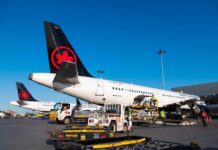
















Airline circles are once again up in arms about an idea launched by the new Michel Barnier's government to reduce France's abysmal deficit: increase taxes on air transport. There's nothing original about this idea, which often appears to be an easy way of getting money into the state coffers. Without really understanding what is at stake in overtaxing air transport, the victim of atonement in the name of the environment and social justice. In the minds of many officials, air travel is still considered a luxury, or at the very least, superfluous…
ACI Europe which brings together European airports, and Association of Airlines A4E (Airlines for Europe) have expressed their dismay at this potential measure.
A counter-productive measure
A4E and ACI Europe are therefore urging the French government to reconsider these plans, which do not appear to be based on a thorough analysis of the economic impact. The two institutions put forward the following arguments:
- The significant damage that these tax increases would inflict. Beyond the airline industry itself, a tax increase weaken the competitive position and appeal of France as a destinationThis has repercussions for the national economy and therefore for its citizens.
- Obstacles that these tax increases will create for the effective decarbonisation of aviation by reducing the sector's ability to finance the corresponding investments.
This is underlined in particular by Olivier Jankovec, Managing Director of ACI Europe. " The increase in aviation taxes is the epitome of short-term thinking in politics. If confirmed, this new plan would unintentionally weaken the competitiveness of French aviationThis would penalise citizens and reduce the sector's economic contribution. Each 10 % increase in direct connectivity leads to a 0.5 % increase in GDP per capita. The French government would de facto be opting for fast money at the expense of sustainable economic competitiveness." .
Olivier Jankovec continued: " This plan is all the more worrying given that the aviation sector is in the process of transforming itself in order to achieve ambitious net zero emissions targets. The recent Draghi report acknowledges that European aviation will need €61 billion each year to achieve this." .
It echoes Ourania Georgoutsakou, Managing Director of A4E: " This proposal to increase taxes on French aviation would be counter-productive. Diverting resources from the industry by increasing taxes ultimately means less investment in crucial decarbonisation measures ".
However, according to the daily Le Monde, the government has already decided on the increase. This would target the international solidarity tax.. Le Monde even suggests that the tax will rise from €60 to €200 for long-haul flights in business class and from €7.50 to €60 in long-haul economy class. As for business flights, each passenger on a long-haul flight would have to pay a tax of €3,000.
Reducing or abolishing taxes in Europe
Before making any decisions, the French government should take a look at what is happening in neighbouring countries. Even in countries where environmental awareness is much higher than in France, many governments have finally reduced aviation taxes, or even abolished them. Ireland, for example, abolished all ticket taxes in 2014. Then came Austria, which halved its tax on air travel in 2018. Italy also reduced its ticket tax in 2016.
The position of Swedenwhich has decided toabolish aviation tax from 1 July 2025. After analysing the effects of this tax, the Swedish government took the view that aviation taxes do nothing to promote sustainable aviation and in fact only harm economic growth, tourism and employment.
Four years after the release of Covid, passenger traffic in Sweden remains more than 20% below its 2019 performance. The abolition of this tax will therefore boost air traffic. Ryanair has already announced the opening of around ten new lines by basing two aircraft, one in Stockholm and the other in Gothenburg. This will result, for example, in the launch of a route Marseille-Stockholm…

The German counter-example
On the other hand, soaring air taxes in Germany are having an increasing impact on air travel. The doubling of these taxes since 2021 means that a flight to Germany is less and less profitable..
According to the BDL - Federal Air Transport AssociationA flight to another European country with a 180-seat Airbus A320neo medium-haul aircraft with a load factor of 85% costs between 4,000 and 4,400 euros. Against approx. 660 euros in Barcelona and about 2,200 euros in Rome. The increase in the air security tax next January will add a further €5 to the price of the ticket.
BDL points out that the difference in costs between Germany and the rest of Europe is forcing major European airlines such as Easyjet, Eurowings and Wizz Air to use aircraft based outside Germany.
Consequences for passengers: the closure of many air routes, which is increasingly handicapping businesses. As a result, Lufthansa has stopped serving many domestic and European routes - with no real alternative by rail or car. Not to mention the haemorrhaging of airlines from airports such as Düsseldorf, Hamburg or Stuttgartyet at the heart of powerful economic regions.
At the end of August 2024, the total number of passengers year-to-date at German airports, was still more than 16% lower than the 2019 figures. This compares with an average increase of 16% across Europe. An example for French politicians to ponder...
Updated on 6/10/24