











The Destination 2015 strategic plan is coming to an end. What is your assessment?
Rémi Bouysset - 2015 has only just begun, but we will close our financial year at the end of March, and we are already very pleased with our results. Our Destination 2015 plan identified three-year objectives, which we will have achieved in two years. All our indicators are in the green for the ten priorities we set ourselves, particularly in terms of our commitment to our customers and the motivation of our teams. The recent move of our French headquarters was part of this logic: to put in place all the conditions for a good working atmosphere, to facilitate communication and cooperation between departments, by shaping a new environment for ourselves, and by affirming a new corporate culture focused on customer service. I'm confident because we have very good teams, who I can count on and who our customers can count on.
Do the figures support this good result?
R. B. - We measure customer satisfaction with all our contacts (travel agents, travellers, travel managers). The results show that they are all highly satisfied with the welcome and quality of service they receive. The SLAs in place with customers are a means of monitoring the commitments we have made to them, but we don't need them to provide the service they expect. It's what we do, it's what we love to do. As a result, we have achieved very good results in terms of customer loyalty, to the tune of 99.9%, while at the same time attracting new businesses. For the last two years, our growth has been between 15 and 18%, and we should have a very good year in 2016.
What about after Destination 2015?
R. B. - We still have a year to go, but the next stage is already in place with the "Constellation 2018" project, which we plan to launch once we've drawn up an internal and external assessment of Destination 2015.
What's new in the Constellation 2018 plan?
R. B. - The priorities remain the same, with an increased focus on technology, and in particular integration issues (OBT, HBT, etc.). In my opinion, the agency's value lies on two levels: issuing tickets on time and optimising the travel programme. The sinews of war for the agency now consist in knowing how to integrate these solutions and create an effective ecosystem, by ensuring that the different tools work well with each other. Few players are capable of doing this today. I have no problem working with one supplier or another, as long as none of them pays me. As a tool integrator, the agency has a duty to advise the customer according to their organisation, their core business and their needs; we are there to provide our expertise so that the choice is appropriate and sustainable.

What else is new in the Constellation 2018 plan?
R. B. - Technology consulting will be strengthened as part of Constellation 2018. We are developing a systems integration consulting business. We support our customers, but also other companies who are already contacting us to take advantage of our advice and expertise in project management, even though they don't already use our services to book their business travel. This will be one of the main focuses of Constellation 2018, as will the move upmarket in terms of service.
Do you have any concrete examples of this strategy to move upmarket?
R. B. - We've already extended our opening hours, but we're going to move to 24 hours a day during 2015. Once again, we listen to our customers. And where we can, we anticipate needs so that we can respond as soon as customers are ready too.
What is Fraedom, the official launch of which has just been announced?
R. B. - It's a T&E [Travel & Expense] offering for SMEs faced with the problem of hand-filling expense claims. These small businesses end up spending a lot of money on processing costs. So we're offering them a turnkey solution, with a range of possible settings. There's a huge need in this segment. It will be rolled out progressively in various markets after the UK market, adapting the product to local specificities. So this will be part of Constellation 2018.
As well as consulting, are there any other new technology projects in the pipeline?
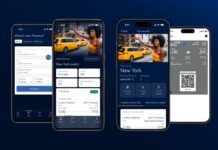
R. B. - I'm not sure that the added value of an agency consists in creating a miracle solution such as a mobile application. On the other hand, we are there to guide the developments of publishers to ensure that the customer has complete and effective solutions. So HRG is not going to launch its own application, but we are working to make this ecosystem coherent for the user.

A few months ago you were considering a possible tie-up with a hotel platform. Where do things stand today?
R. B. - We had to ask ourselves this question; it's what the customer expects of us, for the hotel industry, as for all the other solutions emerging on the market. We've talked a lot with the various players, but none of the solutions is perfect. So we prefer to maintain a consultative approach, based on the needs of the business, its culture and the profile of the user, to identify the best combination. The non-GDS hotel base exists in specialised platforms. We're not a booking factory, we offer much more. I don't want to fight on this terrain, which is very dangerous in terms of levelling down, given the remuneration levels of agencies today. Agency costs represent less than 2% of travel volume! Ten years ago, that figure was 5 %... So the crux of the matter is not agency costs.
What is the profile of an HRG customer?
R. B. - We have a very good retention rate. In fact, we carried out a study on this subject, and found that contracts are in the critical renewal phase after nine years in general, worldwide. What also unites our customers is their complexity. This is a good sign, because it shows the added value we can bring them. Customers also appreciate our sound and transparent business model. Our whole philosophy is based on lowering the average ticket price paid by customers. And all our customers can see that.
What is the added value of a business travel agency today?
R. B. - I see three: consolidation of data, countries and tools; integration of systems and travel policies within an ecosystem that is easy for business travellers to understand; and support, which is difficult to quantify because it all depends on our attitude and our methods... HRG is recognised for the successes it achieves in conjunction with its customers. In my opinion, the agency is the best coach. If it's seen as a 'simple' supplier, it can't work.

How do you see HRG in 2020?
R. B. - HRG was founded nearly 170 years ago, and has always been service-based. Over the years, and particularly with the integration of Fraedom, we will also become a technology company. In 2020, I see HRG as a viable balance between these two dimensions: a technology company with a strong spirit of service and support.
How do you view the new players in the market, such as Airbnb, Uber and Magic Event in France?
R. B. - That's what's so exciting about our industry: there's always something new. These solutions are here to stay, they are long-term offerings, but they are not yet well integrated into the distribution channels. Here again, before positioning itself, the agency studies the opportunities for its customers.
How do you feel about the more or less open ambitions of technology players in the business travel segment?
R. B. - I think this is a good thing. Of course, it can be seen as a threat, but the market is still huge. If Google wants to kick a fifty-year-old well-established distribution system into the long grass, so much the better! It will certainly create problems for us, but it will also create opportunities. However, Google Travel was created several years ago, and we have yet to see any tangible projects come to fruition. But it will come, no doubt about it.