














"While the economic recovery in 2010 has given a boost to business travel, optimal cost management, which was initiated during the crisis, will remain one of the key elements of the travel business".says John Baird Smith, Director of Air- Plus France. Against this backdrop, the new payment solutions are consolidating their positions to replace cheques and bank transfers in private and public companies. "They are the essential pillars of any business travel management policy because they ensure that all transactions are reliable".says Jean-Michel Kadaner, Chairman of Key Corporate Solutions. In this constantly evolving market, virtual cards are starting to arrive in France.
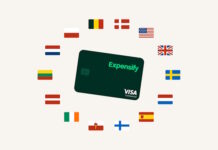
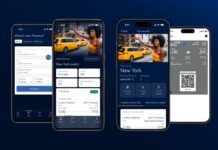
By the end of 2010, American Express was already offering companies a centralised payment solution for hotel expenses. "Keeping its Anglo-Saxon name, vPayment takes the form of a dematerialised solution, generating single-use card numbers on demand, with an authorised debit period and a predetermined spending amount".explains Stéphanie Laroque, Cards and Corporate Solutions Marketing Director at American Express.
To understand how it works, let's take the example of an assistant booking a hotel for the following week. Unless he immediately pays for the room using the traveller's corporate card, this assistant will not be able to make a reservation other than by using some form of payment. With this new solution, the assistant will be able to complete the process, using the virtual card as a guarantee and also to pay for the service when the traveller checks out. In our example, a week later.
As Stéphanie Laroque continues, "The advantage of the virtual card is not just limited to reservations, but also includes reporting. In other words, detailed, consolidated monitoring of hotel expenditure: information on transactions and settings, with up to four analytical references, three of which can be customised by the user when the card is created". With this process, companies and travel agencies can better control their expenditure, gain real visibility over these items and simplify accounting flows to limit disputes and the number of supplier accounts. Without a virtual card, they sometimes have to deal with up to one supplier account per hotel! In March, American Express Corporate Cards announced the integration of vPayment by BSI, the specialist in expense management for hotels and seminars, which offers companies a database of more than 140,000 establishments. Other partnership agreements in various sectors are expected to follow in the coming months.
BNP Paribas, for its part, is innovating by launching a virtual Visa card from 1 April 2011. This single-use card, which can also be generated on demand, is linked to a purchasing card account and can be used at any merchant in the Visa network. As a result, it is widely accepted around the world. "This payment solution can be used to pay for low-cost airlines, hotels and car hire".explains Laurent Sautré, Head of Commercial Cards at BNP Paribas. In practice, this single-use virtual card, which has all the characteristics of a traditional card, allows companies to limit the amount of the purchase, for example in a hotel network referenced in their travel policies. By avoiding the risk of fraud associated with a physical card, this process increases the security of the transaction," continues Laurent Sautré. And, by providing additional information when the virtual card is created, it also makes it easier for companies to reconcile and monitor transactions.
The advantages of the virtual card don't stop there, with the guarantee that you will only pay the price set out in your travel policy. In its range, the MasterCard payment network has a specific offer in this area. "With our InControl system, our partner banks that issue MasterCard cards can provide their corporate customers with a unique card number per transaction; this provides security while making it easier to capture data and trace each purchase."explains David Dechamps, Head of Products Western Europe at MasterCard.
 Greater transparency on commissions soon
Last February, Christine Lagarde, the French Minister for the Economy, Finance and Industry, commissioned three members of parliament to look into the fees paid by merchants for card payments. The aim is to improve the transparency of the fees charged to merchants by their payment service providers. And to reduce their fees. Ultimately, the mission also aims to develop card payments as a modern, secure and efficient means of payment.
A green card at Société Générale
Riding the wave of sustainable development, Société Générale launched the Environment card last November for companies and associations, with the support of Visa Europe. In practice, this business card is accompanied by the dematerialisation of statements sent to company employees, which can be consulted on our secure website," explains Élodie Trouillaud, head of corporate electronic payment marketing at Société Générale. For each payment made with this card, the bank donates 5 euro cents to the Office National des Forêts (ONF) to fund projects to protect biodiversity and reforestation". ONF, which will regularly inform companies and their employees about the projects supported.
Since the end of November 2010, all new Société Générale business card contracts have complied with the Environment programme. Customers who already have a contract can also join the scheme at no extra cost, while the annual fee for the new card, which offers both standard and top-of-the-range products, remains unchanged.
Payment cards
From SMEs to multinationals, using payment cards offers a number of advantages when it comes to managing business expenses efficiently. Starting with the elimination of expense advances and foreign currency cash, which means lower administration costs. Companies can also modulate cash withdrawal and payment limits. For example, a sales executive prospecting in distant markets, where hotels are expensive, will no doubt have a higher spending limit than a technician making short trips in Europe.
For business and corporate cardholders, this plastic rectangle is the key to paying business expenses in France and abroad. Depending on the issuer - Visa, MasterCard or American Express - the acceptance network may be more or less extensive. And, depending on its financial policy, the company can choose to debit either the company account or the employee's account, which specialists believe encourages greater accountability.
 Advantages of the company card: A passenger testifies
Hervé Frémy is sales manager at Sénidéco, a company specialising in decorative paintwork with annual sales of €4 million. He manages his expenses using a Visa International company credit card. "Mission Plus issued by Banque Populaire. Designed for SMEs, this card bears both the name of the company and his own name. Accustomed to business travel by TGV and low-cost trains in France, this executive makes one or two trips abroad a year, when he accompanies his manager to far-flung destinations such as India or Taiwan.
When he travels around France, he makes his own reservations and uses his card to pay for plane and train tickets, as well as hotel expenses. These expenses are debited from his personal account a fortnight after his expenses have been reimbursed. His trips abroad are organised by a travel agency and paid for directly by this family business. Every month, the accounting department gives him a copy of the statement of expenses paid by the card and drawn up by the bank.
So far, this traveller has had no need to make use of insurance and assistance cover. The only drawback is the flexibility of his payment card: Although it is issued for a two-year period, renewing it often proves problematic, as it takes almost two months," says Hervé Frémy. In the meantime, I have to use my personal card".. To pay for fuel used for business travel, the company has given him the GR Total card. This means of payment is debited directly from the company's bank account. Just like with the electronic toll card for motorways throughout France.
Serious guarantees
For the company, this solution is much more economical than an overdraft. Not only is an overdraft costly, it can also be challenged by the bank. Using payment cards allows a form of free credit, since expenses are debited with a deferment of around thirty days, or even one year. "super delayed of around sixty days. In addition, when it comes to insurance, and more generally assistance, the cards come with more or less extensive cover depending on the card. "standing of the card. Some cover the company, such as card loss and theft insurance; others cover employees, in the event of transport delays or through repatriation assistance.
In their ranges, banks offer Visa or MasterCard cards, two major players each with an acceptance network of 25 million merchants worldwide. Another market player is American Express, which is both a payment solution and an issuer. For companies with an annual turnover of less than €8 million, Société Générale deals with Visa - representing 80 % of cards issued - reserving MasterCard for larger companies, whether or not they are based abroad. To respond to international calls for tender, Société Générale can also rely on a number of alliances, notably with the Royal Bank of England and Deutsche Bank.
When it comes to business cards, our international offering is based on MasterCard and its Smart Data onLine software," continues Élodie Trouillaud. This invaluable reporting tool makes it possible to consolidate the expenditure incurred by the various global subsidiaries of a large group".. Previously aimed at large companies, Smart Data software is now being adapted to meet the needs of SMEs and SMIs. In a few months' time, MasterCard's partner banks will be distributing it more widely to their corporate customers. The Smart Data onLine reporting platform, which has been tried and tested for over five years, enables large companies to consolidate and analyse their financial data from MasterCard cards and other programmes," explains David Dechamps. In addition to integrating an expense report management tool, the new version of this software, Smart Data Generation 2, has also been redesigned to make it more accessible to SMEs with a fleet of around fifty cards"..
The banking networks offer solutions for monitoring business expenses via the Internet, both for companies and their employees. For example, Natixis offers a choice of three pre-established and modifiable expense management packages: basic, medium and premium. In this banking group, as in others, dashboards and statistical statements are invaluable tools for monitoring business expenses.
 A unique European offering
AirPlus International and BNP Paribas are major players in the European payment card market. BNP Paribas is the leading issuer of Visa business cards in France, accounting for almost 40 % of the market. With more than 20,000 business card customers, it has a department dedicated to business card programmes.
As for AirPlus, it continues to consolidate its presence among strategic accounts, with almost 35 % of CAC 40 companies as customers. This does not prevent it from offering a multi-sector, multi-market service: SMEs, public markets, major national and international accounts.
A centralised payment card
In France, two major players share the debit card market: AirPlus and Amex. These players are joined by Citibank and JP Morgan Chase in international tenders launched by major French groups. Generally available for travellers spending at least €50,000 a year, the debit card is based on a centralised payment system. "housed" in the travel agency with which the customer deals. Every month, the company receives a single statement summarising its transactions. With additional data defined according to its needs, it can easily break down its costs. Within a company, the data from card payments is used by different departments," explains John Baird Smith, Director of AirPlus France. The finance department uses the billing statement data to allocate expenditure to business travel; the travel manager, using the AirPlus Information Manager reporting tool, checks that employees are complying with the travel policy; and the purchasing department, using the same data, can prepare its negotiations with the various service providers"..
If a company changes its travel agency, it retains its previous data. It also happens that a company deals with several agencies. In this case, the "supplier" card can integrate its various expenses. In the standard format, the statements provide the following data: date of purchase of the trip, passenger name, ticket number, class booked, itinerary, trip costs. On request, AirPlus can provide up to nine additional items of data: cost centres, personnel number, project code, order number, accounting charge, departure date, internal account, destination. The cards also come with insurance cover. At Air Plus, for example, travel insurance covers all services paid for by means of an accommodation card used by employees, as well as external collaborators such as guests or partners...
Until 2005, Société Générale offered its customers the AirPlus card. We're looking into the possibility of reintroducing the sale of fully-fledged cards," explains Élodie Trouillaud. In the meantime, when we issue invitations to tender, we respond with selective debit, which has the advantage of debiting travel-related expenses, such as ticketing, to the company's account. Other expenses will then be debited from the cardholder's account"..
The purchasing card takes root in the public sector
Recently, the dematerialisation of purchasing has been gaining ground in the public sector. Ministries, local authorities and public companies are beginning to adopt the purchasing card according to their needs. For example, a hospital will be tempted to use it mainly to pay for expenses incurred over the Internet. The Ministry of Defence, which is in the process of increasing the number of cards to 5,000, is hoping to streamline payment times for its 200,000 suppliers! In the meantime, in large public organisations, the adoption of a purchasing card for cardholders requires a certain amount of political will, as well as the mobilisation of buyers and financiers.
Beforehand, you need to get informed, exchange ideas, talk and meet the experts... With this in mind, the Association of European Purchasing Card and Paperless Transaction Professionals (APECA) is extending the event this year, in collaboration with the Directorate General of Public Finances, "the tour de France of the purchasing card and dematerialisationwith three additional cities: Lille, Dijon and Sète. Covering some fifteen destinations, this touring promotion and information operation takes the form of interactive meetings, experience sharing and testimonials. It is supported by partners presenting their solutions. "The public sector's adoption of the purchasing card will generate management savings by streamlining the procurement process".says Solange Ligeret, General Secretary of ACOA.
Call for tenders
When a private company wishes to introduce or renew its fleet of corporate cards, or when a public entity is considering introducing a purchasing card as a means of payment, it is advisable to issue an invitation to tender. Once you have mapped your purchases, you can draw up specifications tailored to your company's needs. In this consultation of market players, the main criteria to be taken into account are the level of card acceptance, the extent of insurance and assistance cover, as well as the cost of the card subscription and the length of the deferred payment period. While the first two are somewhat fixed, there is room for negotiation on the last two. Depending on the volume of business generated by employees' cards, the contributions charged may be more or less zero, and here again, large private groups can obtain deferred payment terms of up to 60 calendar days. "When invitations to tender are issued, various criteria are examined: the definition of reporting, the cost of the fee, value-added services such as the choice of secret code by the holder, personalisation of the business card's visuals, for example in the company's colours".Very common in the United States, the practice of handing over or transferring goods to a third party is also very popular. "rebatewhich has crossed the Atlantic to France in particular, can take the form of a few per cent of the company's annual travel budget granted by the payment solutions distributor.
The specific needs of SMEs
Unlike large companies, they have little negotiating power. However, market players offer them a whole range of cards "business making business travel easier. American Express offers a card co-branded with Air France, adopted by more than 8,000 French companies. Once again, companies can choose between a payment centralised in their bank account or an individual payment debited to the cardholder's account. What's more, they benefit from a free 28-day deferred payment period from the date the accounts are closed. For employees, this card is a great way to earn miles for flights with Air France and purchases from the programme's partners. "I use the miles accumulated on my Air France KLMAmerican Express card to gain access to business lounges in airports and to be upgraded when I travel far away".says this frequent traveller, who is no stranger to emerging countries. By paying for their tickets with this co-branded card, holders are automatically entitled to travel insurance: accident, travel incidents, baggage and personal belongings, telephone assistance, full redemption of excess with Hertz.
In practice, the Air France KLM-American Express card comes in Silver and Gold versions. In both formulas, the card is free for the first year and comes with 3,000 welcome miles. What's more, the validity of the cardholder's balance of Flying Blue miles is extended by twenty months each time the card is used. If daily purchases earn additional miles, the Gold card is more generous in this respect. In addition, cardholders have faster access to the top level of the Flying Blue programme and to the advantages reserved for them: priority check-in and boarding, choice of seat and access to private lounges.


Special report - Business cards: going virtual
- Business cards - Going virtual
Meet Catherine Barby, Systra Travel Manager


