














Denver, Colorado, USA. A Western myth, reminiscent of the conquest of the West, covered wagons, bad boys and promiscuous girls living it up in saloons... Today, there is obviously little left of the era in the city of the gold rush (1849) for travellers arriving from Europe at the airport of what must be considered "the gateway to the Wild West".
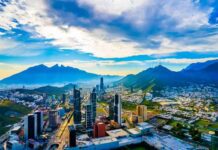
Denver: 2.5 million inhabitants, a high-tech metropolis with elegant post-modern buildings, a friendly city with packed bars, dynamic museums and music scene, and an overbooked cultural calendar. An exception in this part of the West, where cities tend to be big burgs. There's always something going on in Denver. Last June, several hundred artists took over Larimer Street, the oldest street in the city centre with its 19th-century buildings, to decorate its pavements with spectacular chalk paintings. Denver is no stranger to incentive events. It has a gigantic, high-performance convention centre: in June alone, more than forty meetings were held there, not including trade fairs. "But beyond our infrastructure, the city is very pleasant, sunny 300 days a year, with a vast pedestrian area planted with trees and a rich historical heritage", sums up Jayne Buck, vice-president of the Denver tourist office. "Our pubs brew wonderful beer! When it comes to shopping, it's paradise in a very relaxed atmosphere. We're the urban and trendy stop-off point on a trip to the Wild West, which will necessarily be more geared towards discovering nature, outdoor activities and the history of the pioneers."
Heading for Wyoming
An hour and a half's drive from Denver, after crossing an endless plain populated by antelopes, lies Wyoming, a name that conjures up memories of the heroes who trod its soil and nurtured many a childhood dream: Butch Cassidy, Davy Crockett, Calamity Jane or Buffalo Bill... Characters with a strong character who convey the marvellous mythology of the West. A decisive part of American history was played out here, the quest for an Eden that would ensure the country's eternal fortune, the conquest of the Wild West. An exploration and annexation made all the more perilous by the wall erected by the immense Rocky Mountain range and its peaks topping 4,000 metres. Not to mention, of course, the Indians...
Wyoming is half the size of France and, with the exception of Alaska, is the least populated state in the Union. With a population of 500,000, or around two inhabitants per square kilometre, it remains a much-loved and much-visited state among Americans, as much for its grandiose, oversized and religiously preserved landscapes as for the events that have taken place there. Of course, we make a lot of use of this heritage," says Rita Greene Bellardo, director of Cheyenne-based Wyoming Travel & Tourism. The state has a plethora of historic sites dedicated to immersing our visitors in all aspects of Western history."
Peaceful and welcoming, Cheyenne cultivates its provincial charm without worrying about its title of capital of Wyoming. With a population of 50,000, the same as Carcassonne, the town is sheltered from the worries of the big cities. This gives it plenty of time to carefully convert its finest Victorian mansions into cosy bed & breakfasts, and to refurbish the Art Deco lobby of its old railway station into a festive, private venue.
Like all the towns in the region, it began life as a tent city in the mid-19th century. At the time, it was one of the makeshift camps set up on the site of the transcontinental railway which, by linking the East to the Pacific coast, ensured the unity of the country. Used to store materials, these stopover towns were to concentrate the bulk of the workforce, made up of destitute immigrants, ex-soldiers and delinquents... an entire indigent population paid by the slingshot.
A true western
In these future stations, in the middle of nowhere, a small agglomeration of roughly squared-off log huts quickly sprang up, but neatly lined up along the main street, housing saloons and brothels that were quick to drain the meagre resources of the rail workers. Alcohol, gambling, prostitution: the trilogy of pioneering towns is set against a backdrop of destitution. The film can begin. "In terms of incentives, the operations are inspired by the life of the 'westerners'," notes Janet Cowley, director of conventions at the Cheyenne tourist office. The participants like to go out and meet the buffalo, they also love the cowboy songs and poems at the wake and, of course, they want to share the unique atmosphere of our big annual rodeo."
Cheyenne, the rodeo Mecca
More than just a Wild West town, Cheyenne has nurtured and promoted what has made it unique since 1897, the Cheyenne Frontier Days. This century-old event has elevated the town to the status of rodeo Mecca. At the end of July, some 2,000 riders ritually flock here from all over the country, as well as from Mexico, Argentina and Brazil, to compete for a week in front of over 100,000 spectators. Riding wild bulls and horses bareback, lassoing calves, wrestling a steer to the ground by the horns... The highly physical and dangerous events of the competition celebrate cowboy activity in a popular festival setting. "It's during this event that the incentive operations intensify", Janet Cowley points out. Having the best riders of the genre and great country music singers on site makes it possible to put on unique events."
This crazy week is punctuated by concerts in the centre of an arena surrounded by stands where a tide of saddles, lassos, boots, spurs and belt buckles floods in, some of them collectors' items costing as much as $1,000. "This is the biggest rodeo in the world", say the organisers, who are delighted to see that cowboy fashion has become very fashionable and that the bullriders who come here to share a million dollars in prize money are adored like stars.
During the parades inaugurating the competitions, when they parade in their chaps as embroidered as a toreador's bolero, the parallel with bullfighting is obvious. Their sport is just as risky, if not more so. Last year, the best-selling T-shirt at Cheyenne Frontier Days delivered this message: "Pain is fragility escaping from the body". So much for the mystique of the West.
On horseback, manager!
The road that leads north winds through the Big Horn Mountains, an eternally snow-covered range that peaks at Cloud Peak (4,013 metres) and continues into nearby Montana, the site of one of the deadliest battles in the history of the West, Little Big Horn, which ended in June 1876 with the annihilation of General Custer's 7th Cavalry Regiment by 2,000 Sioux and Cheyenne warriors.
On the outskirts of Shell, a town of 50 inhabitants in the Big Horn basin, a desert plain dotted with sparse grass and wild sage, lies one of the largest ranches in the region. The Flitner ranch, 120,000 hectares of which 2,500 are irrigated farms, is one of the properties that welcomes visitors and introduces them to the life of a cowboy. The Hideout, the website for top-of-the-range guest houses (see practical guide), specialises in corporate stays. The cowboy's way of dealing with people, horses and cattle," explains Peter De Cabooter, European manager of these programmes, "is a model from which we draw a lot of inspiration. The combination of phlegm and firmness, the respect for one's word, the determination and flexibility used to achieve one's goals in the training of broncos or the control of herds is a model from which many managers can draw inspiration. Immersing these groups with our cowboys in the work of the farm helps to weld a team together by sharing an ethos." Most of the major European and American companies that have stayed at the Hideout return regularly.
Brokeback Mountain
Heading east. At the foot of the Big Horn, Sheridan (population 15,000) takes its name from the general (1831-1888) who was a hero of the American Civil War and later a ruthless opponent of the Indians: "The more I see of them, the more I am convinced that they should all be killed, or kept alive only as specimens of poverty". But the town these days is more famous for being the setting for the film Brokeback Mountain. Annie Proulx, the author of the book from which it was adapted, is staying nearby. She tells her story at the Mint Bar, observing the glances exchanged between an old cowboy and a group of young people sitting around a pool table. Founded in 1907, the walls of this institution are a concentration of Western culture: a host of stuffed animals, magnificent period photos and an innumerable collection of cattle branding irons used on the region's ranches. Wyoming Travel & Tourism is delighted with the film's four Oscar wins this year, and is expecting a record number of visitors this summer. On the other hand, at the Mint Bar, whose neon sign depicts a horseman riding a bronco, this lightning fame is a source of irritation. Penny Becker, of Sheridan Travel, advises against asking customers what they think of the film. "In Wyoming, a deeply conservative state, it's not welcome to suggest that its ranches are run by gay cowboys."
Cody, Buffalo Bill and his five museums
Be that as it may, underneath their rough exterior, the cowboys we met were very attentive to the foreigners, curious to get their point of view on the region and enthusiastic about sharing their love of the country in a smoky atmosphere, with, with the help of alcohol, words sometimes knitted with disillusionment and nostalgia.
200km to the west, Cody (population 9,000) celebrates its local hero, William Cody (1846-1917), who went down in history as Buffalo Bill. The Buffalo Bill Historical Center, a remarkable centre with five museums, tells the story of the hero, as well as all aspects of daily life at the time, such as the need to be armed: between 1850 and 1860, no fewer than 170,000 revolvers were sold in the West!
The centre also traces the history of the Plains Indians, with poignant video testimonies from their descendants. It also features an exceptional collection of masterpieces by pioneer explorer painters, including George Catlin (1796-1872), who did much to gain recognition for the Indians. This museum, one of the most complete in the United States on this theme, is undoubtedly a must for visitors to Wyoming," notes Claudia Wade, head of tourism marketing for Cody County. After rafting down canyons or exploring the region on a mountain bike, this is the place to get into the spirit of the place and the cultural resonance of the Conquest."
Yellowstone, king of the parks
In the far north-west of Wyoming, Yellowstone National Park (600,000 hectares) enjoys unrivalled prestige in the club of US national parks. It's a status that's been earned the easiest way in the world, since Yellowstone is both a champion of geological curiosities, with its series of geysers and hot springs, and an exceptional zoo where you can meet bison and mouflons, deer and roe deer in the most strikingly unspoilt landscapes in the region.
Jackson, a holiday destination
Heading south, the road crosses the Grand Teton National Park and its snow-capped peaks dominating a valley dotted with lakes and crossed by the Snake River where herds of elk come to drink. Then there's Jackson, a posh ski resort of painted wooden houses grouped around a square, giving it an old-European feel, apart from its distinctly Western wooden pavements. The town has become considerably gentrified since its beginnings in 1897 as a trading post for the valley's first inhabitants. At that time, it consisted of a grocery shop with a dance hall upstairs, in the middle of a desert strewn with rocks. Today, Jackson's villas overlooking the Grand Teton massif fetch $10 million or more. Dick Cheney, the Vice-President of the United States, and Harrison Ford, among others, have made it their holiday destination.
"Summer or winter, the town is always busy," boasts Lori Hogan, communications director for the town's chamber of commerce. "People don't come here to show off, but to have some peace and quiet and enjoy the wilderness. What makes Jackson so successful is that it remains authentic in a magical setting close to Yellowstone and a reserve where thousands of elk come to hibernate. The climate is very mild, which allows groups to organise a wide range of outdoor sports or barbecues under the stars around covered wagons recreating the corral of pioneer times".
But Jackson's trump card is also its luxury boutiques and western art galleries. Or the Million Dollar Cow-Boy Bar, where Clint Eastwood filmed. With its stained glass windows recounting the early days of the Conquest, its buffalo horns, its stools made from horse saddles and its waitresses with tans worthy of Saint-Tropez, it is the most civilised stopover in the Wild West.
And that's where the film ends. On a memory of sublime nature, of a simple and welcoming America, of blue jeans, ankle boots and a Stetson. Cut.
Special report - Far West: the great green of cowboy nature
- Far West: the great green of cowboy nature
Hervé Duxin, Wyoming Travel & Tourism representative in France