




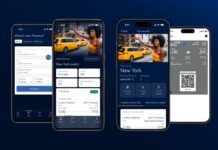

The Uber Rewards loyalty scheme has just been unveiled in the United States: when do you think you'll be able to launch it in France?
Franck Monsauret - I'd like it to be tomorrow! The United States is a pilot market for launching projects and new products. We're expecting a roll-out of Uber Rewards in France in 2019but the date has not yet been set. It's a project we're looking forward to, because it's a very popular product, particularly in the business travel.
Are you planning to extend this programme to the Business world?
F. M. - Several aspects of the programme will be of interest to the business segment. Whether the offer will be adjusted for business customers remains to be seen.
Will the new subscription system recently unveiled by Uber also arrive in France next year?
F. M. - I don't know yet: this is a pilot project, and we're going to have to analyse the initial results before we can decide what to do next.
Subscription and loyalty schemes have been around for a long time: why are these two new offers now appearing at Uber?
Franck Monsauret - I think that the need for a loyalty programme arose with the arrival of our new CEO just over a year ago. Indeed, these subscription and loyalty programmes are not new in themselves: other sectors have introduced them, and other players in the mobility sector have taken them on board. But we need to put things into perspective, given that the company is not even ten years old.

Is it also a way of building loyalty among a more volatile customer base, with an ever-wider choice of transport options?
F. M. - There have always been competitors, and I don't think that customers are any more volatile today than they were in the past. Our ambition is to become a multimodal hub integrating different modes of transport to get from point A to point B. Other mobility solutions are therefore potentially competitors, but can also be partners. Several thousand taxis are connected to the platform.
This multimodal platform is now turning its attention to other types of vehicle, such as scooters, bicycles, etc.
F. M. - It's a project we're working on, just like the self-service electric bicycles offered through Jump. The same goes for electric scooters: we have made a substantial investment in Lime, to the tune of 200 million dollars, and we have also launched our own scooters under the Jump brand in various US cities. Our objective is clear: to make mobility more responsible, by adding clean formats adapted to city centres to relieve traffic congestion. This is the same logic behind an offer like Uber Pool. Psychological barriers have changed enormously, and today it doesn't seem so strange to share a vehicle with a stranger, whereas it did a few years ago. This allows more people to be transported in cars and reduces congestion in city centres.
Should we also expect a launch of the new Uber Eats for Business service in 2019?
F. M. - Yes. Meal delivery is a huge market, and Uber Eats is the leader in France, with 42 towns covered. As companies have expressed a need in this area, we are putting a product in place. Uber Eats for Business is currently being tested with American customers, and we hope to be able to launch it rapidly in France, from 2019.
Uber and Uber Eats meet very different needs. How do the two services fit together? Will you also be in charge of the Eats for Business offer once it has been launched in France?
Franck Monsauret - Yes, because Uber for Business is a distribution channel for the various Uber products aimed at businesses. This of course includes mobility solutions, which represent a major challenge for travel managers as users generally don't wait for their company to adopt these solutions, but also meal delivery and many other areas.

Should we also expect to see an autonomous Uber vehicle in Paris?
F. M. - Will we ever see her in Paris? The answer is yes. But when? It's impossible to say. We are investing enormously in this area. There are so many things to test, to make progress on... We're not going to move tomorrow towards a generalisation of the autonomous car It will be a natural evolution. We have already driven more than 3 million km in autonomous cars in the United States, and more than 30,000 people have made journeys in these vehicles. After the dramatic incident in the United States, we resumed manual testing. This is a long-term project in which we are investing heavily, because we want to be part of this revolution. But it's still far too early to say when it will be launched, as there are still many technological and regulatory developments to come.
Between now and the end of the year, we will also be launching a product called "Vouchers".
What is your roadmap for the French market?
F. M. - The current priority for Uber for Business is to strengthen our workforce. We're in the process of doubling the team. There's also Uber Eats for Business: we're keeping a close eye on what's happening in the United States, and we think we'll be able to work fairly quickly on this. Between now and the end of the year, we're also going to launch a product called 'Vouchers': Uber vouchers that can be used to meet a specific business need, for example for the festive season. Companies can ensure that their employees get home safely by fully or partially funding their Uber journey. This can also be used to invite guests to an event. At the same time, we are also investing a lot of time in setting up partnerships. We already have agreements with Concur, Rydoo and Expensya, and we have others in the pipeline. The aim is to be integrated on all expense claim platforms to improve the user experience and save users a considerable amount of time.
You have signed an original agreement in Nice, linked to public transport. Could you do the same in other French cities?
Franck Monsauret - We'd love to. Generally speaking, we try to build the best possible relationships with local authorities. We share the same strategies: we want to make mobility more sustainable and responsible. A NiceWhen the bus lines stop, we allow users to return home at a fixed price. The project is supported by the city. Discussions are currently underway with other metropolises along similar lines.