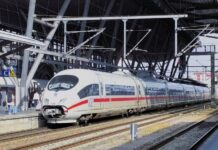
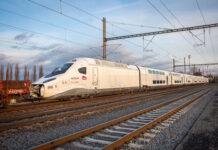
Following the green light given by the European Commission last March to the Eurostar/Thalys mergera new stage in this project has just been completed with the merger of the two railway companies within the holding Eurostar Groupthe name of the cross-Channel carrier, the brand name that will endure. If Eurostar Group's address is located at BrusselsHowever, each company will retain its current head office, located in London for Eurostar International Limited and in the Belgian capital for THI Factory SA (Thalys). The SNCF which was the majority shareholder in the two carriers now holds 55.75% of Eurostar Group's capital, followed by the Caisse de dépôt et placement du Québec (19.31%), the SNCB (Belgian railways for 18.5%) and funds managed by Federal Hermes Infrastructure (6.44%). Jacques Damasthe current CEO of Eurostar, has been appointed head of this new entity.
A merger to boost momentum
Launched in September 2019 under the code name of "Green Speedsix months before the start of the pandemic, this merger project was approved by the European Commission. mothballed for two years due to the collapse in traffic and the significant financial losses that ensued. It will be the hardest hit, with just 1.6 million customers in 2021 (compared with 11.1 million in 2019!), Eurostar only survived thanks to a £250 million (€290 million) recapitalisation by its various shareholders. This wedding is now presented as a shock treatment to hope to bounce back with a target of 30 million passengers by 2032, compared with 19 million for the two companies in 2019. In particular, new routes will be developed to achieve this particularly ambitious figure. Above all economies of scale will be achieved by pooling the high-speed train fleet and even the cabin crew, through the merging loyalty programmes and the introduction of a single IT system and a single booking tool.
Business traffic still struggling
Unlike leisure, the business segment is the slowest to recover from the health crisis. Firstly, for Eurostar, because of thevideo-conferencing boomand formalities for entering the UK which have remained very restrictive for a long time, the departure of many European workers since the start of Covid and the effects of Brexit on the City.
Customers still have to wait two or three years before seeing the initial commercial impact of the birth of this new Eurostar. Marketing campaigns and fare offers under the single Eurostar brand will be introduced to boost traffic and get passengers back on the trains. L'environmental aspect will also be promoted to business and other customers.
But in the meantime, clouds could be gathering over the tracks linking Paris and London. Jacques Gounon, the boss of the Channel Tunnel (Getlink, formerly Eurostar), has announced his intention ofacquire 10 high-speed trains in order to lease them to a new entrant capable of generating 2 to 3 million passengers a year between the two capitals. In this case RenfeSpanish Railways, which is making no secret of its ambitions and has just opened an office in Paris.