




















Shocking! A private club in London is now open for business. There are even rumours that this gentlemen's club, where business discussions are traditionally forbidden, may even welcome women! Is there something rotten in the kingdom of members' clubs? Let's put it this way this crime of lèse-majesté is right up there with the times. Its author: Michael Achenbaum, an American - perhaps that explains it - who is already well known at New York for the trendy Hotel Gansevoort.
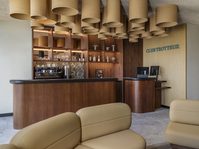
This time, it's an ultra VIP establishment that he opened earlier this year in London's upmarket Shoreditch district: The Curtain. As well as its rooms and restaurants, which are accessible to all for a few hundred pounds per night or per meal, the hotel has a private club that clearly targets the world of fashion, media and advertising, with its rooftop pool restaurant, night bar and dance floor for live musical performances. "We don't care about wealth or status. It doesn't matter who your parents are. We expect our members to have one thing in common: a creative spirit"says the hotel.
Digital Bohemia
From October, this creative spirit will be able to express itself in a more direct way, in a coworking space on the ground floor of the club. "The Curtain is not an establishment with a one-size-fits-all approach to design and would be placed like this in Shoreditch.explains Michael Achenbaum. On the contrary, we are both a hotel and a members club designed for local customers. Coworking spaces are very popular with the mediaWith the growing number of people working in the tech and start-up sectors, it seemed obvious to us to offer this kind of venue to people who are used to working in their own city without being at their desk."
In its own way, resolutely elitist and trendy, The Curtain is taking part in a movement that is still limited, but very real: the participation of hotels in the evolution of mobile workingAt the same time, the gentrifying districts of major cities are becoming full of places that are both business-like and relaxed. In fact, it's the presence of co-working spaces that tells you that a hotel is truly in tune with the times. Mama Shelter, 25Hours, Yotel, The Hoxton hotels, 9Hotel Collection, Sir Hotels in Europe, Hotel Jen in Asia, Zoku and Lyf long-stay concepts: the list goes on and on. lifestyle brands riding the current trend. With their designer frames, cutting-edge atmosphere and laid-back lobbies, they are the perfect competitors. established players to attract mobile executives. All the more so as these hotels are aimed at the same clientele: freelance professionals, start-ups and other creative freelancers.
Pioneering spirit
Back in 2014, the Hotel Schani in Vienna was one of the first to embark on this adventure. Designed in partnership with the German Fraunhofer research institute, which specialises in the economy and organisation of work, the hotel's aim from the outset was to "make the most of the opportunities offered by the Internet".to integrate the coworking concept into the hotel industry"This is what Stefan Rief, head of the Fraunhofer IAO's 'Workplace Innovation' centre of excellence, explained at the opening. This ambition was also in response to a real demand, revealed by a survey showing that 46 % of managers regularly worked in hotels during their trip, but would like the chance to do so in the lobby, in the midst of hotel life, rather than alone in their room. "As business travellers are one of our key customers, we wanted to exceed their expectations with a dedicated coworking lobby, while giving them the opportunity to interact with local entrepreneurs."said Benedikt Komarek, General Manager of the hotel at the time.

Opened this year in the XIV districte arrondissement de Paris and the latest addition to the Elegancia group, the BOB Hôtel - BOB for Business on Board - has also been designed directly to meet the needs of homeless professionals, with communal areas filled with individual tables, tables for four or six people for meetings, and alcoves for more discreet meetings.
After several years in the top-end hotel industry, Paula Gomprecht joined Serendipity Labs, an American specialist in coworking spaces. She
underlines the advantages to be gained from this development: "The hotel industry needs to be at the heart of this new range of workspaces. If you are a company director, your mobile executives need to have access to safe and secure places to work when they travel. If you're a freelancer, you need a professionally equipped place to welcome partners and meet clients.".
The message has been received by this new generation of hotels, who see several advantages to be gained from the boom in mobile working. Starting with offering their residents a more fashionable setting for fulfilling their professional obligations than business centres, which are a little old school and often hidden away in the nooks and crannies of establishments. "The quality of travellers' work declines when they work in their rooms"This is what John Arenas, CEO of Serendipity Labs, says on his company's blog. However, even more than residents, it is the local clientele that these places are aimed at. By attracting neighbouring entrepreneurs, the hotels find a way to liven up lobbies and bars that often run dry in the middle of the day, while at the same time injecting a new energy into them. a "neighbourhood life" spirit which is perfectly suited to these establishments, which are right at home in their town and right in their time.
Welcome to the club
With its The Commons Co-Op offer, the Virgin in Chicago invites professionals in the capital of the Midwest to turn the hotel into their office, meeting room or private dining room by using The Commons Club lounge during the day. For a monthly fee of 55 dollars, they can go from libraries to lounges while benefiting from adapted equipment such as a wireless printer or flat screens for projecting presentations and organising video conferences. For their part Hoxton hotelswhether they're in London or Amsterdam, are putting available to business nomads long tables lined with iMacs. And all for free, with no need to buy anything. Although, of course, that's not forbidden! The result is hotels that are bustling from morning till night, and all the more attractive because of the knock-on effect.


Walking through hotel doors may not yet be the norm in France, but the ongoing transformation of the world of work could change habits. At the C.O.Q., a small design hotel in the 13th arrondissement of Paris.e In the Paris arrondissement, breakfast tables are transformed into work tables in the afternoon, as regulars come to put down their laptops in the friendly setting of a dining room with sofa and fake fireplace. The C.O.Q. - for Community of Quality - is far from unique in the capital, since Air Office, a platform for booking workspaces in hotels launched at the end of 2015, now has 70 partner establishments in the Paris region and intends to reach the 200 mark at the beginning of 2018 by expanding throughout France. In all these establishments, Air Office offers its users - the Freeworkers - a package including at least WiFi and hot drinks for five euros an hour per person, plus a 20 % discount on certain services.
"Most hotels now offer high-quality WiFi, comfortable spaces that also provide a degree of privacy, and water, coffee and tea... in short, everything that traditional coworking spaces offer their members."says Arnaud Régnié, co-founder of Air Office. Among the freeworkers, 25 % are entrepreneurs, 50 % come from large companies such as BNP Paribas or Deloitte, which have set up their own freelance teams. flexible office policiesThe rest is made up of freelancers, journalists and managers of provincial SMEs. "Por them, office space in Paris is too expensive and traditional coworking spaces don't allow them to go here and there, as and when they want."says Arnaud Régnié, who adds that "70 % of the time, the requests concern small meetings of three or four people for two hours, nomadic work in 20 % of cases, and the remaining 10 % relate to internal company meetings in a setting that is out of the ordinary."
Many large chain business hotels, used to seeing business travellers working and meeting in their lobbies, are also coworking without realising it, or at least without saying so loud and clear. Others have a more formalised approach, like the Easywork concept launched in 2014 by Mercure and Novotel, which is now established in around ten establishments in France. "In the past, the bars at Novotel and Mercure were already used informally by mobile executives who came for a coffee to work between two meetings or while waiting for the train.says Frédéric Noblet, general manager of the Novotel Lyon Gerland Musée des Confluences. But it was far from a win-win relationship. The hotelier had the feeling that travellers were just coming to enjoy the space without any compensation. There were therefore two solutions: either the radical one of removing the electrical sockets, or, on the contrary, adapting to this state of affairs. I used to manage the Novotel Lyon Part Dieu and we added sockets and phone chargers, displayed train timetables directly and set up a real reception area, all for €20 a half-day. People were reluctant at first, but then they were won over. This space sees 70 to 80 people a day. I've also integrated the Easywork concept into the Novotel Lyon Confluence, in a smaller space because we're not next to a station. We're meeting a real demand. People come for an appointment or a meeting, stay to work and then have lunch or enjoy the swimming pool."


Coloc' business
These examples show that the hotel industry is well placed to position itself in the following areas a booming sector which, according to some estimates, could account for 10 % to 20 % of workplaces in France in five years' time, compared with 2 % today. Some of the big names are not hesitating to capitalise on their reputation to launch their own coworking space brands, both within hotels and, more often than not, outside them, like Mama Shelter with Mama Works or SoHo House with Soho Works. On the lookout for the latest trends, the AccorHotels group is also betting on the boom in nomadic working and on the need for more flexible working arrangements. has joined forces with Bouygues Immobilier to develop its Nextdoor concept as part of a joint venture providing for a total of 80 Nextdoor spaces by 2022 in France and Europe, with a development rate of 10 to 15 openings per year.
At the same time, others, such as WeWork, are moving in the opposite direction. Recently set up in Paris, this global specialist in coworking has quickly made a name for itself with its loft-style workplaces, which are extremely stylish and warm. Building on its success, last year WeWork launched the WeLive residential concept in Washington and New York. At 110 Wall Street, the building devotes its first seven floors to coworking and the other 13 to coliving, with 45 residential flats for rent by the month or for a few days. A sort of big coloc' with a start-up spirit.
The original version of coworking
While most hotels see their coworking spaces as places where travellers and nomadic professionals can spend a few hours and ease their loneliness while working in a friendly atmosphere, others are pure coworkers, much closer to the spirit of the origins of these creative communities. Very active in the community life of Saint-Ouen, the Mob HotelKolkhozita, located near the Paris flea market, acts as an incubator and has a large room in the basement with workstations that can be rented by the month for talent from the 93. The name of the place is totally in keeping with the tone of this movement that is both collaborative and revolutionary: Kolkhozita.
For its part, the Dutch chain The Student Hotel is developing a campus concept, which recently appeared in Paris, not far from the La Défense business district. Halfway between a student residence and an extended-stay hotel, while also offering rooms for one or two nights, the Student Hotels target business travellers as much as students taking part in the Erasmus programme, but also welcome freelancers and local entrepreneurs in specially equipped workspaces. Building on this, the hotel group has decided to go even further by creating a real community. The group's flagship hotel, the Student Hotel Amsterdam, has developed a vast space called TSH Collab, combining flexible workspaces and real offices, mini meeting rooms and an auditorium, as well as a restaurant, a huge fitness centre and an Olympic-size swimming pool. The result is a sort of Spanish hostel, where new ideas are exchanged between local start-ups and up-and-coming talent.
Special report - Trend: hotels in coworking mode
- Hotels in coworking mode
Interview with Jérémie Trigano, CEO of Mama Shelter
