













Flight plan
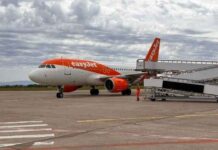
Air Europa flight from Orly-Ouest, similar to the one taken by the participants. Departure at 9.55 p.m. Flight time: 1 hour 40 minutes. Air Europa, a scheduled airline and full member of Skyteam, operates 4 direct flights a week from Paris on board Boeing 737-800s. The route follows a meridian line over Perpignan and Gironne. Palma airport is 20 minutes from the city to the east and from the Hilton hotel to the west.
Tel.: 01 42 65 08 00 / Internet: www.aireuropa.com
The hotel: Hilton Sa Torre Mallorca
Since u ver the last ten years or so, Mallorca has been converting its historic heritage to offer a more upmarket and authentic quality of accommodation. The Hilton Sa Torre Mallorca is one of these successful projects. It is a finca (former stately home) whose foundations date back to the 14th century. Remodelled over time, it has retained its Gothic façade and paved patio, around which are arranged the finest rooms, lobby, restaurant and bar. Its garden is home to an ancient windmill and a superb, unconsecrated chapel used as a venue for various receptions. But this property of several thousand hectares will especially baffle those who saw only beaches and gregarious behaviour in the great Balearic Islands. Situated in the middle of the countryside, between olive groves and wheat fields, Sa Torre enjoys exquisite peace and quiet. Not a building in sight, not even a chiringuito (straw hut).
Absolute tranquillity to enjoy its 90 rooms, spa, swimming pools, tennis courts, conference rooms and, why not, its football pitch.
Hilton Sa Torre Mallorca
8, Camí de Sa Torre, 07609 Llucmajor, Mallorca
Tel: +34 871 963 700 / Fax: +34 871 963 701 / Internet: www.hilton.es
Sóller: like the Belle Époque
 A journey within a journey. This is the town of Sóller, the orchard of the Balearic Islands, long recluse in the natural shelter of the Serra d'Alfabia mountain range. A unique town that owes its fame, and also its wealth, to the cultivation of oranges. During the first half of the twentieth century, the town's trade gave it its most beautiful features: modernist buildings, opulent fincas and its pride and joy: a unique railway.
Inaugurated in 1912, the ferrocarril linking Sóller to Palma has remained unchanged for a century. Dressed all in wood, it flirts painstakingly at 40 km/h, winding its way through fields, gardens and villages. Taking it means reconnecting with a strange sensation of slow travel and rediscovering that sense of time passing. It also means rediscovering the sound of the steel wheels rubbing against the rails, and coming to terms with the jolts of old public transport that has now disappeared.
Miró, thirty years in Majorca
An adopted child of the country, the Catalan painter spent the last thirty years of his life on Mallorca. And Mallorca never forgets its artists. His work is dotted around the island, from the decoration of the Sóller railway station to his monumental ceramic painting facing the Seu in Palma. And what can we say about his foundation, which has nothing to envy the one in Barcelona, with its marvellous studio designed by the Catalan architect Josep Lluis Sert?
Valldemossa: in memory of George Sand
Valldemossa has a curious destiny, owing its worst critics and its fame to the same person: George Sand. After all, it was here that the author of La Mare au diable lived with Frédéric Chopin for a few months in 1838. Encountering the monastic rigour of the locals, she paints an unflattering portrait in Un hiver à Majorque. Meanwhile, Chopin was composing, comfortably installed in one of the wings of the Carthusian monastery that had opened its doors to them. And history was being written before the eyes of this little world, which had no idea of the tourist craze it would generate a century later. For nothing has changed in the adorable village, or in the couple's flats in the Carthusian monastery, from the Pleyel piano to the composer's scores as relics. His sonatas still seem to hover over this haven of peace.
Palma: hidden beauty
Within the colourful walls of its vast historic quarter, Palma encloses a labyrinth of narrow streets, squares and buildings marked by two thousand years of history. But the charm that emanates from this stronghold is entirely Spanish. The triumphant Spain of the Catholic kings who built its most imposing edifices (the Almudaina royal palace, the cathedral, the Lonja). The daring Spain that gave birth to Miró, Gaudí and Catalan modernism. The proud, noble and intriguing Spain of Velázquez, which gave Palma one of its distinctive features: its patios. The casco viejo is full of these courtyards set in palaces renovated in the 17th and 18th centuries by the local aristocracy. Often hidden behind heavy wooden doors, they have recently been opened to the public. Renaissance or Gothic in style, they boast splendid staircases, lovely pools and sometimes astonishing sculptures. An open-air museum...
Gastronomy: the art of mixing
Majorcan cuisine is above all a story of encounters. Nearly a century ago, George Sand lived on nothing but pigs. From this island rusticity, Mallorcan cuisine today has no doubt retained only the best. Or rather, it has been enhanced by contact with travellers from all over Europe, taking with them a pinch of their local gastronomy. Of course, tapas remain tapas, and the inevitable sobrasada retains its strange flavour derived from a mixture of minced pork and chilli pepper, but the dishes are often subtle and varied. Fish takes pride of place on menus, and many chefs make a point of serving rotja (scorpion fish), pez de San Pedro (St Peter's fish), meru (grouper) and ratjada (skate), the last survivors of Mediterranean fishing. Over the last few years, the former cellars have been working hard to bring back a more traditional cuisine, somewhere between a popular tavern and a Michelin-starred restaurant.
Cathedral: from Gaudí to Barceló
The star of Mallorca! For six centuries, the cathedral - la Seu in Catalan - has stood proudly overlooking the bay of Palma, glowing with the golden reflections of its intense stone. A testament to the island's cultural diversity, it has endeavoured to evolve with the times, offering its choir to the creativity of Gaudí a century ago, and more recently a chapel to that of visual artist Miquel Barceló.
Pueblo español: to be privatised
On the outskirts of Palma, the Pueblo Español showcases a condensed version of the architecture of the Iberian Peninsula. It's a great success, with an almost life-size replica of the Patio de los Arrayanes in the Alhambra, the Palacio de la Deputació in Barcelona and the Torre del Oro in Seville. Each monument can be privatised for cocktails, dinners or evenings in an astonishing setting.
Hiking, between sea and mountains
Less well known is the fact that Mallorca is also a paradise for hikers. A mountain range almost 100 km long, culminating at an altitude of 1445 m; cirques, canyons and peaks skilfully sculpted by nature, and in the middle of it all, picturesque villages. All the ingredients are there. All that's missing are the rivers in the summer torpor. But the Mediterranean blue is never far away, because sea and mountains always make common cause on the islands of mare nostrum. The Mallorcans are so aware of this that they have been knocking on Unesco's door for several years to have the Serra de Tramuntana mountain range declared a World Heritage Site. For the time being, however, they are content to offer their visitors a few perfectly developed nature parks, such as the Puig de Galatzó reserve. An island of greenery with caves, steep paths and waterfalls. Another Eden.
Sailing
Rafael Verdera allows you to sail to the south-west of the island, its wild coastline and the Dragonera Island Nature Park. This venerable rig, inaugurated in 1841, has an incredible charm with its old ropes and the warmth of its brown wooden deck. It can accommodate up to 60 people for all types of receptions.
Tasting: the long tradition of Mallorcan wine
Virtually nothing remains of the Romans' time on the Balearic Islands. Nothing, that is, except the pleasure of eating and the evidence that this sunny land knows how to grow its vines. So, in a land where the olive tree is king, vines have taken pride of place: 1,500 hectares and two designations of origin, Pla i Llevante and Binissalem. The latter is the birthplace of one of the island's most renowned bodegas. That of José Lluis Ferrer. From powerful black reds to highly aromatic muscats... the Ferrer family grow only endemic grape varieties, monto negro and moll. And they have recently started producing an organic wine, a way of restoring the nobility of this bodega once frequented by Maria Callas and Ava Gardner.
Special report - Majorca: far from overcrowded beaches
- Majorca: away from the crowded beaches
Meet Marga Méndez, Director of the Mallorca Convention Bureau