














La SNCF has decided to review the Intercités night train services between Paris and the South West in France. Announced on 24 May at a Rail services monitoring committeeThis measure concerns night trains known as "The Pyrenean and "L'Occitanincluding the new night service Paris-Aurillac-Paris. Coupled with the night train to Rodez, the train will split at Brive-la-Gaillarde to serve the Lot and Cantal regions, with stops at Saint-Denis-Près-Martel, Bretenoux-Biars, Laroquebrou and Aurillac (arriving at 8.20am). Available from 10 December However, this sleeper train will only operate on Friday and Sunday evenings outside school holidays, and once a day during zone C holidays.
Due to track works, SNCF then announced that the Le Pyrénéen link to Cerbère would be operated from 10 December and for at least 8 years via the Mediterranean coast. From new stations will be served: Nîmes Centre, Montpellier Saint-Roch, Sète, Agde and Béziers. Another new feature is that the train to Lourdes will continue its journey every night during the summer period as far as Hendaye, stopping at Pau, Orthez, Dax, Bayonne, Biarritz and Saint-Jean-de-Luz.

France has long lagged behind in night-time services
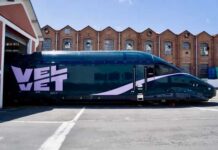
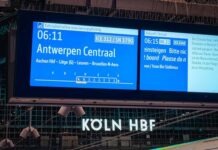
It was during his speech on 14 July 2021 that the President Emmanuel Macron is committed to relaunch night trains as part of its ecological transition. Only two services remained (Paris-Cerbère and Paris-Briançon), ten additional national lines are planned between now and 2030the Paris-Nice - the famous "Blue Train - and Paris-Tarbes were the first to resume service in 2022. Operated by SNCF Voyageurs, all these lines receive financial support from theStatus because they are structurally unprofitable. In order to reduce CO2 emissions from car and, above all, air travel, new sleeper trains are also expected to be introduced in Europe. ÖBB being particularly offensive with its star-shaped network from the Austrian capital as on the Paris-Vienne. This represents more than 20% of its business. On 25 May, the Dutch company European Sleepers inaugurated a night-time rail link between Brussels and Berlin three times a week. However, these national and international projects require significant investment. In particular, to find and acquire cars, which have largely been scrapped in recent decades, and to renovate them to bring them up to date. A prerequisite for attracting travellers.