
















You recently communicated on a trend: historic venues being repurposed to host corporate events. Is this really new?
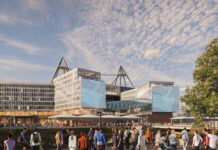
Laurent Gabard - No, not really. Personally, I used to work for an operator who, in Lyon with the Hôtel-Dieu, or in Marseille, would seek out iconic heritage sites to turn them into completely extraordinary hotels in the heart of the city. So this trend isn't necessarily new. But what is certain is that, at the moment, many places are being transformed. The prime example is the Cité du cinéma, which now officially hosts seminars and study days with a very sophisticated offering.
How do you explain this craze?
Laurent Gabard - In my opinion, there are two factors that combine. On the one hand, local councils and businesses want to revive abandoned monuments or places and create local jobs. On the other hand, there is an increasing demand for local events. As part of CSR, companies are moving closer to their sites. People are less often brought up to Paris; more things are organised locally. But above all, it is a deep societal trend. French people are very sensitive to the rehabilitation of places and the preservation of heritage. According to an Odoxa poll, 90 % of French people consider local heritage to be important, and 54 % believe that certain local monuments are under threat. The fact that a company organises an event in these places also contributes to local life and shows its employees that it cares about this heritage.
What criteria make a repurposed venue work well for corporate events?
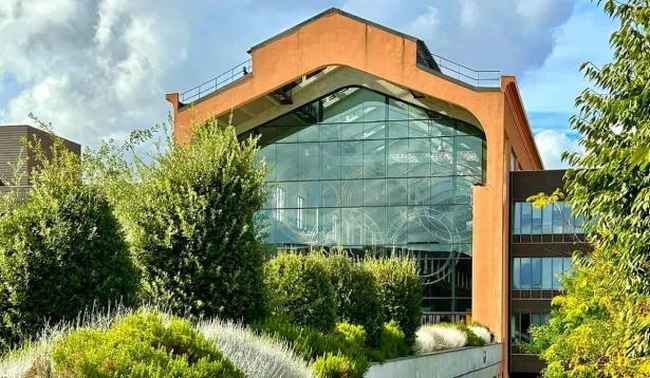
Laurent Gabard - The proximity to the city centre, obviously, the accessibility and the modularity, this ability to adapt spaces, to create sub-spaces for larger events. Audiovisual capabilities are also important: we increasingly need large screens, advanced scenography, sometimes with AI. And these venues generally offer large capacities. The Cité du cinéma, for example, can accommodate up to six thousand people – that’s incomparable with a city-centre hotel.
These places nevertheless have a history that involves constraints, particularly logistical ones...
Laurent Gabard - Yes, but that’s not a problem in itself. It’s mainly a question of budget. Today, architects are very skilled at carrying out these transformations, integrating constraints from the design stage. It’s simpler when you think about versatility and MICE from the start of the project. Also, in many of these projects, local authorities are very involved – town halls, departmental councils, tourist offices. These are local signatures, a way of promoting the destination. It brings real added value for the venue operator.
So are these venues more suited to institutional events?
Laurent Gabard - Not necessarily. We do a lot of events for local companies, in local venues. Business leaders in France are often very involved in Chambers of Commerce and local bodies – and these venues are naturally platforms for them. Generally, we tend to organise events for a hundred people or more. These aren't small study days, unless the venue has perfectly suited rooms.
Do older properties involve a higher price?
Laurent Gabard - Not necessarily. But these venues are often chosen for events with a higher added value, with more elaborate staging and technical resources. This comes at a cost. However, for a standard seminar, the price is often comparable to other types of venues.
How is Rejolt adapting to this trend?
Laurent Gabard - First and foremost, this is a response to our clients' expectations. We constantly monitor all upcoming openings. When a specifier logs into our platform, they immediately find all upcoming openings on the homepage, filtered by region and type of venue—hotel, event venue, team-building activity. We have openings listed up to February 2027. Novelty is a key element when choosing a venue, particularly for communications departments, large sales seminars, or product launches.
Is this trend also found on a European scale?
Laurent Gabard - Yes, absolutely. You find that in England, in Germany… Iconic venues are used a lot. I was recently reading something about the Antwerp Stock Exchange, for example, which is very popular for events. Museums and theatres are opening up more and more to events, with specific constraints but a real dynamic. It's the same everywhere in Europe. We are actually present in seventeen countries with over five thousand referenced service providers.
One final word on the current international context and its impact on MICE?
Laurent Gabard - I'd like to be able to say that I know exactly where we're going… We're not yet measuring the real impact of the current crisis. For now, we're not seeing any cancellations. Companies have made their budgets and are organising their events until June. But I think the situation will eventually impact budgets. The first indicator that will be scrutinised is the average spend per participant – this was already the case last year. The impact is currently much more immediate on individual travel than on events, because companies still need to bring their staff together.
