

















If flying taxis, announced with great fanfare for around 2024-2025, are struggling to take off, then robotaxis have entered a more down-to-earth reality. For some time now, the tech cradle of San Francisco has offered its streets to autonomous and electric taxis, including those from Waymo, Alphabet, Google's parent company. In China, Wuhan has established itself as a full-scale laboratory for the online search giant Baidu through its Apollo Go service, whose fleet in Wuhan has reached 500 vehicles in this key centre of the automotive industry.
Atlanta, Austin, Las Vegas or Los Angeles in the United States, Beijing, Shanghai or Guangzhou in China, but also Dubai or Zurich: business travellers passing through other global metropolises have been able to test these robotaxis, destined to revolutionise urban mobility. If, of course, they felt inclined to, as the advent of these driverless taxis is not without its hitches. Last April, over a hundred of Baidu's robotaxis suddenly came to a standstill in traffic, unable to restart due to a technical incident. In San Francisco, a similar mishap, but of a different nature, occurred in December 2025 to about ten Waymo vehicles, paralysed by an electrical failure that particularly affected traffic lights.
Stranded passengers, disrupted traffic: these glitches, widely shared on YouTube and social media, highlight the vulnerabilities of large-scale autonomous transport. Is this enough to scare off customers? Not necessarily. In the fourth quarter of 2025, Apollo Go announced a 200 % year-on-year increase in its services, totalling 3.4 million driverless journeys. Meanwhile, in the US, Waymo exceeded 500,000 journeys per week last May, according to a study carried out by Presenc AI.
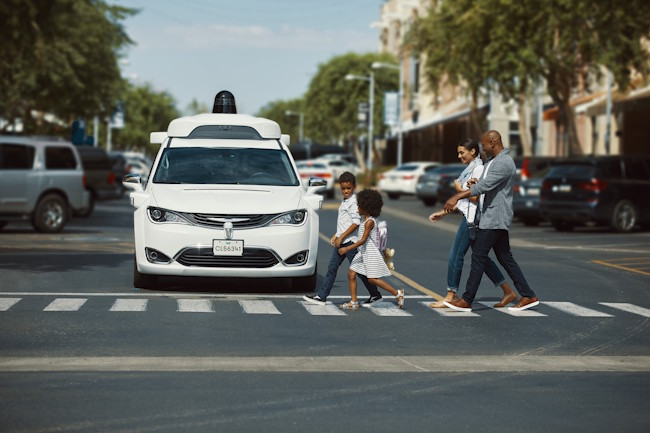
Yet, everything could have started better: a brief flashback to chaotic beginnings, with San Francisco as the setting. The first to receive authorisation in 2022 to operate a paid driverless taxi service, Cruise – a subsidiary of General Motors since 2016 – had to suspend its activity on the injunction of the Californian administration following an accident with a pedestrian. Once bitten, twice shy, General Motors, which has sunk over 10 billion dollars into Cruise, only decided to return to autonomous vehicles at the start of 2026, but no longer to robotaxis. Only to refocus on assisted driving for its models or for B2B uses in controlled environments, for example for logistics or mobility on campuses.
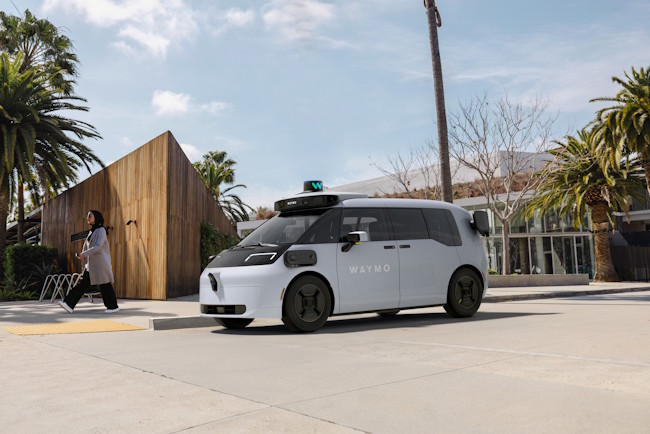
Meanwhile, Waymo, which had followed Cruise in launching its autonomous taxi service in the Californian city in 2023, had a clear field to expand its operations, only recently being joined by Zoox. This has laid the groundwork both within the city and beyond, with a fleet that now numbers 3,000 vehicles operating in 11 US states.
Waymo, Tesla, Zoox: three distinct technological approaches
Waymo is thus, by far, the most mature operator across the Atlantic, well ahead of Amazon or Tesla. It must be said that Elon Musk's company only launched into the race in mid-2025 with the unveiling of its Robotaxi service in Austin. A service that has its own booking app, but which only relies on… 44 vehicles. And these are deployed in Austin, but also in Dallas, Houston, Orlando, Tampa and more recently Miami. Indeed, the production of Cybercabs – two-seater vehicles with no steering wheel or pedals – which are intended to expand its network, only began on a large scale last March at Gigafactory Texas.
In the meantime, Tesla is basing its service on Model Ys that have been converted into taxis, which are still often accompanied by human supervisors on board. And its approach to the market is very different from Google’s. Whilst Google’s system relies on cameras and AI trained on billions of miles of data collected by its fleet of consumer vehicles, Waymo, by contrast, relies on a more complex architecture packed with sensors. Radar, lidar, cameras and high-definition mapping: all these high-tech safeguards enable Waymo to claim a 94 per cent reduction in serious accidents compared with human drivers travelling in the same areas.

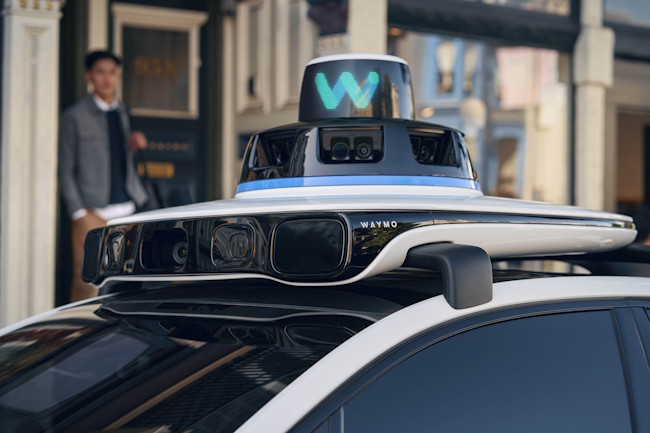
However, this undoubtedly safer environment comes at a price: according to an estimate by Morgan Stanley, reported by several specialist media outlets, the price per mile charged by Waymo to passengers, around $1.4, is higher than that of its competitors, being around $0.8 at Tesla, whose long-term objective is to lower it to $0.4, or even $0.2 per mile, according to Elon Musk.
Another ambitious concept, another ambitious player: that of Zoox, a start-up bought by Amazon in 2020. While Waymo and Tesla – at least for now – offer models that still have steering wheels and pedals, as required by US regulations demanding that a human can take control at any time, Amazon's choice is different. Its vehicles have been designed from the outset without a steering wheel, brake pedal, or rear-view mirrors. For the passenger, it has a futuristic London black cab feel, with two rows of two seats facing each other, but without a driver's cabin at the front.
The bold choice to break free from the constraints of classic vehicles has recently paid off. At the end of July, through a waiver, Zoox received authorisation from the federal road safety agency (NHTSA) to offer rides to the general public without the possibility of manual takeover. Zoox sees this as a reward for its approach. rigorous on security The NHTSA guarantees ‘rigorous oversight of the application of the rules’, whilst ‘removing unnecessary barriers to innovation’ » according to NHTSA administrator Jonathan Morrison.
With this necessary preliminary step now complete, Zoox will be able to begin its large-scale roll-out. Whilst its current fleet comprises just 105 vehicles, production is expected to reach 2,500 vehicles a year over the next two years. This is because, unlike Waymo – which handles the technology but relies on partnerships with manufacturers such as Hyundai, Jaguar and the Chinese manufacturer Zeekr, Zoox’s robotaxis will all be produced at the company’s own factory, due to open in 2025 in Hayward, California.
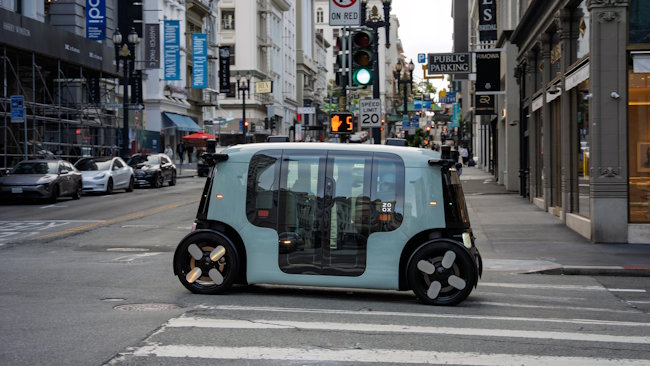
Whilst the roll-out of robotaxis in the United States was initially carried out cautiously under the supervision of the US authorities, neighbourhood by neighbourhood and city by city, their development is now set to accelerate. Zoox, having already launched in Las Vegas and San Francisco, is now heading to Miami and Austin, and will no doubt later expand to Atlanta, Dallas, Los Angeles, Phoenix, Seattle and Washington. Tesla, for its part, is targeting other cities in Florida in addition to Miami, Orlando and Tampa. Meanwhile, the market leader Waymo is expected to launch in around twenty US cities, with trials also underway in New York.
Heading for London, Tokyo or Dubai
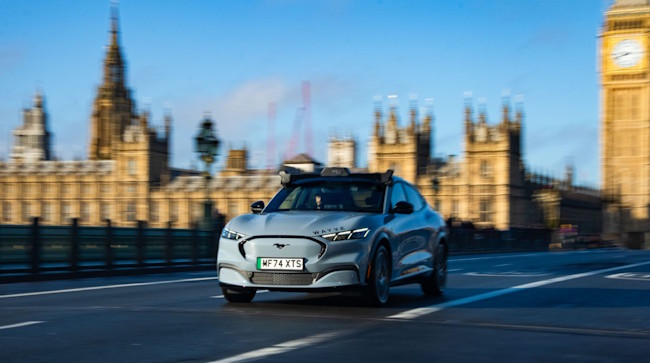
But Waymo also plans to expand beyond its home turf, with its operations in Tokyo and London currently undergoing testing. “ Londoners told us they wanted to use Waymo to get to nights out, leisure activities and the city’s airports ", states the Google subsidiary on its blog, believing it will complement London’s transport network with " a convenient, reliable and fully electric private hire service "which allows its guests to enjoy a peaceful setting" to catch up on their emails, relax or make a private call. "
It has taken some time to map the streets of the British capital – not always discreetly, as residents of the Spitafields neighbourhood have been woken up on several occasions by the sirens of a Waymo Jaguar stuck in a cul-de-sac – Waymo’s service is expected to launch shortly, perhaps as early as this coming September according to information released earlier this year. But the Google/Alphabet subsidiary is not the only one setting its sights on the streets of London. Waymo will face competition not only from Uber’s ambitions – as part of a partnership with Wayve, which specialises in AI-driven autonomous driving – but also from those of its major Chinese rival, Baidu.
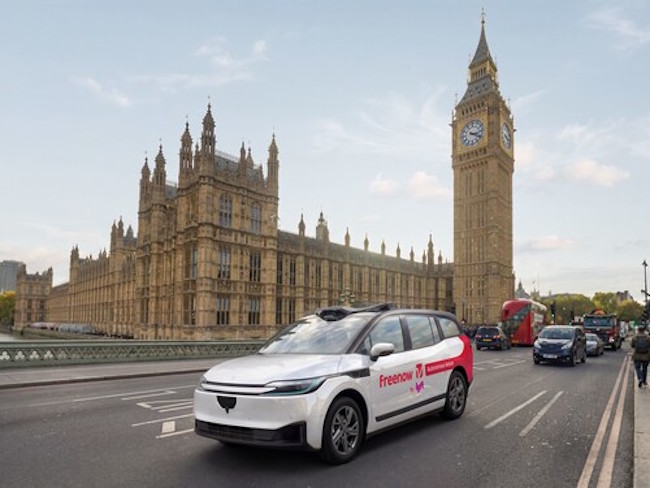
Its Apollo Go service did indeed enter the trial phase at the end of July, with its launch in London taking place in partnership with Freenow by Lyft. Whilst Baidu’s RT6 robotaxis have already been practising driving on the left in Hong Kong, Apollo Go’s public services in London are not expected to begin until 2027, pending approval from the UK authorities. But Nan Yang, Baidu’s vice-president and managing director of the group’s Intelligent Driving international division, is already delighted: “ Testing our autonomous fleet in one of the world’s most iconic and complex urban environments demonstrates the maturity of our technology. By combining our cutting-edge autonomous driving technology with the local operational expertise of Freenow by Lyft, we are officially moving from vision to reality, together. "
Whilst Waymo and Baidu are set to begin their global expansion soon, another Chinese player, WeRide, is arguably even further ahead. Alongside its fleet of 800 robotaxis in China, which operate in certain districts of Beijing and Guangzhou, WeRide launched its first paid rides in Dubai in April. This was done in partnership with Uber, with the two companies committing to deploying at least 1,200 robotaxis in Dubai, as well as in Riyadh and Abu Dhabi, in the future.
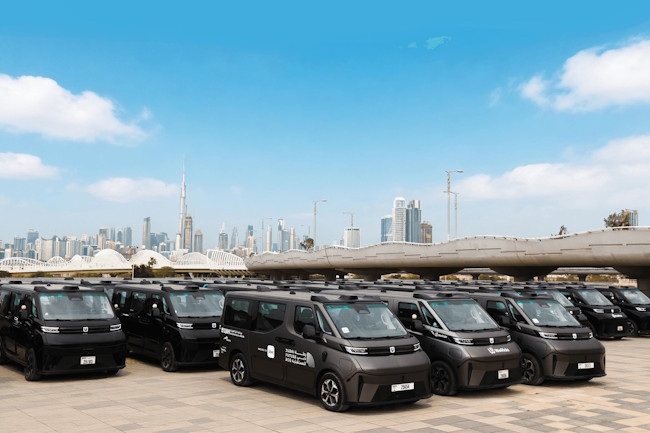
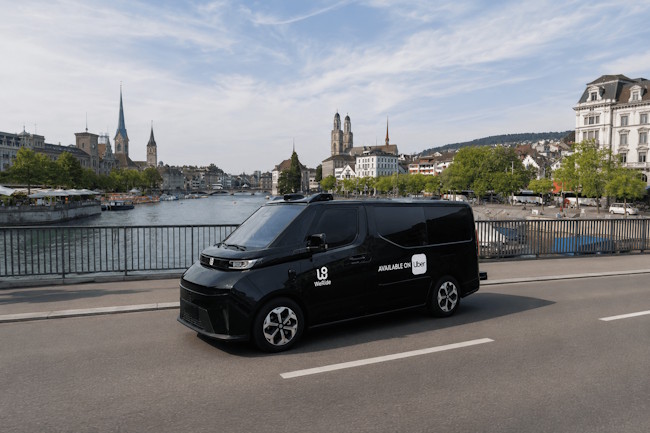
Whilst Uber holds a stake of nearly 6 % in WeRide, this partnership also saw the launch in June of pilot schemes in Madrid and Zurich, with a view to the service going live later this year. “ Europe is a priority region for WeRide, and the announcement of two contracts in two weeks reflects both the speed and the effectiveness of our expansion strategy ", said Jennifer Li, WeRide’s Chief Financial Officer and head of the international division.
Developed in collaboration with the equipment manufacturer Bosch and fitted with high-performance Nvidia chips, WeRide’s GXR Robotaxi is based on an artificial intelligence architecture that integrates perception, prediction, planning and control functions for both driving and parking. The system is currently being tested in challenging environments, including left-hand traffic in Japan, German motorways with no speed limits and… the famous roundabouts that are a feature of the French landscape.
Could German or French cities one day see Uber ride-hailing vehicles driven autonomously by WeRide? Nothing has been announced to that effect as yet. However, in addition to Dubai and Abu Dhabi, Uber and WeRide expect to roll out their service in around fifteen cities by 2030, particularly in Europe. “ Drawing on Uber’s global reach and our cutting-edge marketplace technology, we are delighted to be partnering with leading autonomous vehicle companies such as WeRide ", said Dara Khosrowshahi, CEO of Uber, when their partnership was announced in 2025.
However, although Uber has a stake in WeRide, the world’s leading ride-hailing company has been forging a series of agreements with most of the players in the autonomous taxi sector, for example with its competitor Baidu for the roll-out of Apollo Go in Dubai and Abu Dhabi. This is undoubtedly a way for Uber to make up for the abandonment of its own ambitions. A fatal incident involving a test vehicle in 2018, and an accusation of trade secret theft by Waymo the previous year: Uber threw in the towel on robotaxis in 2020, focusing instead on its network and vast user base rather than on mastering the autonomous vehicle itself.
Uber and Lyft, the market’s key players
As part of this, in addition to its projects with WeRide and Baidu, Zoox’s robotaxis will be available to Uber users in Las Vegas this summer, and then in Los Angeles in 2027. “ Zoox's robotaxi doesn't look like any other vehicle on the planet, said Dara Khosrowshahi. We are delighted to collaborate to introduce more passengers to the future of mobility.In parallel, Uber has this year signed agreements with Lucid for vehicles, and Nuro for technology, to develop this activity in Houston. The ride-hailing leader has also initiated its upcoming launch in Zagreb with Verne and Pony.ai – another ambitious Chinese player through its partnership with Toyota – as well as in Munich, alongside Nvidia and Autobrains.
Taking advantage of the CES trade show in Las Vegas, Uber also unveiled a partnership with Motional, a subsidiary of Hyundai, for an offering of IONIQ 5 robotaxis navigating Sin City. As part of these ties with manufacturers, Uber has also partnered with Nissan, in association with Wayve, to equip Nissan LEAFs which should be tested in Tokyo by the end of the year. Furthermore, Uber has partnered with Stellantis and Nvidia at the end of 2025 to develop a fleet of 5,000 autonomous vehicles incorporating DRIVE AGX Hyperion 10 chips and intended for the United States as well as elsewhere in the world.
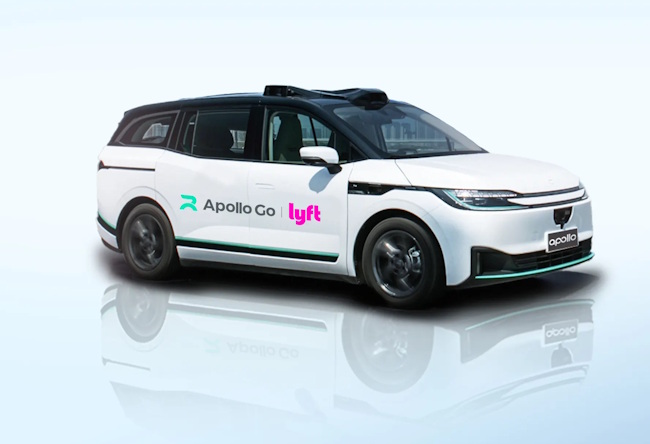
While Uber is firing on all cylinders, Lyft is certainly less proactive but is not to be outdone, having notably partnered with May Mobility to offer an autonomous taxi service in downtown Atlanta before potentially rolling out this service elsewhere in the southern United States. And its partnership with Baidu and Apollo Go, which is starting in London, is expected to see developments elsewhere in the UK and Germany or in other European cities. Why not in Hamburg, for example? Freenow by Lyft has indeed concluded a memorandum of understanding with the municipality there to consider the integration of robotaxis into the German metropolis's urban transport system.
Waymo, Baidu, Tesla, WeRide, Pony.ai: research firms such as DataM Intelligence and Markets and Markets agree that these five players already account for more than 70 % of global activity, a sign of the sector’s gradual consolidation. But for business travellers, two things are certain: firstly, they will very soon be called upon to use these services. Secondly, they will have to book them via Uber. Or via Lyft. Or both.