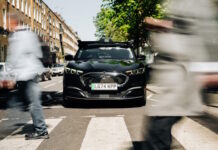


















Having settled in since December last to Netherlandsthe application Sixt charge is heading for the French marketGermany, Austria, Belgium and Luxembourg. The German car hire company claims to be "the first car hire company to offer its customers an app-integrated top-up solution, providing an alternative to third-party top-up cards and apps".
For this increase in power, Sixt connects to the network Elli. The Group brand Volkswagen has hundreds of thousands of charging points in no fewer than 27 European countries. Business travellers should therefore benefit from a more intuitive and, above all, more practical travel experience. Because the Sixt charge proposes tointegrate all stages of electric vehicle charging, from finding a charging point to invoicing. Travellers can identify themselves via a single application, and their charging sessions carried out via Sixt charge are then billed by Elli via the application channel alone, to the credit card linked to the customer's Sixt account.
Other Sixt charge features include a real-time search for available charging points in the vicinity, as well as an advance price comparison. Sixt charge also specifies the types of plugs available at specific charging points, and lets you start and end a session without using a charging card. It should be noted that the tool also applies to electric vehicles outside the rental company's network.
" By deploying SIXT charge on our various European markets, we are expanding our ecosystem of sustainable mobility offers"Nico Gabriel is delighted. Head of Operations at Sixt, he continues: "By making it easy to recharge at hundreds of thousands of charging points across Europe via the SIXT app, we are helping to tackle the main challenges associated with the acceptance of electromobility. Together with our partner Elli, we are committed to making sustainable mobility accessible to more people. ".
According to a study published at the end of January by BCD Travel81% of business travellers simply do not hire electric vehicles, and 13% "rarely" try. This reluctance is linked to logistical constraints, particularly when it comes to recharging. The risk of not being able to find a charging point was cited by 46% of business travellers. And in 33% of cases, the range of electric vehicles and therefore the need for frequent recharging was cited.