














You are developing, via Foncière Concorde – the joint investment company of the Galia group and the Terrot group – several hotel projects in garages or car parks in Paris. Why this target?
Samuel Gelrubin – Our group has been transforming for several years, with the hotel sector taking up an increasingly important part of its business. This movement is based on one reality: car parks and garages are becoming less and less useful in Paris. The city's clear intention to see fewer cars on the road is facilitating the transformation of these spaces.
You have three projects in progress. Can you present them in order of their progress?
S. R. – The most advanced is the hotel that we will open in the fourth quarter of this year on Archereau Street, in the 19th arrondissement.e arrondissement, next to Cours Florent. Its concept is aimed at a young clientele, with, among its hundred or so rooms, a majority of small double rooms and a few dormitory-style communal rooms, in the vein of urban youth hostels. The establishment will also include a diner on the ground floor, an amphitheatre and, to top it all off, a rooftop. Its christened name? Hôtel Super. Enough to create real momentum in this neighbourhood.
You also unveiled another project on Lamarck Street, in the 18th arrondissement.e district, on a whole other scale…
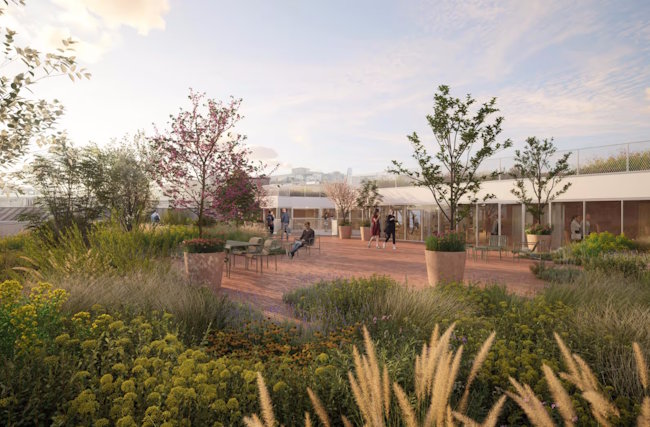
S. R. – Indeed, it's a very large development of over 15,000 m², with housing at the rear, including some social housing, and at the front, a hotel combining sport, accommodation, and catering, as well as meeting rooms. This Mix Hotel concept works very well in Brussels, with large companies particularly appreciating it for all the activities offered there.
Where did you get the idea to work with this Belgian brand, which is still relatively unknown in France?
S. R. – It all started when I went to the Equinox hotel in New York, almost at its opening. A high-end hotel with very specialised gyms that attract clientele. I started looking for what existed in that vein, and I came across the Mix Hotel in Brussels, which is a bit of the equivalent, but less luxurious. I felt it lent itself very well to this location, Lamarck Street.
Your third project is located on Rue René Boulanger, near République. Where are you with it?
S. R. – This also involves the conversion of an old garage to the rear, in addition to a residential building facing the street. It is still too early to say more about this project. We have not yet received all the administrative authorisations, which we are working to obtain.
You primarily target garages, but, like other property players, do you also convert offices into hotels?
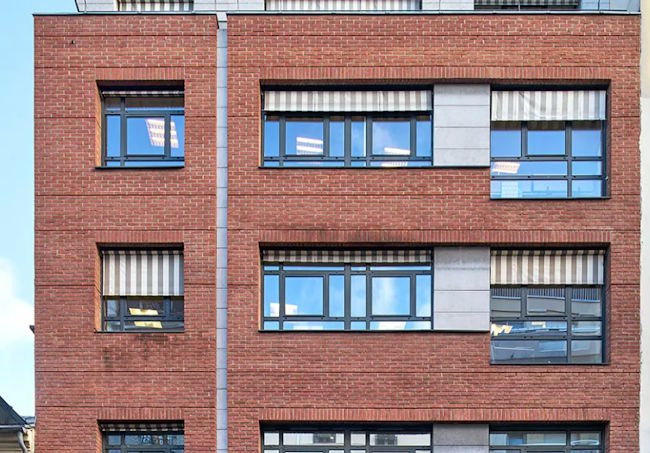
S.R. We do that too. For example, we are currently converting two office buildings into aparthotels, one on Rue Hautpoul, in the 19th...eand the other Mont-Cenis street, in the 18th arrondissementeHowever, today, buying an office to transform it into a hotel represents a significant cost, and economically, it's not always straightforward to achieve. Land with a garage is much more accessible, making the transformation more viable.
Isn't converting a garage also easier, with all that space, all those possibilities?
S. R. – From the outside, one might get the impression that you can do anything you want with a garage. And it's fantastic to see it that way. But I can tell you that the constraints in Paris are enormous, in terms of zoning regulations and conservation obligations. It's much more complex than a bare plot of land. If you take the example of the project on Rue Archereau, we were able to do a demolition-reconstruction, which is simpler. But for the project on Rue Lamarck, we are obliged to keep the facades and the floors. Things are not so obvious.
With the exception of the Mix Hotel, you choose to manage your establishments yourselves rather than affiliating with international brands. Why?
S. R. – The future Mix Hotel is indeed the only case where this operation will be linked to a lease. All other hotels and aparthotels that we are developing will be under our own management, through Terlia, our joint hotel management subsidiary with the Galia group. The reason is simple: it costs us much less and relying on our own brand brings more value – with a marketing team to build a storytelling adapted to the location – than opting for a brand, for example from the Accor group. The idea is really to create a destination, and today, that works very well. In our opinion, there is no need for an international brand within Paris. If you are setting up in Roissy or in places where customers need to be reassured by a brand, it's different. But with a strong concept and a good location in Paris, we don't need one.
Hospitality: the metamorphosis of offices and car parks
In Paris, offices and car parks have a hotel future.
- Terrot Group: prime parking spaces for hotels
Covivio: When offices turn into hotels