


















Before we look at the luxurious offering of the new Waldorf Astoria and the role your hotel will play in hosting major events, tell us first about Rabat. Morocco's capital still lags behind Casablanca or Marrakech. Why?
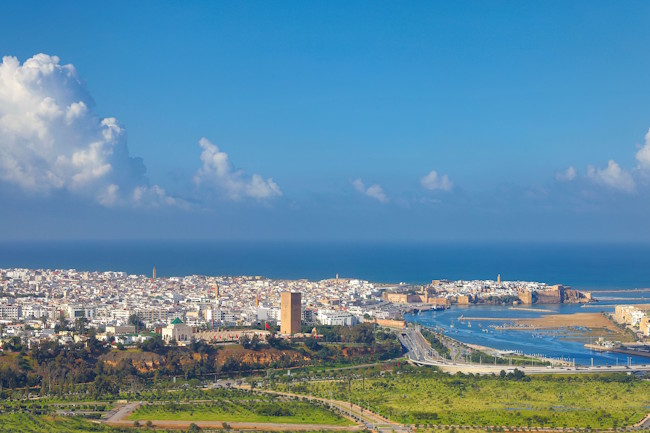
Guy Bertaud – When we talk about Morocco, we naturally think first of Marrakech and Casablanca. However, Rabat truly deserves to be discovered. It's perceived as an administrative destination, but it's more than that: it's a city that combines administration, business travel, and leisure. A destination in line with the bleisure trend. It is the King's city, the city of embassies, but economic activity there is considerable, linked to the Moroccan government. Every major decision passes through the royal palace and the ministers in charge of the economy or industry. A genuine economic hub is indeed developing around Rabat. To give you an example, the world's leading electric battery manufacturer, the Chinese group Gotion High-Tech, is investing 10.5 billion dirhams – approximately 1.5 billion euros – for the upcoming launch of a gigafactory between Rabat and Kenitra, a city located an hour's drive north of the capital.
Let's turn to your hotel and its event offering, which appears exceptional.
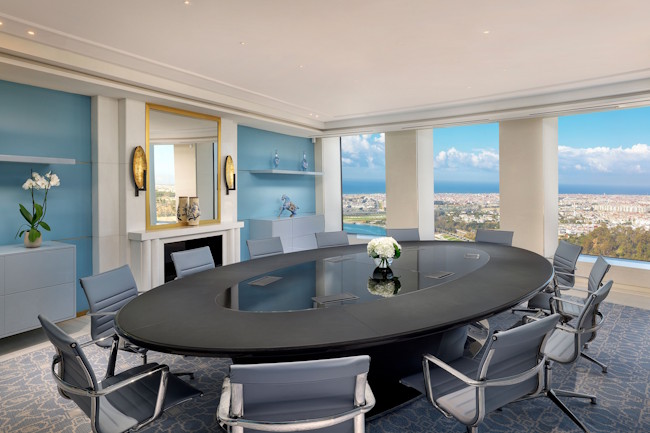
G.B. We do indeed have the largest conference centre in Morocco with our Grand Ballroom. Precisely 1,293 m², it can accommodate up to 900 people in theatre style and host dinners for 580 guests. And, importantly, in a space free of any pillars, with a ceiling height of 7 m. In addition to this, we have an adjoining meeting room, very useful for VIP meetings on the sidelines of conferences, for example for ministers needing to isolate themselves for private discussions. And the Grand Ballroom offers us agility that allows us to host international conferences, corporate conventions, and product launches, as we did for a French car brand. That's for the offering located on the ground floor of the tower. But we also have 4 boardrooms at the top of the tower, on the 29th floor.e floor, the one just below the hotel reception.
Your hotel opened in mid-April. Is this high-profile event offering already finding its audience?
G.B. Since opening, we have already hosted around twenty events and five more are expected by the end of June, including two on the same day in the Grand Ballroom: one during the day, followed by a gala dinner. We work closely with major Moroccan companies and ministries, as many activities are linked to the administration. For example, we organised an event in partnership with the Ministry of Economy and Finance, and others with the Ministry of Digital Transition and Transport. However, we have also hosted corporate events and a literary event dedicated to literature and poetry in the Arab world, organised by an Emirati client. The activity is very diverse.
How do you explain such strong demand so soon after the Waldorf Astoria Rabat Salé's debut?
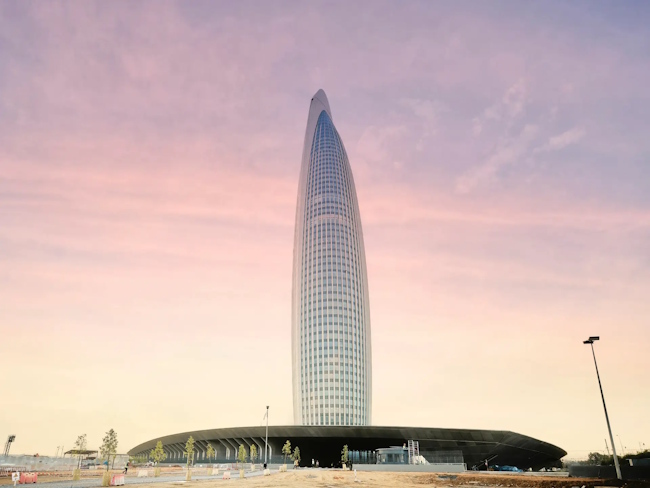
G.B. There are two things. First, a single venue that can accommodate events that previously took place in Casablanca, but could not be held in Rabat. But most importantly, there is the appeal of the tower itself, the tallest in Morocco at 250 metres high and with a design inspired by the Apollo rocket. It is the only building in the country named after His Majesty Mohammed VI. This gives events held there an almost official importance, beyond their commercial role. It’s not just about selling a particular product or project, it’s also about image. In the same vein, while the tower houses a hotel, luxury apartments, and offices, for all the companies that will occupy the latter – and there is high demand! – being located within the country's flagship tower also means entering into a dialogue with the Moroccan government.
Can we talk about the Mohammed VI Tower as a Moroccan "Burj Al Arab"?
G.B. I don't know if one can speak of it in the same way as the Burj Al Arab in Rabat, but the Kingdom's ambition was to make Morocco and its capital shine through the Mohammed VI Tower. It already features on 200 dirham banknotes. And our role, through the hotel, is to contribute to this radiance.
Given the stature of your hotel, is the Waldorf Astoria intended to be a choice of accommodation for heads of state when they are passing through?
G.B. In Rabat, there is a palace for the distinguished guests of the kingdom. Also, I do not know if we will be the official hotel for heads of state, but we are available for that. We notably have a highly secure suite, with bulletproof doors, capable of accommodating personalities requiring a very high level of security.
To go into detail about your hotel, how many rooms does it have? And, an important point for French clientele in particular, what does it offer in terms of catering?
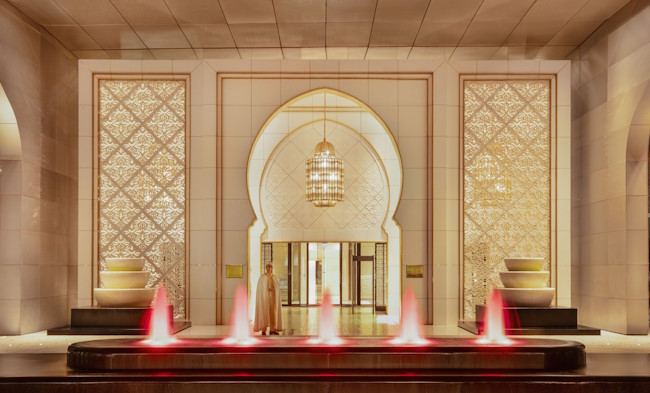
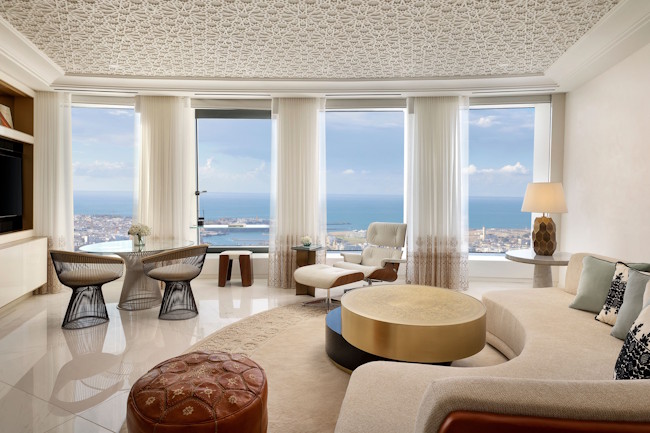
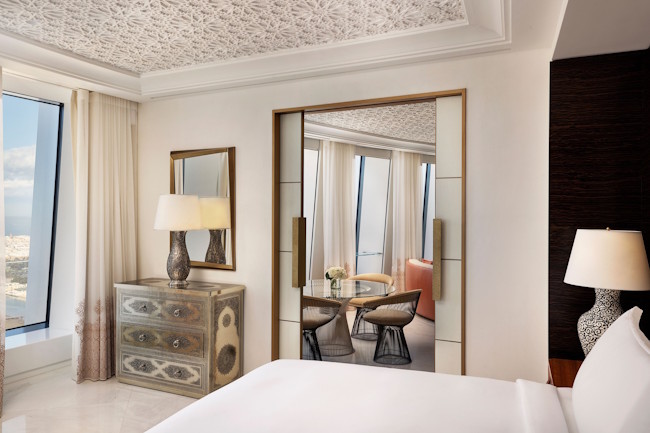
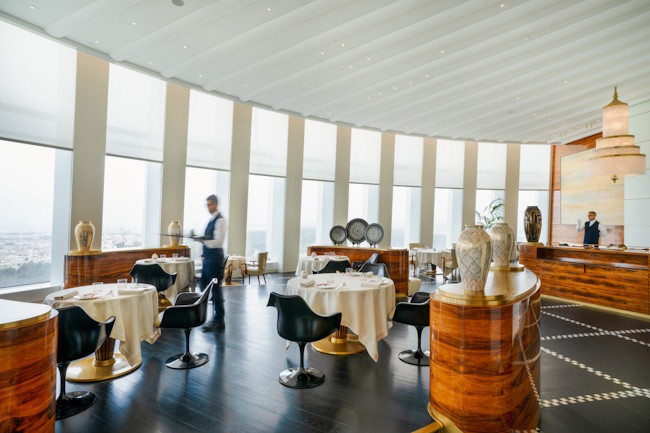
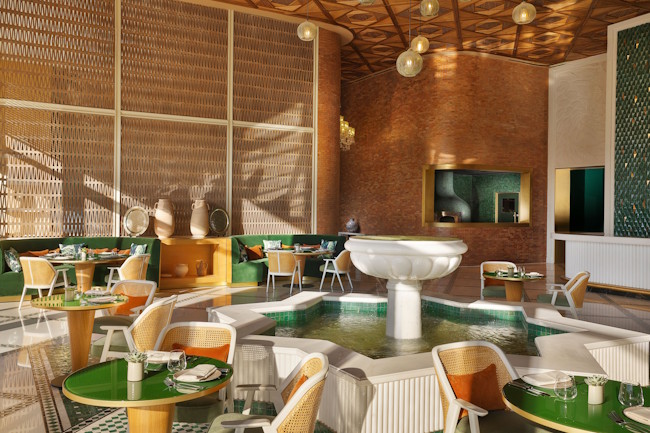
G.B. Our hotel, designed by interior designer Pierre-Yves Rochon, offers 55 rooms. These are mainly suites, ranging from 60 to 900 m², with 17 rooms connected to a suite, which also allows for the creation of two-bedroom suites. In terms of dining, we will eventually have four restaurants, with two partner chefs. And not least, as our signature restaurant at 33e floor, Aldabaran, is signed by Alain Ducasse. For the Magnolia brasserie, located on the ground floor of the tower, we have imagined a culinary journey from Morocco to the Levant with the Moroccan chef Lahcen Hafid, formerly of the Ritz in Paris. The menu travels along the southern Mediterranean with strong Moroccan, but also Lebanese and Greek influences.
We then have a more traditional dining venue, in a palace spirit, with our Peacock Alley lounge. And a fourth restaurant, this one Asian, will be added at the end of the year. A festive place, open from 6 pm to 2 am, with music, atmosphere, where the codes are reversed, the food coming to accompany the drinks rather than the other way round. This diversity makes the Waldorf Astoria, like the Mohammed VI tower, a destination within the destination in Rabat.
In parallel, the hotel's wellness offering is also one of its strong points.
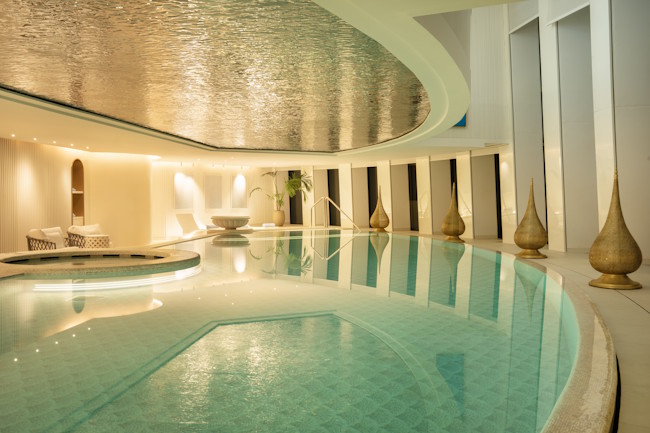
G.B. In addition to a gym, we also have a two-level wellness area, with treatment rooms on one side and an indoor pool on the other.e floor, with spectacular views. But we also have an outdoor swimming pool surrounded by sun loungers. This "bleisure" logic is maintained by offering both unique meeting spaces and suites with office areas, in addition to a wellness environment which is unusually spacious for a hotel with only 55 rooms.
How do you reconcile this disparity between your Grand Salon, which is the largest event hall in Morocco, and this limited number of rooms?
G.B. First and foremost, our primary vocation is to welcome VIP clients attending events who are looking for this type of suite offers. Since our opening, we have systematically accommodated around ten participants. In parallel, we also have requests for private hire for residential seminars. But beyond that, depending on the number of rooms required, we can approach other hotels for participant accommodation, starting with the Conrad Rabat Arzana, which, like us, is part of the Hilton group, or other hotels such as the Fairmontwhich is located near the tower.
How does the Waldorf Astoria fit into the luxury hotel landscape in Rabat?
G.B. In terms of positioning and price, the Waldorf Astoria is number one, ahead of the Four Seasons and the Ritz-Carlton. A group of similarly priced establishments follows with the Fairmont, Sofitel and Conrad. This tier is completed by independent hotels such as the Villa Mandarine or the Story. But there is still room for new players. A Royal Mansour is currently under construction and will open in 2028. Whether in the luxury segment or not, many hotel groups are considering expanding into Rabat. As part of its fifteen projects aiming to triple its presence in Morocco, Hilton is notably expecting two hotels in the capital, under two different brands (Editor's note: a Waldorf Astoria will also open in Tangier). Rabat is truly becoming a rapidly developing hub of interest.
As Rabat Airport will soon be equipped with a new terminal, does aviation play a role in this attractiveness?
G.B. For the hotel industry, air traffic is key. When a city improves its routes, it always attracts more international customers. Rabat's new airport will open in the last quarter of 2026 and will increase capacity from 1.5 million to 5 million passengers per year, which is considerable. Until now, Rabat was a small airport, I would almost say "provincial" without wanting to be pejorative. In the 1990s, there were only two flights a day to France, one by Air France and one by Royal Air Maroc. And, soon, we could probably increase to around thirty daily flights from Paris, Bordeaux, Lyon, Marseille and Nice. In parallel, Rabat airport has just signed an agreement with a Saudi airline for a direct Jeddah-Rabat flight from the beginning of July, and Emirates will also be returning. And that's without counting the clientele that transcontinental flights arriving in Casablanca, whether from the United States, the Middle East or China, can bring us. Royal Air Maroc has been connecting Beijing to Casablanca since 2025 and has also just launched a direct link to Los Angeles.
Is the airport's proximity to the city, or indeed all the possible connections with other major Moroccan destinations, also an asset for Rabat?
G.B. A considerable asset, even. Rabat Airport is a maximum of fifteen minutes from our hotel, whereas from the centre of Casablanca, it takes an hour to get to the airport, and even longer during peak hours. But what will also change the game for travellers is the TGV line that will connect Rabat and Casablanca airports in twenty-five minutes by late 2028-early 2029. Whether for a business trip or an extension with a leisure stay, Rabat's accessibility is a strong argument. Casablanca and Tangier are an hour or a little more away by TGV, Fez and Meknes a two-hour drive. Not far from the capital, you have Kenitra and its many factories. Tangier Med, the fourth largest port in the world, is within TGV reach. Rabat is truly at the heart of business and tourism in Morocco.
