










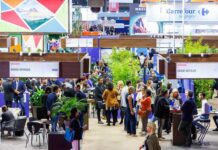
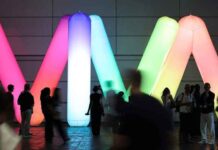




"Zurich, a city on the move": the slogan will certainly come as a surprise to those who still imagine Switzerland's economic capital as a tucked-away metropolis, as discreet as a banking secret, where the only source of entertainment is the lapping of the lake's pure water. A strange cliché for a city that saw the birth of the Cabaret Voltaire and the Dada movement at the beginning of the last century, and where the charms of the city's interior are no longer confined to the gilded guild houses. Zurich is by no means an immobile or even conservative city. To convince yourself of this, all you have to do is turn south, take tram 13 to Utobrücke station. As soon as you step off the tram, a glittering floor tells you the good news: there's something new in the air. Its name: Sihlcity, a vast complex developed by developer Karl Steiner AG, financed - to the tune of almost 400 million euros - by Crédit Suisse and Swiss Prime Site, and designed by architect Theo Hotz.
A former paper factory
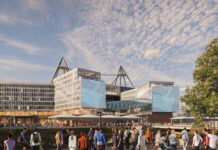
A vast site completed in March 2007 on what was once the production site for Sihlpapier, a top-of-the-range transparent paper that the city specialised in for almost a century and a half. The workers' cohorts have now been replaced by crowds of shoppers who have set out to conquer the shops, multiplexes, restaurants, bars, clubs and spas spread over the 100,000 m2 of the new district, which likes to call itself a 'mini-metropolis' or a 'city within a city'. In keeping with the post-modern era, the most charming vestiges of the industrial era have obviously been preserved, such as the large brick building of Papiersalle and, above all, the 60-metre-high vertical chimney that is featured in all the guidebooks and leaflets promoting the district.
This local version of the Eiffel Tower - we do what we can... - is not, however, the only iconographic symbol of the site, which does indeed imprint on visitors' retinas other striking memories, such as the vermilion grand staircase of the Arena multiplex or the clever play of lights and tangle of escalators in the shopping centre, which somewhat enhance a range of brands that is, to be honest, nothing revolutionary. But at a time when the virtues of decorum play an essential part in the pleasure of shopping, the appearance of Sihlcity clearly filled a real need: inaugurated on 22 March this year, the place had already received, by the evening of the 26th, visits from almost 200,000 curious shoppers.
Sihlcity is not the first successful redevelopment of an industrial site in Zurich. In the 90s, the city even made a name for itself with the remodelling of the Zurich West district, which has continued to set the trend ever since. From Sihlcity, it takes just a few minutes on the 13 tram to reach this district, once bustling with the comings and goings of workers from the Steinfels soap factory, the Schütze & Co and Schöller & Co textile factories, the Lowenbrau brewery and, above all, the empire of the builder Escher Wyss and Co. Industries that helped build the town's prosperity until the 1980s. The rest of the story is easy to guess, as it's similar in every way to what's happened in most western metropolises: the factories closed or moved out of town, and the disused but surviving buildings were taken over by the broke but trendy crowd of artists, graphic designers and photographers, followed by bars, restaurants, galleries and cinemas.
Zurich West, a fertile mix
The district finally came into its own in 2000, with the inauguration of the gigantic Schiffbau, an experimental cultural centre with a more than apparent industrial patina, whose standing was enhanced by the presence of the La Salle restaurant, which quickly secured a place for itself at the top end of Zurich's gastronomic scene. Benefiting from a fertile mix of classy restaurants and bohemian bars with frugal furnishings, the district has naturally become a natural home for companies in the new information and communication technologies (NICT) sector, grouped together in a technopark where, alongside start-ups, there are also the development offices of a number of established names such as Amadeus and Swisscom. As for the construction and public works companies, they are probably already looking for the next brownfield site to redevelop.
Special report - Zurich: serial retraining
- Zurich: a series of refresher courses
Rehabilitation
Sihlcity
Technopark - Zurich West
Zurich, always at the top


