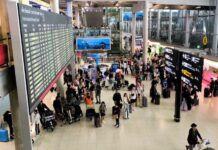
It was one of the first European countries to close its borders and impose a strict quarantine. Today it is one of the first countries to relax these same rules. The Swiss Confederation has recently reviewed its entry formalities. And this just a few weeks after restricting international arrivals.
It had to be said that Switzerland was restricting the entry of visitors from countries where the incidence of people testing positive per 100,000 inhabitants was lower than in the Confederation! So where was the logic in such a measure?
Swiss pragmatism
On October 29, the Federal Council amended its regulations on quarantines for travellers. From now on, the list will only include countries and areas where the incidence of the disease exceeds that of Switzerland by more than 60 cases.
As of November 2, Switzerland had 1,060.7 positive cases per 100,000 inhabitants, a much higher figure than in France or Germany. Incidence rates are even higher in the cantons of Geneva, Vaud (Lausanne) and Zurich..
Travellers from countries with a lower rate than Switzerland will therefore no longer be subject to a ten-day quarantine. These travellers can undergo a rapid covid-19 antigen test before coming to Switzerland.
The Confederation has also eased restrictions on business and medical travel. The rule that such trips may not exceed five days has been abolished.
Under the new regulations, the majority of European countries are therefore exempt. There are, however, some exceptions. The nationals from Belgium, the Czech RepublicAndorra as well as Hauts-de- France and Ile-de-France regions will be subject to the mandatory ten-day quarantine. The incidence rate remains well above that recorded in Switzerland.
Masks are worn almost everywhere
In the country, the health authorities have also tightened the rules for living during covid periods. Since 29 October, restaurants and bars have only been able to seat a maximum of four people per table. These establishments must remain closed between 11pm and 6am.
Switzerland has also abolished all public events involving more than 50 people. The measure also applies to private events involving more than 10 people.
And finally.., the obligation to wear a mask has been extended to new enclosed public spaces. This includes public transport waiting areas, stations and airports. But also queues outside shops, restaurant terraces and busy pedestrian areas.