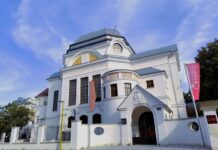
To evoke SalzburgMozart, music festivals and one of the most beautiful Baroque old towns in Europe. For the business traveller, it is above all an exceptional geographical location on an east-west axis between Vienna and Munich and towards the Adriatic Sea. It also boasts a world-class hospitality infrastructure and a very high quality of life. Salzburg's GDP per capita is the second highest in Austria, even exceeding that of Vienna.
All these factors have led the city authorities to predict that visitors will return in force. And to transform the city into a research centre for the urban tourism of the future by capitalising on its reputation. " It's been 15 months since we went into hibernation mode but all the ingredients for a recovery in tourism are in place" says Klemens Kollenz, International Sales and Marketing Director. " The name Salzburg says it all. Our international image is very clear, with a high level of recognition - on a par with Vienna.. It's a huge asset that means we haven't fundamentally changed our approach to marketing - despite the Covid pandemic." he explains.
The pandemic was an opportunity to work on visitor flows. Salzburg, like Dubrovnik and Venice, was suffering from tourist saturation. According to a study by the Austrian Institute for Economic Research (WIFO), in 2018 there were 11.9 tourists per inhabitant. A figure on a par with Florence, Lisbon or Amsterdam, and well ahead of Paris (7.5 tourists) or Vienna (4.0 tourists).
Digital industries: the future of tourism and business in Salzburg?
The city now relies on digital technologies. And according to the city's economic strategy plan, the digitisation of services can drive innovation. The plan details that the interaction between tourism and infrastructure service providers, commercial enterprises, research and education will be able to make Salzburg a a laboratory for developing and testing new tourism solutions.
The activity MICE has a role to play. " Salzburg is one of Europe's most attractive cities for MICE, not least because it offers a highly centralised infrastructure. This means that delegates can reach an event from their hotel within ten minutes. What's more, the city's magnificent historic sites offer an unforgettable experience." stresses Klemens Kollenz.
As part of Salzburg's economic strategy, city councillors see MICE activity as a factor in recognising the city as a laboratory for urban tourism in business circles. Congresses and conferences can serve as a lever for the future positioning of Salzburg as a place of creative knowledge.
Business travel and the digitalisation of the offer, with a better distribution of activities throughout the city, will thus be able to help the city's tourist office achieve one objective. Increase the number of overnight stays in the city with visitors staying 2 to 3 nights. In 2019, this figure was 1.7 nights.