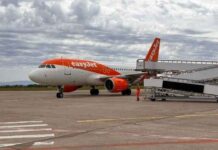
















Installation on board, distribution of newspapers in both classes. After take-off, the Business Class hostesses offer refreshments and aperitifs. At 11am: lunch. Economy class lunch is served in snack boxes: fresh salad with cabbage and cucumber, chicken in sauce and chocolate papillote; soft drinks, red and white wines served by the glass; coffee, tea. Business class: tray service and china crockery; mixed salad with cold meats, choice of salmon and potatoes or chicken and rice, cheese cubes, pastries; nothing excessive. Bordeaux white and red wines, in small bottles; coffee, tea, liqueurs. 12 noon: sale of duty-free products. Landing at 1.20pm, it's 2pm in Kiev. Ukraine International Airlines operates three daily flights between Paris and Kiev, in both directions, on Boeing 737s. Two of these are code-shared with Air France. Tel: 01 58 22 20 06 - Internet: www.flyuia.fr
Kiev: In the shadow of the Orthodox bulbs
A marvel. Kiev, the mother of all Slavic cultures, is a joy to behold, and all the more of a surprise because it is still little-known to Westerners. There are churches whose bulbs glisten gold in the sunlight, St Sophia's Cathedral, directly inspired by its big sister in Istanbul, and other religious monuments, of which there are so many; St Michael's, the Petchersk Lavra (translate the main monastery), revered throughout Ukraine; and St Andrew's Church, whose rococo dominates the charming streets of the old town, which are unfortunately overcrowded with too many souvenir stalls... The rest of the city is made up of vast avenues lined with chestnut trees, Independence Square - a place to remember the famous Orange Revolution - and upmarket districts where Mercedes and Ferraris park in front of the beautiful remains of private mansions where, not so long ago, the apparatchiks of the Soviet era lived; The city is also a covered market, where you can taste caviar for free, or the quiet, slightly "bobo" Ruelles, which sleep on the banks of the Dnieper... At the helm of the city tour is Chuperka Galyna, the historian-guide - a real guide and a real historian - with a passion for Slavic history, who uses the places and buildings to tell the fantastic story of her city. The result is a succession of Wikings, Mongols, Tatars, Turks, Poles, Cossacks, Russians, Austrians, German occupiers and Soviets... to which must be added a touch of Byzantium, a lot of Jewish culture and a plethora of names of kings, artists and local heroes that, alas, sound a little empty to a French ear. As a result, you find yourself completely at a loss, while at the same time feeling slightly uneasy about your own ignorance. All the same, the veil of opacity will be lifted little by little as the journey progresses.
Laure De Petchersk: Religious fervour
To get an idea of the religious fervour that has taken hold of Ukraine since the end of the Soviet yoke, all you have to do is climb up to Pechersk Lavra, a vast monastery founded in the 11th century and the city's most visited monument. The complex covers 24 hectares and is divided into upper and lower sections. Churches, of course, bell towers, monks' cells, paintings, icons, an exceptional panorama over the Dnieper... but above all, in the lower laurel, a whole network of catacombs, with churches, an underground refectory and 123 naturally mummified monks' bodies. The upper laurel houses the fabulous treasure of the Scythians, an ethnic group living in the 4th century BC. A profusion of gold jewellery inspired by Greek art, if not from Greece.
Night train: The Trans-Siberian Railway in action
The carriages on this train come off the same lines as those on the Trans-Siberian Railway. It runs overnight from Kiev to Lviv in the north of the country, and is identical to its famous cousin. A night train atmosphere, moving from compartment to compartment, three words exchanged and a lifelong friendship; vodka of course and, why not, caviar bought at the market. An opportunity to rub shoulders with real Ukrainians.
Lviv: Art and beauty
It's the story of a grand square lined with 16th-century houses, the story of a fabulous trading city at the foot of the Carpathians, nicknamed "the Babylon of the East" in the Middle Ages. It is also the story of one of the few cities in the country spared by the Nazis during the Second World War. Lviv, a Unesco World Heritage Site, has remained as it was in the past, lost in a forest of churches, pierced by a multitude of passages and courtyards where the washing is hung out to dry, and criss-crossed by narrow streets with disjointed cobblestones. And all those young people, those 'under 20s', enjoying themselves on café terraces and partying the night away. The historic centre of Lviv, which can be explored on foot, is divided into distinct neighbourhoods. Here the Armenian church, there the Jewish quarter, there a Greek-sounding street name, another of Serbian origin. The city is a melting pot of cultures, with a remarkable intellectual and artistic life, as evidenced by its world-renowned opera house and the list of great names who have stayed at the Hotel George, for many years the city's most exclusive hotel: Balzac, Liszt, Ravel, Sartre, Tolstoy... Today, the hotel has lost some of its lustre and is confusingly reminiscent of the Soviet era.
Evening wear
Lviv's opera house has a reputation to live up to. It is one of the most beautiful in Ukraine and the only monument in the city to feature on banknotes. Built at the turn of the last century by Viennese architect Gorgolewski, it spares neither gold nor frescoes, and boasts a magnificent hall of honour, the Hall of Mirrors, which can be reserved for private use, for example for a gala evening. The house, which was once home to Empress Sissi, stages all the great classical masterpieces in exuberant settings.
Countryside: The imaginary Carpathians
The old Dracula is long gone. It's a long way from the landscapes that, so recently, seemed to have been frozen for ever in the 50s, when rock'n'roll was a thing of the past. It's a long way from the peasant women in their printed smocks, the hamlets and their dirt tracks that serve as county roads. All those photos that are the talk of the tourist books are in fact 60 kilometres away, in Romania, on the other side of the border mountain... Because as far as the Ukrainian Carpathians are concerned, the former USSR and its bulldozers have done away with the charming farmhouses and much of what made the local population's way of life so special. Now it's full of concrete cubes, graceless things with all the modern comforts, as they say. All the same. There are remnants, and beautiful ones at that. All you have to do is stray a little from the potholes of the main road - and even then, not that much - and you're back to an aesthetic that's still very much alive, to blue or green cottages surrounded by tiny vegetable gardens and wooden fences, paths through villages tumbling down along streams and extraordinary bucolic scenes dotted with free-range chickens, men and young boys working the land, attractively-dressed harnessed horses and eternal farm dogs trotting behind. The human warmth of the villagers and the obligatory welcome vodka: one, two, three... No one dares decline the tradition: it offends.
Special report - Ukraine: Under the golds of the East
- Ukraine: Under the golds of the East
Olga Sansone, Eastern Europe Destination Manager, Vacanture agency