





















After two disrupted years, are visitor numbers in your establishments now living up to expectations?
Benjamin Abittan - Business has really picked up after the Omicron period. Lately, we've even been having weeks like we've never had before, sometimes up to 7,000 participants per day ! As a result, every month we have exceeded our best results since last March. The year 2022 will undoubtedly be even better than 2019, which was already a historic year, and this over just 10 months of activity, since we were virtually at a standstill in January and February. I am, however, frustrated by the fact that, with everything already booked, we have unmet demand equivalent to €50 million.
How do you explain this near overflow situation?
B. A. - Firstly, by the fact that we have won 2,000 new customers since the summer of 2021, mainly SMEs and ETIs who have come to us to recreate links. These are companies that we don't usually cater for, because they are less inclined to hold seminars, and their employees all know each other. Added to this is the fact that we are now taking over the training programmes of major companies. The current shortage of talent means that more employees need to be trained to bring them in-house. As our new brand identity underlines "reveal your talentsChâteauform' is part of this approach. Companies that see their employees as a wage bill, a cost, will find other, cheaper solutions elsewhere. But we want to be partners with those companies that want to move forward by investing in people.
In view of this growing demand, do you plan to open new locations?
B. A. - The fact that we didn't expand for two years is now making itself felt. So we're stepping up the pace on this front, with a stronger team and a determination to increase our presence in all the countries where we operate, as close as possible to our customers. Climate issues mean that companies are returning to local seminars. Taking 500 people to Greece three times a year for corporate events doesn't make much sense today.i. That's why I'm looking for larger sites, with 300 rooms for example, for which I have a number of ideas, particularly near Paris. But nothing yet concrete enough to be announced.

So you're moving away from your usual approach and turning to larger establishments. Why this change?
B. A. - For a long time, our core business focused on venues with around a hundred rooms. But there is now a very strong demand for accommodating large groups. Even so, we will be very selective in our choices, because a new establishment is a gamble for at least 15, or even 30 years. Hence the growing importance of the proximity of our sites to our customers in the face of changing attitudes to global warming. In any case, we refuse to create new locations that are not in the spirit of Châteauform', with a little extra soul. For example, our largest house at the moment, Campus La Mola near Barcelona, was a 185-room MICE hotel located right next to a 13th-century farmhouse.e century, which we have also adopted. So people come together in this massia The hotel is modern and comfortable, and we've added our own touch. As there is no longer any check in/check out, the reception desk has been broken up, and the restaurant areas have been completely redesigned. In this context, the lobby has become an enormous lounge, a vast games room with pinball machines, arcade games, minigolf... This combination of a MICE hotel and a slightly magical place right next door is just the sort of thing that could be done again elsewhere.
Are you also considering other development models?
B. A. - While we're staying the course with our dedicated B2B model, we're exploring other ideas, other ways of doing things. Why, for example, not take a step towards the traditional hotel business? As our expertise in seminars is widely recognised, a number of establishments have come to us saying that, in the same way, they have a Nuxe spa and a chef's restaurant, they'd love to have a Châteauform' seminar centre. Until now, the proposals were not compatible with our specifications. But if we can find a hotel, whether chain or independent, where customers can find the Châteauform' experience in the seminar area - and not the hotel services hidden behind the Châteauform' brand - we won't hesitate. All models are possible.
Our Inside offer is designed to make office life more attractive and strengthen corporate culture.
Benjamin Abittan
In a way, this outsourcing of the Châteauform' offer is also what you propose to companies?
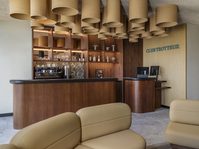
B. A. - We have always listened to our customers. They asked us to be in town, so we opened City establishments. Today, corporate customers come to us for enjoy the Châteauform' experience every dayOur Inside offer is designed to make office life more attractive and to strengthen the corporate culture. Our Inside offer is designed to make office life more attractive and strengthen corporate culture.
What does this Inside offer actually involve?
B. A. - We suggest that companies put in place a manager who, like the host couples in our homes, is in charge of the entertainment and experience of their workplaces. Someone who is in charge of catering, meeting room management, layout, relations with the various service providers, etc. This is important for transforming the experienceIt's a great way to get a handle on the catering and cleaning teams in particular. Imagine a CSR awareness week, where everything that isn't sorted is not thrown away. If you're not in charge of the cleaning teams, if the bins are systematically emptied every day instead of overflowing, awareness is different. To improve the experience, because they have a budget to spend as they wish, they can create unexpected and generous things, for example a little impromptu celebration after the signing of a big contract or offer oysters and ice cream galore at lunchtime.
You already had the Home offer, launched with Société Générale at the Les Dunes campus in Val de Fontenay. If you're now launching a more formalised and extended offering, it's because there's a real demand for it from businesses?
B. A. - It exists today. But we are at the stage where companies often entrust these invitations to tender to their purchasing department. We're often told: "We've budgeted x euros per day per talent, and you've come up with a higher bid, how can you match that? What job description should the manager have? What calendar of events? But the Inside offer is not a cost-saving solution operating costsIt's about creating a corporate culture and an overall experience. We can agree on the number of events to be organised, but above all we are giving responsibility to a human being whose job will be to improve the lives of our employees, who will get to know them and create links within the company. And that's without showing off in the first month and then tightening the screws for three years.
So it's a response to the problems of recruiting and retaining staff, which are very sensitive issues in companies today?
B. A. - The fiercer the war for talent, the more companies will ask themselves whether they'd rather spend, say, €150,000 on a poster campaign saying "come and work with us, it's great" or €50,000 on quality of life in the office. In fact, we've turned down some projects because the company that came to see us hadn't this broad vision of investing in people. After that, before all that develops, there's also the long view of real estate, of companies considering changing leases or premises. In the meantime, if there's one area where companies are prepared to invest in their talent, it's through their universities. For example, we have deployed the Inside offer on the SNCF Réseau campus in Saint Priest, and at Pernod Ricard on the La Voisine estate. Other projects of this type are underway, including the expected opening of the Deloitte campus for the EMEA region, a 500-room facility where Deloitte is preparing to train a very large number of employees.

Your new brand signature, "Let's reveal your talents", is also an invitation to turn to you to discover new ways of managing?
B. A. - Indeed, there's a real appetite for understanding what makes the Châteauform' spirit what it is. In a way, we are not mercenaries, but missionaries of this humanist corporate culture on which we have worked extensively with Isaac Getz, the management professor who created the concept of the "liberated company" and then that of the "altruistic company". We can also share our own training programmes on this subject with our customers, or raise their awareness when they come to our seminars. I have examples of managers who discussed the subject with a couple of guests at a seminar, and were then offered the book The humanist company Jacques Horovitz (editor's note: co-founder of Châteauform' with Daniel Abittan, Benjamin Abittan's father) and who told us that this way of thinking had led them to change their management. Just by being ourselves and sharing our way of doing things, we can, without being sanctimonious, convince as many companies as possible to adopt this approach.
We advocate a company that serves people, not uses them, and gives them the autonomy to express themselves without silencing their creativity.
But at the end of the day, what makes Châteauform' so special? ?
B. A. - My father, who is a serial entrepreneur, has set up lots of different businesses, in photography, optics, hotels and funeral services. You don't succeed in so many industries by chance, so there's a method to it, a know-how, a form of management that nurtures talent. We advocate a company that serves people, not uses them, and gives them the autonomy to express themselves without silencing their creativity. Not everything is perfect, of course, but we have a very pragmatic respect for people, based on the idea of the 'wheel of happiness'. In other words, happy talents make happy customers. The customer experience is inevitably shaped by their state of mind. In fact, their satisfaction rate is the best quality control.
But do you think this spirit can be transposed elsewhere?
B. A. - I think this philosophy is applicable to all businesses. I fell in love with Châteauform' because I was aware of its potential impact. The great institutions that convey meaning are in crisis today, whether it's religion or politics, even if ideologies are making a comeback, albeit under the banner of populism. As far as I'm concerned, it is the great human organisations that are companies that can improve the world of tomorrow. And they do this by taking care of their community, their tribe, by getting involved in CSR and by giving meaning to their work. At a time when we welcome one million executives every year, Châteauform' has all the ingredients to help companies make this metamorphosis. Because, let's not forget, the goal of business is people - with a capital H - not profit.

