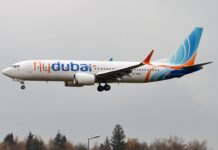
Air France announced on 7 August the suspension of flights to the Nigerbut also the Mali and the Burkina Faso. L'Niger airspace had been closed since the previous day. A company spokeswoman told Reuters: " Because of the ongoing coup in Niger and the closure of Niamey-Diori Hamani airspace and airport, Air France will no longer serve Niamey-Diori Hamani airport until further notice" . As for services to Bamako and Ouagadougou, they will be interrupted at the very least. until 11 August inclusive "it adds. What's more, business travellers will have to contend with longer flight times from and to a number of African airports, as has already been the case with the closure of Russian airspace since the start of the war in Ukraine... " The closure of Niger's airspace considerably widens the area in which most commercial flights between Europe and southern Africa cannot operate. Flights already have to make some sort of diversions to Libya and Sudan "the experts at FlightRadar24. They believe that " With Niger's airspace now off-limits, airlines flying from Europe to southern Africa will have to divert and add 1,000 kilometres or more to their flights, which will increase the amount of fuel needed for each flight and the duration of the flight." .

For its part, the Ministry of Foreign Affairs updated - on 7 August also - its recommendations for travel in the Niger and neighbouring countries. In its notice on travel to the Sahel, the French Ministry of Foreign Affairs states that ". We strongly advise against all travel to Niger. French nationals in Niger are urged to exercise the utmost vigilance: it is essential to limit travel, to stay away from all gatherings and to keep regularly informed of the situation." . In addition, " Do not travel to areas that are expressly not recommended.. French nationals who find themselves there are asked to leave. In areas that are not recommended unless there is an imperative reason to do so, it is advisable, if travel or a stay proves essential, to take reinforced security measures, particularly with regard to travel and accommodation. French nationals who find themselves in these areas should be aware that their safety and their lives are explicitly and directly threatened. The proven risks in these areas are incompatible with tourism." .

Following the coup d'état of 26 July at NigerThe situation has deteriorated sharply for foreign nationals on the ground. On 2 August, International SOS has raised its level of surveillance a notch, from "Warning à "Stand by. This is the third of the five levels defined by International SOS, with the next two steps in the event of a deterioration in the situation being the evacuation of non-essential personnel, followed by the evacuation of all staff. "Switching to STANDBY indicates that advanced evacuation preparations must be made in case the situation suddenly worsens or in case the organisations cannot withstand prolonged periods of shortage."says International SOS.
Faced with the hostile demonstrations against its embassy and the closure of its airspace, France opted for an evacuation operation, launched on 2 August. In total, 1079 people were evacuatedincluding 577 French nationals and their dependants. Private specialists were called in to help, particularly for nationals based outside France. Niamey. "Since the beginning of the crisis, we have organised the safety and evacuation of around ten French and European nationals."says Thibault Janin. The Managing Director ofIlios International continues: "Most of them were working on an ad hoc basis for engineering companies on local technical assistance projects. We also handle the evacuation of expatriates or travellers of African nationality working for European companies but who cannot be covered by the French Ministry of Foreign Affairs. In fact, France can only cover French or even European nationals.

" For the French people present on the outskirts of Niamey, we organised road transport under heavy protection to the international airport so that they could be taken care of as soon as possible by the French forces. For those in outlying towns such as Tahoua or Agadez who were unable to leave the country in time, we coordinated with other organisations such as UN bodies which have their own airlines and which can also, in exceptional cases, take care of expatriate nationals on board", says Thibault Janin, who points to the more problematic case of African expatriates who are not evacuated by their governments. " We are still in the process of grouping them in a secure area in Niamey, until we can get them out of the country properly. The reopening of the borders should enable them to be evacuated under good conditions. If not, we are looking at other options for getting them out by other means.".

For the days and weeks to come, International SOS advises organisations currently operating in Niger to postpone any trips to the country. Among the practical recommendations, the security specialist points out that employees must be able to equip themselves with sufficient reserves (food, water, emergency electricity, fuel, cash and essential medicines) to be able to stay in safe accommodation for seven days. Another requirement for companies is that the networks for exchanging information with employees must be solid and prepared for possible communication breakdowns during crises.
On 3 August, the military junta lifted the curfew that had been introduced on 26 July, while at the same time terminating the functions of four ambassadors. In addition to France, the United States, Nigeria and Togo are also affected. It is hard to imagine what will happen next, given that the ultimatum set by ECOWAS expires on Sunday. According to International SOS, "The most likely outcome of the current negotiations is the announcement by the CNSP (Conseil national pour la sauvegarde de la patrie) of a plan for transition to democracy, and the maintenance of a tense calm in the country. However, there is a credible risk of a rapid deterioration in the situation.".