












On the Markt, Bruges' main square, three horse-drawn carriages await visitors. In the background, the neo-Gothic provincial palace and a cluster of medieval houses as neatly lined up as nuns celebrating the Eucharist... Just like the belfry opposite, the slender silhouette of their crenellated gables shares the main subject of the city's best-selling postcards with the canals that criss-cross the city, forming the almost perfect outline of a large egg. But the image of Bruges, a cultural centre with a remarkably homogeneous heritage, has something to say about the quality of its buildings, the value of its museums and the modest elegance of its centuries-old bridges on almost every street corner. It has not always been the model of delicacy suggested by both the city's lace-making tradition and its reputation as the capital of chocolate.
During the Middle Ages, which witnessed the city's extraordinary economic boom, the same "MARKET PLACE was the scene of some less graceful scenes, including particularly cruel executions, accompanied by the almost systematic use of torture. At the end of the 15th century, a local chronicler recorded an average of four death sentences carried out here every month, including hangings and beheadings, as well as condemned prisoners being buried alive or boiled... Perhaps the ferocity of the magistrates was stimulated by the painting commissioned from Gérard David at the time for "to decorate City Hall: a diptych showing an outcast being flayed alive. The work never left Bruges. Today, it hangs just a stone's throw from the official building, in the Groeninge Museum, which houses, among other masterpieces, the famous Last Judgement by Hieronymus Bosch. The city owes its fortune to its geographical location. Situated in a polder region, it has long benefited from access to the sea and advances in navigation to consolidate its commercial power. Until the area silted up and Bruges' prestige waned as the sea receded for several kilometres... Between the 12th and 15th centuries, during a flourishing period, Bruges - etymologically speaking - was home to "de bryggjaThe harbour - the landing stage - is home to a large number of merchants from all over Europe, grouped together in an association that fiercely defends its freedom to trade and its privileges. Germans, English, Scots, Castilians, Galicians, Lucquois, Venetians, Genoese, Florentines and Portuguese disembarked here with wood, iron, copper, lead, cereals, wine, cloth, fruit, carpets, spices and silks from the East, exotic animals and furs. With dozens of ships able to dock at a single tide, the circulation of money in various currencies intensified. And new financial practices emerged, such as the bill of exchange, the first manifestation of paper-based commerce. These transactions were carried out mainly by hoteliers, the most famous of whom was Van der Beurse. His surname is the origin of the word "stock exchange"An institution created here in 1409, a sign of prosperity if ever there was one.
In 1438, a Castilian merchant wrote the following about Bruges: "it's a big city, very rich, and one of the world's major markets. It is generally considered that two cities are fighting for commercial supremacy: to the west, Flemish Bruges, and to the east, Venice. However, it seems to me - and I'm not the only one - that Bruges' commercial activity exceeds that of Venice. I explain it in the following way: although England has some commercial activity, Bruges is the only major centre in the whole of the West. So all the countries meet there, and it is claimed that the number of ships leaving its port exceeds seven hundred on certain days."
The many testimonies to the town's prosperity are our best assets," says Jean-Pierre Drubbel, from the Tourist Office. And they have the enormous advantage of being concentrated in the medieval part of the town, which can be explored on foot." From the Grand Place du Markt, for example, visitors can turn north-west to discover monumental Bruges and its Gothic finery, including the Burg. This architectural gem features side by side the interesting Basilica of the Holy Blood (1139-1149), whose ground floor is occupied by a 12th-century Romanesque chapel built to house a few drops of Christ's blood; the Gothic town hall with its octagonal turrets (1376-1420); and what was once the civil registry (1534-1537) with its gilded Renaissance façade. On the edge of the canal where the galleys used to unload, the Place Jan van Eyck is home to three buildings that still echo the city's Golden Age: the old Tonlieu (1477), a massive building where duties were collected on merchandise; the distinguished Loge des bourgeois and its Gothic turret, a sort of 15th-century Rotary Club; and the Loge des portefaix, the porters of burdens, in other words the dockers, a flamboyant Gothic showcase whose preciousness contrasts surprisingly with the arduousness of the profession and where daily tasks were distributed by playing dice.Not far away, another facet of the local economic power: the estate of the Van der Beurse family, a four-storey Gothic residence, a rare height in Bruges for a private house, but one that underlines the opulence of its occupants. The walker has covered less than three hundred metres... and spanned five centuries.

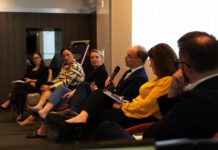
4 ) The municipality Bruges takes great care in welcoming business groups. They are usually welcomed by the alderman in charge of tourism in the majestic Gothic hall of the town hall.
5 ) Red brick housesThese are typical of the city, examples of bourgeois discretion and opulent wealth.
In the golden age
In Bruges, I recommend sailing with your nose to the wind," smiles Jean-Pierre Drubbel. You need to lose yourself a little to be surprised". It's true that the size of the historic city lends itself perfectly to discovery. "haphazardly"The city has a large number of rental companies and car traffic is restricted by a traffic plan so discouraging that the inhabitants of Bruges themselves venture out as little as possible. Heading east, you'll find yourself in more working-class neighbourhoods with provincial charm, as far as the old city walls and their windmills. Along the way, you'll be able to discover a few curiosities, such as the church of Sainte-Anne (1611-1624), modest in appearance but with an interior design that earned it the nickname "Churchesalon" for the large number of paintings and the Baroque woodwork. Nearby, the Musée des Arts et Traditions Populaires (Museum of Folk Art and Folk Traditions) offers visitors the chance to see what were once the maisons-Dieu, one-room doll's houses built from the 16th century onwards to house the poorest people as a result of the town's gradual decline.The southern route takes in the Groeninge Museum, Europe's largest collection of Flemish and Dutch paintings (Jan Van Eyck, Jérôme Bosch, Hans Memling, Gérard David, Peter Bruegel the Younger, etc.), and the Church of Our Lady, whose bell tower dominates the town. The building (13th-15th century) is famous for its Madonna and Child, known as the Madonna of Bruges, a marvellous piece of art created in 1504 by Michelangelo.
Groups can also reach the main conference centres by pedibus, not only in the heart of the city, but also in highly historic locations such as the St John's Hospital, with its two parts, one medieval housing the Memling Museum and the other dating from the 19th century and featuring 21 meeting and banqueting rooms, or Les Halles, the 13th-century covered market that forms the base of the belfry on the Markt. The first floor has been converted into two multi-purpose halls, each with a capacity of 600 guests, under period beams. "Here, there are no transfers by bus or other means. This is something that groups particularly appreciate," points out Kathleen Bertier, Director of Meeting in Brugge, the congress bureau. Some companies even claim that they get more participants when their meetings are held in Bruges! Excursions, meals, accommodation: everything is done on foot or by bike. It doesn't take long for a sense of conviviality to develop among the delegates. This phenomenon is reinforced by a hotel offer made up mainly of small family-run establishments close to each other. So everyone meets up here and there to organise their free time. Networking is in full swing!

With the North Sea...
Groups can reach the coast and Knokke-Heist by bicycle, just as the inhabitants of Bruges do with their families: following the canals for around twenty kilometres, the ride through Damme, a medieval town that was once the outport of Bruges, is pleasant even for the less sporty. That's the advantage of the flat country... Knokke, the pearl of the Flemish coast sung by Jacques Brel, offers a completely different atmosphere, with the North Sea on the horizon, strollers on the beach, ferries and tankers cruising offshore, and a singular Western view, with the silhouettes of the cranes, gantries and wind turbines of the port of Zeebrugge silhouetted against the light. We have 10 kilometres of beach and it's naturally an environment that we make the most of for team-building activities," notes Steve Roose, director of EventMosaic, an events and receptions agency. We use classic water sports, regattas in sailing boats, coastal rallies in rosalie that combine town and beach, with an introduction to handling various kinds of kites or sand yachting. The beach is also the venue for treasure hunts and barbecues".. Like many European seaside resorts, Knokke is a child of the British invention of tourism and the "desire for the shore In the first decades of the 20th century, this pattern ensured the development of Knokke, initiated by the painter Alfred Verwée (1838-1895). In the first decades of the 20th century, this pattern ensured the development of Knokke, initiated by the painter Alfred Verwée (1838-1895). A handful of Anglo-Norman style villas, a cluster of hotels, an artificial lake for the picturesque, a golf course to ensure the town's appeal, and the possibility of a large number of tourists. "in between and a seawall where you can gaze out over the waves: that's how the resort began, targeting a wealthy clientele, the only ones who could afford to stay at the opulent Pavillon du Lac, opened in 1925, or splash out at the casino inaugurated in 1930, a social circle where Frank Sinatra, Ella Fitzgerald, Marlene Dietrich, Maurice Chevalier, Georges Brassens, Yves Montand... and Jacques Brel, of course, performed.
Since then, the layout of the town has changed, and construction has diversified to accommodate the middle classes on the outskirts of the town centre. On the seafront, a curtain of buildings has replaced the turn-of-the-century mansions. And yet, the destination still holds its own. "You can't imagine a better way to shop for a meeting".adds Paul Moeyaert from the tourist office. Knokke is home to some 50 art galleries and a flurry of shops that bring together the crème de la crème of Italian fashion, Swiss watchmaking and French luxury. Last year, the Vuitton brand marketed a version of its monogrammed bag in the town's colours, an operation previously carried out in Saint-Tropez and Deauville. It was a great success, selling out before it even hit the shops.
It seems that the crisis has not spared Knokke. But recently, as in the Belle Epoque, the members of the Zoute Automobile Club bring out their finest cars to take part in the local Grand Prix, a retro choreography of Aston Martins and Rolls, Ferraris and Bugattis. Here, we're still proud that one of the town's landmarks is named "la place m'as-tu vu?". After all, the ballet of the latest German sports cars provides the entertainment, and the Michelin stars the catering. At the instigation of a dynamic town council, an international architecture competition was organised, in particular to provide the town with an emblematic building. The winning project by architect Steven Holl, comprising two large, offset glass sails, integrates the ageing building of the famous casino and is presented as a 108 m tower combining high-tech and clean energy. The programme, which includes a luxury hotel, conference centre and thalassotherapy centre, is just waiting for a developer keen to turn this futuristic dream into reality.
Dossier - Bruges Knokke-Heist: Flammandes strolls
- Bruges Knokke-Heist - Flammandes strolls
Steve Desmidt, MICE Manager for the Province of West Flanders