




















What is Fiera Milano's mission?
Carlo Bonomi - Fiera Milano's mission is to be an international platform that connects companies, markets and professional communities, capable of generating economic, relational and cultural value. We are not just a venue operator, but an industrial partner that accompanies clients and organisers along the entire event value chain: from design to production, from technological services to communication, right through to impact measurement. We operate with a long-term vision, supporting the competitiveness of strategic sectors and contributing to the development and international appeal of Milan and Italy.
How has the MICE business in Milan evolved since the health crisis?
Carlo Bonomi - After the pandemic, Milan saw a very rapid and structural recovery in the MICE (Meetings, Incentive, Convention, Events) sector. Demand has rebounded strongly, but with different characteristics: events are more international, with an increased focus on content, quality of experience and sustainability. Milan has benefited from its consolidated global position, and Fiera Milano has been able to capture this development thanks to ongoing investment in infrastructure, services and expertise. Today, MICE has not only returned to pre-Covid levels, but is also one of the Group's main growth drivers.
Are there any new infrastructures or projects linked to MICE?

Carlo Bonomi - Allianz MiCo is one of Europe's largest congress centres and a key part of our MICE strategy. The venue offers over 60 flexible rooms and large exhibition areas, all equipped with high quality audiovisual systems and broadband connectivity to support meetings, conferences and conventions of all sizes. Other technology services are also available, further enhanced for the Olympic Games, as well as logistical support to ensure the best possible experience for organisers and participants.
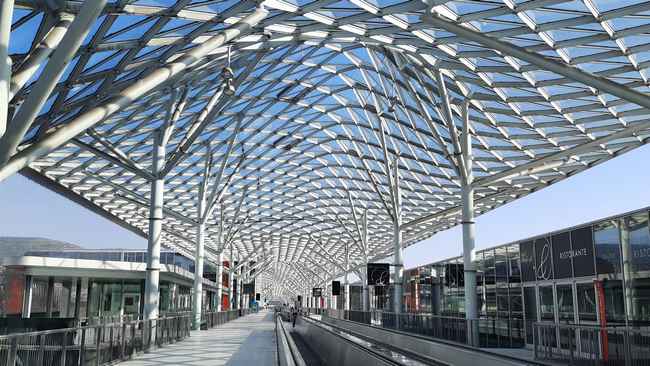
At the same time, we are developing an increasingly multifunctional exhibition centre model, capable of hosting trade fairs, congresses, major events, shows and sports competitions, connected to the city's urban environment and infrastructure, in order to consolidate Milan's position as a global destination for business, innovation and professional communities.
As Vice-Chairman of UFI, what is your assessment of 2025? And how do you see 2026?
Carlo Bonomi - The year 2025 confirmed the strength and central role of the global trade show sector, demonstrating that face-to-face events remain fundamental in an ever-changing economic and geopolitical context. However, 2026 will be a year of transformation rather than simple growth. The trade show system is evolving from a meeting place to a permanent value-creation platform, where physical events, digital tools and data are integrated to generate relationships, business and knowledge throughout the year. The future will reward operators able to move beyond their traditional role as venue providers to become true ecosystem builders: hubs able to connect industries, foster innovation and grow professional communities before, during and after events. Technology, sustainability and skills will be structural levers, no longer incidental elements. In this sense, 2026 represents a turning point: the exhibition sector will redefine its role as a driver of economic development, knowledge sharing and international cooperation.
What are the main issues and trends to watch out for in the coming year in the MICE industry?
Carlo Bonomi - Measurable sustainability, intelligent digitalisation, security, organisational resilience and the internationalisation of content. The MICE of the future will increasingly be an integrated ecosystem.
