


















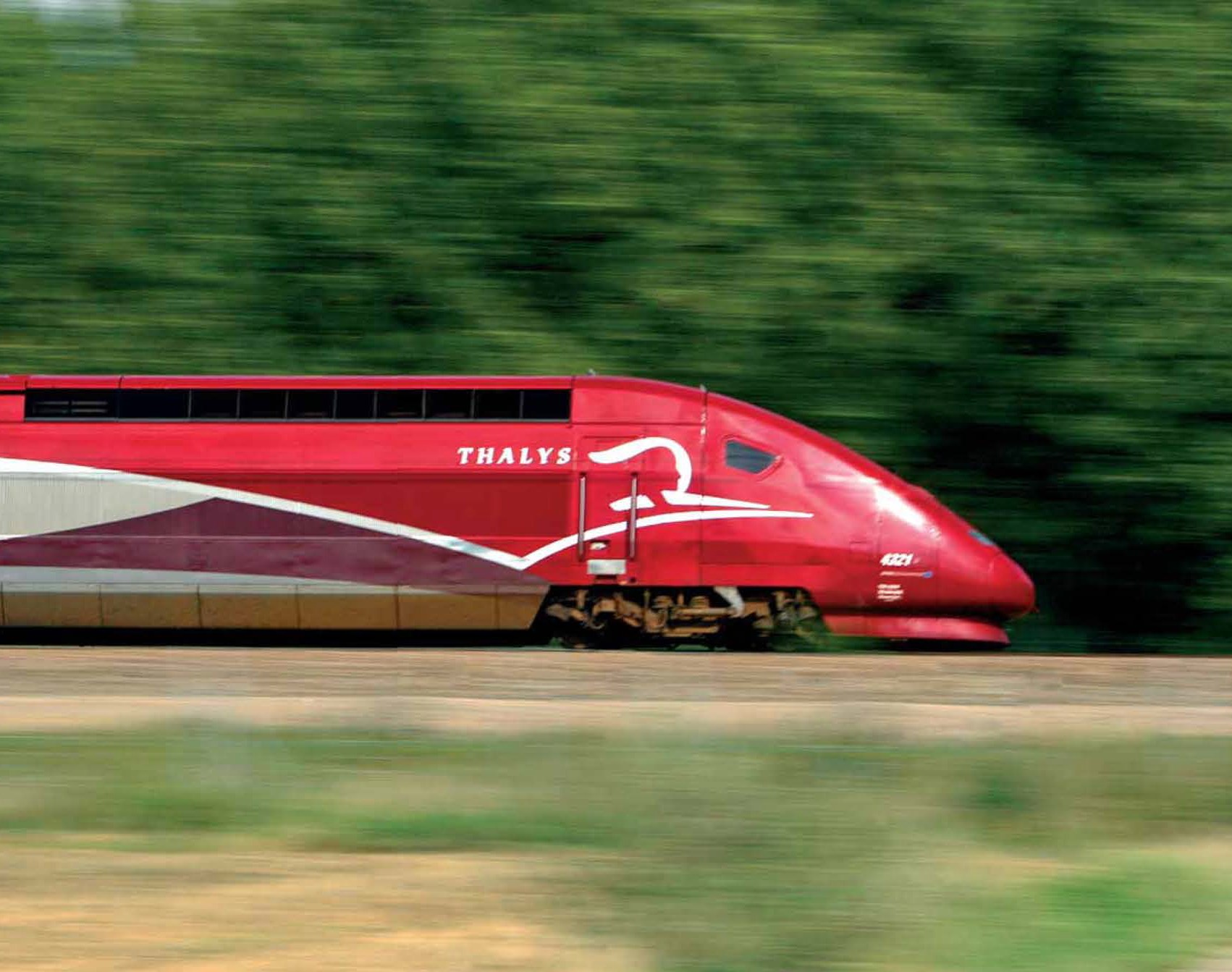
Although air and rail transport can be complementary, as shown by the development of the TGVAir service, the two main players in business travel are nonetheless competitors. This is all the more true in a European market where the high-speed network is in the limelight, and where facilities for business travellers are improving significantly. Thalys has just published a study highlighting the advantages of the "red train" over its air counterpart. The survey, carried out by EPSA, logically advocates the advantages of the train for professionals and their companies. As expected, the strong point of the Thalys lies in its value for money, with fares 62 to 70% cheaper than by air, for a limited difference in journey time. The report refers to "a much smaller difference for journeys of 3 to 4 hours", and points out that "since the acceleration of Thalys, the difference is now only 43 minutes between Paris and Amsterdam".
The study goes further, and finally attempts to put a figure on the overall value of the journey, by integrating the difference in duration and the average hourly cost of a manager. It concludes that "a Thalys journey for a manager between Paris and Amsterdam, for example, represents an overall investment of €476, compared with €701 by air, if the cost of the time spent is taken into account". These figures should contribute to the success of the train in general - and the Thalys in particular - with professionals, especially as the same study points to the cost of the journey as the main criterion for travel policy in 53% of cases, compared with 29% for the duration of the journey.

Productivity potential of different modes of transport