




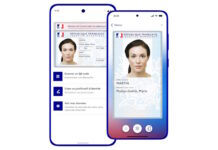











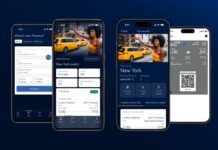


Last September, Apple caused a stir when it launched Apple Pay, a mobile payment service, and incorporated NFC (near field communication) technology into its iPhone 6, enabling contactless payments to be made from a smartphone. "Everyone was waiting to see what Apple would do. Was it going to develop its own solution out of a desire for singularity, or was it going to launch into NFC? The most pessimistic about this technology have been contradicted"Alain Demerdjibachian, Director of Product Marketing at Ingenico, the world leader in payment services. Indeed, the fact that Apple has converted to this technology, which some predicted to be stillborn, could mark the irresistible rise of mobile payment. "We can feel the market evolving. It's one of our strategic priorities"says Nicole Flory, marketing and communications director for AirPlus in France. In Germany, this specialist in travel expenses is testing a corporate card integrated into NFC-enabled smartphones, in partnership with Deustche Telekom.
In recent years, the general public has seen the emergence here and there of digital wallets enabling secure online payments from a mobile phone, notably the 'walletts' from Google and PayPal, V.me from Visa and MasterPass from MasterCard, and the Paylib solution from the BNP Paribas-Société Générale-Banque Postale trio, recently joined by Crédit Agricole. Crédit Mutuel-CIC's Fivory application, which was recently tested in Boulogne-Billancourt, allows customers to pay for purchases using their mobile phone at the checkouts of certain establishments. However, all these initiatives are still limited in scope, as the global payments environment has not yet moved into 'mobile' gear. "First of all, the terminals must accept payments, and the phone must be eligible, notes Alain Demerdjibachian. The process of registering the credit card on the mobile is also a hindrance, sometimes requiring a whole ceremony that can put off even the most enthusiastic geeks."
Smartphone in your pocket
As is often the case, Apple's move into mobile payments could give the whole sector a boost. Especially as the pieces of the jigsaw are gradually falling into place. In September, MasterCard announced the advent of a contactless standard for merchants accepting payment cards by 2020, so that consumers will be able to pay anywhere with their NFC-enabled devices. Ingenico is also working on this. "We are going to support the development of contactless payment and contribute to its widespread use. Our aim: to make the user experience as simple as possible."adds Alain Demerdjibachian.
So can business travellers be prepared to travel with only their smartphone? We urgently need to wait. Mobile payment has only just begun to make inroads in the consumer world, but it will take some time for it to take hold in the B2B sphere. "We know we're going, but there's no demand at the moment, confirms Pierre-François Brézès, Vice President and General Manager France of American Express' Cards and Corporate Solutions business. "Firstly, we need to be able to offer business travellers a degree of uniformity in the acceptance network for this type of payment, which is not currently the case worldwide, says Laurent Sautré, Head of Corporate Card Sales and Implementation at BNP Paribas. It is also important to bear in mind that the number of smartphones in companies is still very heterogeneous. As a result, the smartphone as the sole means of payment in place of a corporate card cannot be envisaged in the very short term. In fact, we receive very few requests from our customers."
This policy of taking baby steps can also be explained by the fact that, unlike private individuals, businesses already have a multitude of dematerialised payment solutions at their disposal. Starting with the oldest of them all, the debit card, offered by BNP Paribas and AirPlus in partnership, by CIC, by Citi and, of course, by American Express under the name of Business Travel Account (BTA). "Payment is a very old subject in business travel, and one that has caused us a lot of problems for a long time. Hence the emergence, a few years ago, of the debit card to pay for airline tickets."says Laurent Comte, Managing Director of Business Travel at Carlson Wagonlit France.
The main advantage of this method of payment, which is registered with the travel agency, is that it is integrated directly into the travel booking process. This simplifies payments and facilitates very detailed reporting of travel expenses on the basis of statements issued by the agency. Following on from its success in the airline sector, the lodged card has now been extended to other sectors. It is now accepted by the SNCF, car rental companies and certain hotel reservation centres such as CDS and HCorpo. Better still, it is no longer just reserved for large companies, as BNP is launching its Voyage card for the middle market in the first quarter of 2015. "However, as far as key accounts are concerned, we always respond to invitations to tender in the company of AirPlus."says Laurent Sautré.

Well-managed expenditure
Unfortunately, a card can only do so much, especially when it comes to simplifying payments in a world as fragmented as the hotel industry or booking tickets on low-cost airlines which, until recently, did not accept corporate payment solutions. All this has led to the advent of a new solution, the virtual card, which facilitates online purchases by issuing a single-use VISA and/or MasterCard card number on demand, depending on the issuing bank. American Express was one of the first to offer this type of solution back in 2009. "As part of our long-term relationships with companies, we discuss with them any difficulties they may be encountering, or expenditure that is being poorly managed, remarks Pierre-François Brézès. That's how vPayment came about, out of a need to reconcile hotel spending". At the same time, the rise of hotel reservation centres has played a large part in establishing this solution within companies, all of which are looking to rationalise a large budget that is still far from being optimised. Most banks offer it, including Citi, CIC, LCL, Société Générale and BNP Paribas. "Our offer is developing positively with large companies and travel agencies"underlines Laurent Sautré, who adds that "in the first quarter of 2015, we are upgrading our solution to issue virtual cards in two new currencies, sterling and the Swiss franc".

Dematerialisation
Alongside its virtual card, BNP Paribas will be launching a "procurement card" early next year. While the virtual card is mainly used to complete a reservation and manage the exchange of information between a central booking office and hotel establishments, this new product is designed to optimise financial transactions between the company and the central booking office, in the same way as a "lodged card". "As all our cards are issued from the same platform, reporting is consolidated."explains Ludovic Velasco-Martinez, Head of Corporate Card Marketing at BNP Paribas. With relations with hotel reservation platforms becoming increasingly strategic for the various players involved, AirPlus has entered into a partnership with the German centre HRS, which has been accepting the AirPlus virtual card since the end of the summer. Called AIDA, this solution, which is accepted by the Mastercard network, made its debut on the French market this year. But the other major development is the partnership signed between the German payment specialist and Amadeus, one of the world's three major GDSs, giving rise to the Amadeus AirPlus Travel Agency Card. From now on, travel agencies will also have access to this virtual means of payment, enabling them to pay for a wider range of services on behalf of their customers.
Payment hub
This announcement reflects a very recent trend, namely the introduction of the virtual card within the systems of these key business travel intermediaries. Like AirPlus, eNett has introduced a virtual card within the Travelport GDS. For its part, Carlson Wagonlit has gone the other way by setting up a "payment hub", as Laurent Comte describes it, with Conferma, one of the leading specialists in virtual card number issuing technology. As a result, CWT's solution is compatible with all the GDSs and virtual cards on the market. "This payment solution can be integrated into payment flows and automated, stresses Laurent Comte. Our aim is to bring together the entire business travel chain to offer high added value: booking, itinerary information, travel progress and reporting. This includes integrating payment methods.". The aim of this simplification drive is to ensure that travel agencies continue to play their role as global partners.


