



















Revolut is now a brand recognized by the general public. But what place does its Revolut Business activity occupy?
Clémence Fredenucci – Today it is a real priority. To go back in time, Revolut was founded in 2015 and Revolut Business in 2017. Over the last three years, we have accelerated significantly in developing this business segment, which has become one of our very important engines. Today we are present all over Europe and in the United Kingdom, but also in the United States and the APAC region, in Singapore, Australia and recently in New Zealand. And now, as soon as Revolut launches in a new country, we simultaneously launch Revolut Business, not in a second phase as before. We want to put everything on the same level.
Revolut now has a French banking license, and not just a Lithuanian one. Moreover, the former CEO of Société Générale, Frédéric Oudéa, has become chairman of the board of directors of Revolut for Western Europe. Is France therefore a major market for Revolut?
C. F. - It has been for a long time, being our second market in Europe after the United Kingdom. Although we are growing a lot in Germany and the Netherlands, and all European markets are important, France is particularly so. We are experiencing the fastest growth there, having recently announced that we have eight million customers, and this factor makes it a key country. We have already invested a lot in France and will continue to do so.
What types of companies are customers of Revolut Business, especially in France?
C. F. – Since our strategy is global, we do not provide country-specific figures. However, to give you a quick overview, we have more than 800,000 customers worldwide, with a significant portion in Europe and the United Kingdom. In this context, we target companies of all sizes, ranging from freelancers – with our Revolut Pro product – to large enterprises, including micro-enterprises, SMEs, and large enterprises with Revolut Business. Our product and offering are broad enough to meet all their needs at their respective levels.
In all this range of companies, do you nevertheless have any priorities?
C. F. – Our target audience is really micro-enterprises, SMEs and mid-sized companies. This is where our main volume of business is concentrated. We are less focused on freelancers, a segment that Qonto and Shine are well positioned in. And this is despite the fact that we also want to invest in business creation, since a solution for capital deposit will arrive in the coming months; instead, we are targeting existing established companies.
Precisely, how does Revolut position itself compared to other neobanks?
C. F. – As a one-stop solution that integrates the entire value chain of the financial cycle, or even the life cycle of the company. I compare us less to Swile, which is primarily positioned on restaurant securities, than to Qonto and Shine, or even Pennylane, although the latter’s range of professional banking tools remains limited. Revolut’s value chain is complete, with a strength that also relies on our retail base. While we have 80 million consumers in total, including eight million in France, a company may want to be present in the Revolut app and offer its products on our store, or offer them the option to pay for their purchases via the Revolut Pay solution.
In fact, you also count travel agents among the customers of this solution...
C. F. – Indeed, we recently signed agreements with the airlines Wizz Air and Corsair to integrate the Revolut Pay solution, which allows them to collect payments from their customers. In this context, a private customer of Revolut can pay in one click, directly from their Revolut account. Thus, for a company that has a Revolut Business account linked to Revolut Pay in its payment tunnel, it can offer its employees a better experience and enable them to access rewards. And this, in addition to lower fees, since it bypasses certain intermediaries in the card networks by transferring a Revolut account to another Revolut account.
Do you plan to establish other partnerships of this type? For a French traveler, we think of Air France, Virgin or easyJet, but also of Accor, IAG and the SNCF.
C. F. – Of course. These are very large accounts, and the implementation of solutions and the discussions that precede it can take much longer with this type of player. But we are already working with Booking and Lastminute, for example, and we are in discussions with Trip.com.
Revolut Business recently announced a partnership with Eurostar to link your two loyalty programs. How is your program attractive?
C. F. - While American Express has its own miles program, we have RevPoints. Specifically, when I pay, I accumulate points that I can then convert into miles or points with various travel players like other well-known brands. The list is not fixed and evolves over the years. But unlike Amex where miles can be earned and spent with a partner airline, Revolut allows you to convert your points with other travel players.
Let’s return to your various payment solutions. What do you offer companies?
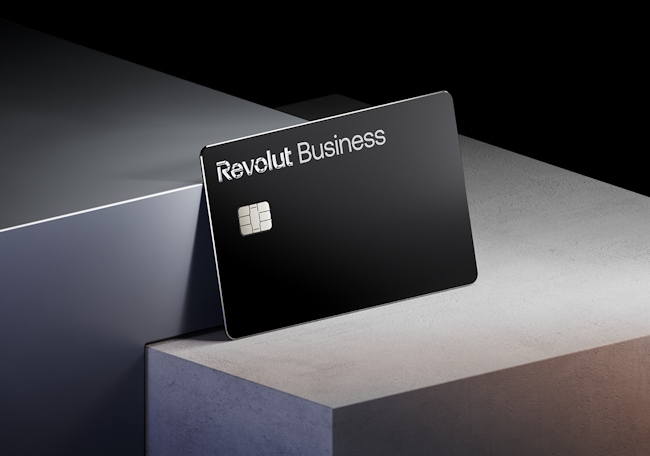
C. F. – We have a very diverse range of products adapted to the type of actor, their size and the volume of their payments. Among other things, there are traditional physical cards that are debited from the company’s account, but also virtual cards that can be added directly in the app. All of this with control over spending, such as payment caps, limits based on categories of purchases or time, such as weekends.
Revolut Business’s offering also relies on its multi-currency product, its ability to manage transactions in more than 35 currencies from its platform. Is this a key argument? ?
C. F. - That is truly our strength. Currency fluctuations are significant, as are the foreign exchange fees charged by banks. And we are very strong in foreign exchange. The ease of paying in different currencies is our differentiating factor, especially compared to companies in the travel industry, such as travel agencies and tour operators. While the margins in this sector are quite slim, every cent that is saved counts, even on a single currency.
You cite travel agencies and tour operators as examples. Is Revolut Business’s offering particularly suited to this type of business?
C. F. - Yes, because in addition to the multi-currency aspect, we have other value propositions for their destination. For example, we can distribute virtual cards on a very large scale via APIs integrated into the travel agency processes. This way, we can create cards for every type of purchase: air travel, hotel, car… Everything is automated and allows for precise tracking of each payment. These cards are also for single-use only, which also greatly reduces fraud. But Revolut Business adds something that not everyone offers and that may interest travel agencies: the «acquiring» part.
In practice, how far does this «acquiring» part go?
C. F. – A travel agency must potentially make payments in several currencies, but also receive payments in several currencies. Revolut Business offers them the ability to receive money by wire transfer, online or in person, with terminals, QR code payments, link payments or via gateways that connect the website directly to the bank account. Ultimately, we can make payments – by card, SEPA and Swift transfers or transfers – and receive money in various ways, all of which is automated.
Does Revolut Business also allow travel companies to optimize their cash flow?
C. F. – When there is a lot of volume, we can go further. The question then arises of how finance integrates into the company’s processes. When payment goes through Revolut and arrives in a Revolut Business account, the advantage is that there is no intermediary, with funds arriving in less than 24 hours. However, in the travel sector, suppliers are paid without necessarily being paid immediately. And if we have to wait to receive the funds, the need for working capital becomes very important. So the sooner we have the funds, the sooner we can deploy them. In this context, depending on the country, we offer savings accounts or money market funds where you can deposit money and withdraw it easily. This allows you to work with your cash over short periods and optimize your cash flow.