



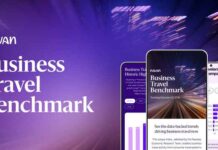










Concur recently carried out two studies into the distribution of business travel. What are the most surprising findings?
Tim McDonald - The most striking point is the extent to which business travellers are booking directly with suppliers. This is an issue we've been seeing for some time in the US, but we didn't expect it to be so prevalent in Europe. The figures surprised us: 39% of business travellers in the UK, 35% in Germany and 33% in France booked direct at least once in the past year.
So a player like Concur can still be surprised by market developments?
T. M. - Yes, such a high frequency is surprising. It's important for us because we want to help our customers deploy and improve their travel policy, make savings and be able to locate their travellers in the event of a crisis. But it doesn't work if the traveller books with the supplier. If direct booking is used in one third of cases within your company, this means that your travel policy is only effective in two thirds of cases... And the phenomenon can only increase. That's why we're investing in our own product, but also in integrating suppliers so that our customers can retain control and make savings even when their business travellers book direct. We're not suggesting that companies should encourage this phenomenon, we're just explaining to them that when they authorise live booking, they should be able to maintain the management of their business travel, include this data in their reporting, and apply the validation process.
So market fragmentation is an opportunity for a player like Concur?
T. M. - We're just trying to solve the problems our customers face, by making sure they can manage all their business travel. The other challenge is to ensure that their business travellers have access to all the suppliers on the market. This is a particularly crucial problem in Europe, where many hotels are not listed in the GDSs. That's why we turned to HRS and Booking.com.
Do you envisage direct distribution becoming more widespread?
T. M. - I think this will certainly be the case for the major suppliers. There will always be smaller players - in the hotel industry in particular - for whom the investment will be too great to make the approach worthwhile. I don't think it's a question of pitting one type of business traveller against another: direct booking depends above all on the type of trip. If the business traveller is visiting a destination for the first time, he will probably book via a corporate tool, to identify the hotels that are most convenient in relation to his meeting place.
Isn't this a threat to the role of Travel Managers?
T. M. - I don't think so. On the contrary, it's an opportunity for Travel Managers and TMCs, who will be able to work on real added value for the traveller and the company.
What does the "perfect journey" advocated by Concur consist of?
T. M. - To be able to organise and book a business trip efficiently and simply, and then to carry out that business trip with as little disruption as possible. This means putting an end to the need to keep all your receipts, which is why we are developing electronic receipts. It also means receiving real-time information about the trip.