










By focusing on the most obvious areas of expenditure, with transport and hotels in the lead, travel managers tend to underestimate the other aspects of business travel. Travel restorationnotes from taxis, transport cost of "urbanroaming"It is difficult to classify the various expenses incurred by a professional when travelling into a single category. "Ancillary', 'secondary', or even "ancillaries"These various adjectives tend to play down the importance of the costs which, when added up at the end of the year, can weigh heavily on a company. "It's tempting to lump these very different types of additional costs into this somewhat catch-all category, says Emmanuel Vergé, Marketing Director of Concur France. Until now, these expenses have only been analysed from time to time. However, depending on the company's activity or profile, all of these expenses can remain either completely marginal, or even major.". Gilles Bobichon, Director of Dimo Software's Travel & Expense Management division, agrees: "These costs are not ancillary: they are in factan integral part of business travel".
Expensive business lunches
So it's hard to put a generic label on all of them. expenditure lines It's also difficult to put a figure on these expenses. More importantly, it's difficult to put a figure on these costs. On the French market alone, the business lunches would amount to some six billion euros. On average, they represent almost a third of an expense claim, according to Business Table. To raise market awareness of the fact, this business lunch specialist is offering a centralised booking, ordering and invoicing tool. "When we launched the solution in 2012, this type of approach was not in the air at the time, as the problem was poorly understood by companies.says Laurent Gabard, Managing Director of Business Table. Today, they have clearly understood that these fees represent an enormous processing cost and are genuinely seeking to rationalise this position."
 Having already won over major CAC 40 companies to the idea of optimising their catering budgets, Business Table is now turning its attention to smaller organisations. This summer, its agreement signed in 2014 with American Express Cards has been extended to include medium-sized companies and SMES with a joint offer that allows them to open an account free of charge and with no commitment. Some forty small businesses joined Business Table during the summer, reflecting the real demand for this type of solution.
Business Table's push into the SME market was confirmed in July with the announcement of a strategic partnership with Edenred. Users of the business travel solution Ticket Travel Prodeveloped by Edenred, can access the rates negotiated by Business Table with 15,000 restaurants listedall combined with centralised billing. At the end of their lunch, all the professionals have to do is sign the receipt. "What we lacked was an online solution to help our corporate customers manage this area of expenditure."says Yan MortreuxManaging Director of Edenred France's Business Expense Management business, who believes that ".business meals represent a quarter of employees' expenses". Edenred is not the only player in the business travel sector interested in this issue, since Concur has also added Business Table to the network of partners integrated into its TripLink tool.
More generally, travel expense management specialists are on the lookout for these new categories of expenditure that could be included in their solutions. "We have set up a monitoring unit in order to integrate a number of new partnersexplains Gilles Bobichon from Dimo Software. There are a huge number of start-ups in the business travel sector. Not all of them will be chosen, but we need to identify the ones that make the most sense in terms of their service offering.". KDSanother benchmark in the business expense management market, is following suit. The new version 16.3 of its Neoavailable since mid-July, includes taxi booking. "Over time, we want to open up to new services: why not integrate catering, or even alternatives to travel such as the videoconferencing ?"asked Sébastien Clouet, KDS Marketing Director, at the product launch.
Nothing great about Excel
In addition to the direct cost of this expenditure, there is also the problem of data processing. Especially as many companies are still using basic solutions in this area. "Excel is still regarded as a leader in the world of expense account. Many companies are still at this stage"says Sébastien Clouet at KDS. "We need to minimise this down time spent on expense accountsconfirms Emmanuel Vergé at Concur. It's a lot of work, and as uninteresting as it can be. If you can automate it with payment solutions and dedicated booking services, and if all the supporting documents are attached to a single digital file, the effort disappears and the expense claim practically takes care of itself.".
This lack of productivity is regularly calculated by studies that seek to quantify the average cost of an expense claim. In the white paper "Expense claims: global practices and sticking points", HRS and the GBTA Foundation estimate 53 euros the cost of processing an expense claim for a trip including an overnight stay in a hotel. Twenty minutes would be needed to draw up a single expense claim, and a further 18 minutes to check it. An eternity on the scale of a company, whatever its size. This international study also estimates that companies spend on average 3,000 hours per year to correct expense claims, at an estimated cost of half a million dollars. "Often, companies focus solely on their core competencies. direct costs such as flights, hotels and ground transport. However, optimising the management of expense accounts offers enormous potential for savings."says Tobias Ragge, CEO of HRS. At Concur, Emmanuel Vergé goes even further: "On the one hand, there is the face cost, and on the other, the treatment cost. These are two different and complementary things. But you also have to take into account the cost of inactivity It's a question of clearly identifying the risks we run if we don't manage this expenditure. This risk of non-compliance is crucial and will have a negative impact on the company, in terms of its image or the violation of certain rules vis-à-vis the tax authorities or the Urssaf. It's a hidden cost".
And Concur's Marketing Director reminds us of the note from taxis 40,000, which cost the director of the Institut National de l'Audiovisuel (INA) a few months ago, pointing out in passing that an effective expense claim management system would have enabled the institute's managers to be alerted earlier. The tools do exist, and they are being perfected, like the new version of KDS Neo, which can be used as soon as a trip is booked, anticipates the cost of ancillary expenses The data is then reconciled according to the actual expenditure incurred during the trip. The data is then reconciled according to the actual expenditure incurred during the trip.

Countless start-ups
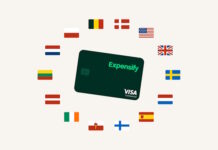
Alongside these well-established players, other new protagonists are launching today. "The market is evolving rapidly, with the emergence of countless new offerssays Gilles Bobichon. No one can claim to be an end-to-end provider, because all products are interdependent.". The 2016 edition ofUnivAirPlus has also demonstrated the dynamism of the offer: in theInnovation Room set up by AirPlus for the occasion, participants were able to discover start-ups such as Expensyaa cloud, web and mobile solution for managing business expenses, as well as Dine+Go or Business Table, which is already a recognised player.
AirPlus' involvement in this field is not insignificant. Because the payment solutions also have a role to play in rationalising this expenditure. "The development of payment methods, and the virtual card in particular, will change the market and make life easier for employees."predicts Laurent Gabard at Business Table. He adds: "Many new services will evolve in line with new technologies."
 The emergence of these new offerings comes at a time when data is becoming increasingly dispersed. The sale of optional services has become the new way for suppliers to boost their revenues, by offering services such as in-flight wi-fi in the airline sector, or by charging for services that were previously included in the face rate. In the airline industry, so-called "ancillary" charges are on the increase, and the trend has become widespread. Travellers are embracing the principle. They're even asking for more, according to a study carried out by Sabre with the evocative title "Travellers want to pay extra to personalise their trips". While a third of those surveyed reject the idea of paying a supplement, an equivalent proportion (33 %) are prepared to pay up to 50 pounds, 18 % up to 100 pounds, and 15 % above that...
To maintain control and increase visibility over these more or less costly "extras", companies need to compare existing solutions, paying particular attention to the end user to ensure that the business traveller has access to a "comfortable" tool, backed up by a catalogue of service providers that meet their needs. Otherwise, they are likely to turn away from the tool and go back to their good old booking habits. The temptation is all the stronger in the catering sector, a particularly 'sensitive' area in the French market. Each employee is generally very attached to his or her own favourite addresses, and it will be difficult to get them to remove their favourite table from the list for the sake of rationalisation. "Today's travel programmes are very user-oriented, says Emmanuel Vergé of Concur. We have to make life easier for our employees and offer them what they need, otherwise they'll end up booking themselves out of line."
For many people, submitting expense claims is still a very manual process, which has an impact on productivity.

EXPENSE NOTES
Cheating or not cheating?
 Do business travellers cheat on their expense claims? It's a question that's regularly raised, but one that doesn't always get the straightest answers. In its report "The cost of internal fraud in European companies' expense management"Spanish specialist Captio believes that "12.8 % of charges analysed are potentially fraudulent"It also points out that SMEs are the most exposed. The fraud rate is estimated at 13 % for small companies, compared with 10 % for large accounts. The digital management platform for business travel expenses even puts the average annual cost for a European SME at more than €40,000, compared with more than €27,000 for large companies. Even more telling: Captio puts the figure at €7,223 per employee on average. "We believe that the lack of expense management tools and policies in SMEs [explains] why they suffer more cases of fraud."says Joaquim Segura, CRO and co-founder of Captio. Double expenses (29%) and old expenses (33%) are thought to be the main culprits behind this financial abyss, ahead of weekend expenses (12%). While some employees take advantage of their employer - particularly with mileage expenses that are sometimes subjective - others are rather more cautious. A Ruigrok NetPanel study estimates that 14.5 billion euros go unclaimed by employees every year. The reason: frustrating and time-consuming reimbursement systems, lost receipts or simple oversights.