















Report Serge Barret ; Photos Alain Parinet.
" As you drive through the Apulian countryside, you'll see that there's no shortage of masseria...says Caroline Groszer, a Swiss-born hotelier who has been based in the south of Italy for almost ten years. In the past, they were fortified farms; some against invaders, but more generally against organised gangs. Today, some are in ruins, others still function as farms, but above all, many have been transformed into country houses, bed and breakfasts or small hotels of varying sophistication. Come and have a look at mine: I've turned it into a boutique hotel, and I've really put my heart into it!".
With all her heart, to say the least. Because, if you were expecting to come across an old farmhouse still in its original stateIf you could imagine rediscovering everything that made up the vocabulary of a South Italy that was once rural to the core, in this case the poor Puglia of the early twentieth century, then you'd have been right.e If you'd imagined all that, then you're in for a big disappointment. The Masseria Alchimia is to a fortified farm what the Château de Versailles is to a block of flats.

More and more jet set
Of course, the old basic structure is still there, a square tower topped by a surviving machicolation. But for the rest, and under the original vaults, almost everything has been recomposed, reinterpreted and, of course, painted in the traditional whitewash. The recessed volumes are reminiscent of a design by Le Corbusier, while the minimalist decor favours Arte Povera sculptures and contemporary art canvases. The whole place is set in the middle of the countryside, surrounded by three hundred-year-old olive trees, giant cacti, fragrant bunches of rosemary and low dry stone walls built along paths that gently follow the contours of the land. All in all, it's the epitome of the Italian south, which is fast becoming one of the world's most fashionable destinations. Madonna, who stayed at the region's classy Borgo Egnazia resort last summer, made no mistake; the England's glamorous royal familywho was in the same hotel in the spring, either.
The opposite would be surprising. For the region, nestled in the heel of Italy's boot, has just about everything that makes up contemporary top-of-the-range tourism, both leisure and corporate: a rich cultureThe region's unique vernacular architecture, medieval and baroque towns, delicate countryside landscapes, white sandy beaches, secluded coves and superb cuisine. Not to mention the safety and proximity criteria that are essential today, particularly for business customers.
Masseria Alchimia is located in the countryside surrounding Fasano. Not that the town is one of the most beautiful in the area, even if a few Baroque buildings liven up the historic centre nicely, but Fasano's appeal lies in its strategic position: all the cities, towns, ports and remarkable villages - at least fifteen of them - are an hour's drive from its central square. The maximum. So, in true Italian style, or in other words, piano piano, you have to take it easy, leaving yourself plenty of time for peace and quiet, coffee breaks and restaurant stops that are inevitably punctuated by a parade of dishes. oh, the number of dishes, oh, the antipasti! - showcasing the very best the region has to offer.
In fact, the whole stay will be marked by exceptional gastronomyThe region is one of the richest in the peninsula. And while we're at it, we'll get down to business first thing in the morning in Polignano a Mare - an all-white village, perched almost overhanging a cliff whipped up by the sea - with a cappuccino or caffè, as the Italians like it, accompanied by pasticciotti di Lecce, regional pastries to die for. Then there are the first narrow streets, the first piazzas, the first chapels, the first craftsmen, including a very contemporary master glassmaker, Peppino Campanella, and an incredible beach tucked away at the bottom of a natural ravine right in the centre of town.
Baroque and rococo
Then, passing back through Fasano, a little further inland and infinitely more spectacular, we come to white Ostuni, the 'città bianca' (white town) on a knoll overlooking the olive-grove-covered plain down to the sea. Wandering through the city - whose winding streets are reminiscent of ancient oriental cities - is also an opportunity to grasp a little of its turbulent history. Its own in particular, and that of Puglia in general. Towers, forts, high walls, arcades, ogives, Romanesque-Gothic in the cathedral, Rococo in the churches and Baroque on the front of the houses... but above all, above all, a luminous harmony despite countless successive occupations by Greeks, Romans, Lombards, Saracens, Byzantines, Normans, Aragonese and Bourbons...


In summer, the density of tourists, shoulder to shoulder, spoils the magic a little. But that's no problem for corporate groups, who are generally lucky enough to travel out of season. So they take the opportunity to sit down under the roof of a small traditional trattoria - Osteria Monacelle, for example, which can be made private for the occasion - and indulge in a farandole of antipasti specialities from Puglia; a dozen or more appetisers which, on their own, make up a very copious meal, and which are served with love by a cook who takes great care of them.
But the most extravagant site, the most visited, and also the most decried because of the number of souvenir vendors, is to be found in Alberobello, around twenty minutes away. Listed as a World Heritage Site, and that goes without saying... The result is a complete village of over 1,000 trulli, incredible little conical houses Built from dry stone, without any mortar whatsoever, the exceptional concentration of houses gives a real impression of a village of dolls, leprechauns or goblins, the choice is yours, especially as the roofs are generally decorated with Christian or esoteric symbols.

Their origins date back to the second half of the 16th century.eThis was the case when the royal tax was levied on masonry constructions. As a result, farmers began to build these curious mushrooms, which could be easily dismantled thanks to a clever assembly of flat stones. With few or no windows, one or more interconnected conical roofs, a chimney, a door and there you have it...
Today, in Alberobello, almost all of them have been converted into shops, bars, B&Bs and restaurants. On the other hand, in the surrounding countryside - the beautiful countryside of the Itria Valley - they are generally converted into chic, rustic holiday homes. This has the advantage of ensuring their preservation and upkeep. Punctuating a landscape of hills and meadows They add a touch of mystery, a sense of a not-so-distant world where magic reigned supreme.
Locorotondo, just two minutes away, has chosen a completely different building style, following the curves of a neighbouring hill whose slopes are home to a few scattered trulli. Its whitewashed cube-shaped houses, adorned with chunky, flower-filled balconies, are so close together that it's hard to tell them apart. It's delightful. So complete that the town is on the list of the 100 most beautiful villages in Italy... And it's the same all over the region: fifteen or so towns, identical in their Italian character and yet all different, offer the best of history, architecture, art history and, incidentally, the art of living.
So it is with Martina Franca and its ducal palace, then with Cisterno and the café terraces of piazza Vittorio Emmanuele II. The same goes for the port of Monopoli and its loggia palace, a testament to its Venetian past. Finally, on the way back, it's that other tiny fishing port, Savelletri, where you can indulge on the terrace of Pescheria 2 Mari in the sacrosanct tradition of aperitivo, a slightly lighter version of the usual bombardment of antipasti.
In this case, and since we're by the sea, raw fish and more raw fishIt's a deliciously fresh dish, sliced or tartared, with olive oil or herbs, all fresh out of the water. It's enough to make a top Japanese restaurant sashimi green with rage. It's amazing how light the cuisine can be in Puglia. It's true that you eat all the time and a lot, to say the least, but the dishes are generally accompanied by just about everything the Mediterranean has to offer in the way of legumes. Including, for example, thistle stalks, which are cooked in soup or au gratin.

A real cinema set
Without totally abandoning the deep rural character that is omnipresent in this region of Italy, we venture a little further south towards the infinitely more sophisticated urban, with Baroque in abundance, palaces, town houses, bishoprics and churches crumbling under lacework of blond stone.
We'll start with Nardo, a little softer on the subject than its neighbour Lecce; a sure way to make the transition smoothly. Narrow streets, twists and turns, pink or soft ochre walls with the patina of time... in either case, an incredible charm which shines the spotlight on Piazza Salandra, undoubtedly the most beautiful, the most homogenous piazza in southern Italy, with balconies, loggias, arcades, colonnades, a central monument erected by the survivors of the terrible earthquake of 1743, a church too and lively café terraces in the evenings. "Countless films set in Havana have been filmed in Nardo.It's a great place to stay," says Antonello Rizzello, owner of two boutique hotels set in historic buildings in the city centre, one in a former palace and the other in a monastery. "Herehe continues. I only travel by bike. In fact, that's what I advise my clients to do, so they can take the opportunity to ride through the countryside and stop off at one of the local beaches or a nearby cove."


Duly noted. So we set off by bike for a short day's ride, with a picnic in the soft grass. It's easy, the country is flat... In a silence barely disturbed by a few bumblebees on the prowl, he gives hundreds, thousands of ageless olive treesThis is a place where you'll be able to enjoy the sunshine, pine trees, just enough wind to make the girls' hair fly, white paths that crunch under the wheels of a bicycle, a couple on horseback, meadows surrounded by low dry stone walls and an 18th-century masseria.e century Masseria Brusca - with its own church and one of the most beautiful walled gardens in Italy. The noble owners are more than happy to show visitors around, and even have a small shop selling the products of their estate: cheese, honey and oil.


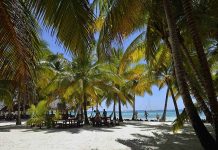
It's like that all the way down to the sea, which has the good taste to be almost Caribbean in its coves. Basically, absolute happiness which the corporate groups are sure to appreciate. On the way back, cyclists will be in for a big surprise in the suburbs of Nardo, with an 'eclectic' district of villas - or rather castelets - in the Liberty style, which is to Italy what Modernism is to Catalonia, Art Nouveau to Belgium and Jugendstil to Germany. In Nardo, this style is often inspired by oriental architecture, resulting in extravagant 'Moorish villas'. Some of the owners, some of the very highest nobility, willingly open their doors to small groups and entrust their lounges and gardens to the organisers of chic cocktail parties.


To round off the trip in style, spend a day and a night in Lecce, nicknamed the Florence of the South, half an hour by motorway from Nardo. A real firework displayThis is a Baroque theatre scene that spares no expense in macaroons, caryatids, cheeky cherubs, mischievous animals or remarkably elaborate balconies and balustrades... in short, a stage for all the world's architectural fantasies, whether on the palaces still inhabited by ultra-refined nobility or on the facades of churches and cathedrals. In the squares too, like the unmissable Piazza del Duomo, which is even more beautiful at night, when the skilfully-adjusted spotlights illuminate it. The same goes for the sublime façade of the Basilica Santa Croce, and in fact, it's the same everywhere in the labyrinth of the old city. A city so well-mannered that it prevents boredom by offering a surprise around every corner, on every porch and in every window...


Star chefs take inspiration
So if you want to get away from it all, don't hesitate to take a 15-minute drive out of town to the village of Squizano and discover the breathtaking Salento, as this part of Puglia is known. What's there to do? A cookery class, of course! Groups of between two and 50 people love them. All the more so as the lessons are given by real local housewives under the guidance of Ylenia Sambati, who sometimes come in groups of ten to share the experience to music, nothing less than PavarottiThe chefs of the day will be able to share their little secrets. And to top chefs too, with a number of renowned professionals from northern Europe travelling especially for this event, as well as, closer to home, the very French Guy Martin. The setting, especially the village square, is worth the diversions in itself, with a décor straight out of 1960s Italy, a sort of Cinema Paradiso frozen in time, with a bistro in its prime and curious grandpas sitting on the public benches. Except, of course, at siesta time.


In the evening, back at the Hotel Fiermontina, tired and perhaps a little tipsy, because the cookery classes are accompanied by a tasting of excellent wines from the region, we'll linger in the lounge where the fascinating Antonia Filali, owner of the hotel, tells the story of her region with great humour: the contempt of the Italians from the north for those from the south, the clichés, and also the little story of this Italy that was once very poor, without much of a future, and a land of emigration. Including that of her family members... and what family members they are! With fabulous destiniesThe kind you only see in the movies. A grandmother of such beauty that she would undoubtedly be a top model today and who, leaving at the age of 17 in the late 20s, became the muse and then the wife of the French sculptor Jacques Zwobada. Better still, the story of her great-uncle. At just 14, he walked to Rome to become a boxer and soon became Italian champion, then married no less than Madeleine Astor in New York before moving to Hollywood and a career in film. All told in a phrasing that would have you rolling on the floor. And, this being Puglia, with a generous aperitif in the background, of course.

Special report - Southern Italy: barocco paradiso
- Southern Italy: barocco paradiso
Southern Italy: address book