






For many business travellers, 2008 will retain the image of a annus horribilisThis marks a rather abrupt change in the history of business travel. "My first business trip was in 2006, recalls this former hotel industry professional. The trip was to Dubai, in business class and in a five-star hotel. All catering was included. Two years later, the crisis of 2008 hit. I flew from London to Hong Kong in economy class, and I realised that there was a risk that I would have to pay more. human impact in business travel. What seemed like a lot of fun to me has become a constraint.."
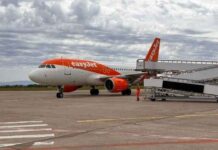
Fortunately, the economic context has changed considerably over the last decade. But have companies gone backwards? Have they eased up a bit by improving the level of comfort for their travellers? Nothing is less certain... "The tightening of the screws that took place in 2008 continues today"believes Stéphane Donders, CEO of Traveldoowhich explains: "Our customers are large groups, and there is a strong high inertia to change the internal rules. It's a fairly cumbersome process, so it takes a lot of time.." Especially since the crisis of 2008, the evolution of supply has not really favoured a return to the bling bling" business travelif he even existed. The the rise of low costThis trend is well illustrated by the fact that traditional airlines have responded by segmenting their offer - in other words, a simplified basic service, enhanced by à la carte pay-as-you-go options.
By switching from business to eco, by becoming frequent travellers on low-cost airlines, nomadic professionals have become accustomed to falling into line. And the glamour that used to surround a business trip is now a thing of the past.The move bore the hallmarks of a certain distinction and elegance.a statutory scope reserved for a certain group of employees who are eminently globetrotters for the benefit and renown of our company and, for my part, bearers of a share of the dream of distant horizons."As Patrice Pourchet, head of the Essec group's purchasing training programmes, recalls in the preface to his book Stratégie et management du voyage d'affaires (Strategy and management of business travel).
Yet the tightening of travel policies has not made business travel any less attractive. All the studies agree on this point: business travel motivates the troops. According to the report "US Business Traveler & Travel Policy 2018"published by Travelport83 % of those surveyed like to travel on business and see it as an advantage. Another study, published by Booking.com Businesseven believes that "25 % of French employees would accept lower pay in exchange for more frequent business travel". However, unlike their cabin-mates, business travellers will not necessarily be able to take a nap to recover from a ten-hour flight in economy class, and when it comes to negotiating a major contract, it's best to have a clear head. That's what the job of travel manager and management of travel policy: finding the right the right balance between cost control and passenger comfortbetween the economic and the human.
Listening to travellers
While the first area can be examined coldly, from a statistical angle, the human factor is obviously more subtle. In search of performance indicators - the famous KPIKey Performance Indicators - can travel managers do anything other than listen to travellers themselves? According to studies on the subject, things are moving in the right direction. The authors of EVP barometer 2017 even estimated that "the traveller becomes the linchpin in the construction of the travel programme of the company". He added: "a major change occurred in 2016 with the fact that, from now on, the measuring satisfaction [of business travellers] has a direct impact on changes in travel policy, up 12 points on 2015".
By drawing up the first travel policy for BlablaCar, Juliet Thanwerdas confirms that it has paid particular attention to the traveller. "It was important not to fall into the traveller frustration, she explained at a conference organised this year by Egencia. I wanted to keep this friendly start-up spiritThe human aspect of travel is also taken into account, allowing people to travel in the best possible conditions so that they are not tired when they arrive at their destination, while at the same time being very relaxed. cost-efficient."
Not all travel managers share this view. According to some observers, listening to travellers is not yet the rule. "There are not really any specific directives aimed at involve employees in defining travel policyEven though we have sometimes helped certain customers to carry out satisfaction surveys to take account of their constraints. This is a fairly new and interesting phenomenon"says Stéphane Donders, CEO of Traveldoo. "We are not consulted at all"says this French expatriate, who has been working in West Africa for many years. Admittedly, some booking tools are beginning to integrate customer reviewsIn this way, business travellers can consult their colleagues' comments on a hotel to better assess whether it meets their expectations.
capitalise on passenger feedback
"This approach is beginning to develop"believes Cédric LefortSenior Director of Consulting Solutions at BCD Travel. But the initiative is still in its infancy, as this young business traveller working for a French multinational can testify: "I've never had the opportunity to give feedback on my hotel experience, and I don't even know if there's an internal mechanism for doing so. There probably is, but it's neither obvious nor well explained.." It is in a company's interest to listen to its business travellers. It's a question of consistency between the travel programme and bookings. "It is essential to capitalise on travellers' feedback to improve contracts with suppliers, or to eliminate some of them.says Cédric Lefort. It is better for the company to take the initiative rather than letting negative comments spread informally, without the information being passed on to the travel manager or human resourceskeeping the hotel in the programme without it being used."
More generally, compliance with the travel policy depends to a large extent on the relevance of the choices offered to employees, who will not hesitate to think outside the box if they do not find what they are looking for within the framework set by the company. For Cédric Lefort, "the company must absolutely take account of passengers' opinions in the construction of travel policy, even if, of course, we don't ask them to write it down... The tighter the grip, the more likely travellers are to book elsewhere. And they will always find a good reason to justify their choice.." The testimony of this business traveller attests to this: "The catalogue of hotels is relatively extensive, but you can always find better. In a destination like Tel Aviv For example, security restrictions limit the choice to a few ageing establishments, so you have to fight to stay in a boutique hotel. And, in the end, it works. It often does, the rules are only on paperBut you can get round it if you put your mind to it!"
While some companies still prefer a locked policyWhile other travel managers have taken a completely different path, favouring thetraveller autonomy. "There are no real recommended hotels, only a maximum ceiling per night or per meal"explains this nomadic executive working in the industrial robotics industry. L'example of Google is most often cited to illustrate an approach to travel management that consists of giving travellers the keys to their own travel programme. They are therefore free to book the various stages of their journey and are encouraged to "challenge the calculated cost upstream by the company, destination by destination. The savings made are then divided between the company and its employees in a format chosen by the employer, such as vouchers or a "gift voucher". upgrade on a forthcoming trip.
A number of specialist platforms are capitalising on this phenomenon, such as Rocketrip or the French FairJungle that promise savings of 20 % to 30 % on the travel budget. These players in the "gamification - The aim is to make these savings more 'sexy' by rewarding travellers, while at the same time diverting them from loyalty points promised by the airlines. Samir Idris, co-founder of FairJungle, for example, believes that ".On a return trip from Paris to Toulouse, it is not uncommon for business travellers to prefer a scheduled airline flight costing 400 euros to a low-cost flight costing less than 110 euros, with similar timetables and the same cancellation and baggage conditions. And they do this simply to earn miles.."
However, the phenomenon does not yet seem to have made any real inroads in the French market.while our Anglo-Saxon neighbours are happy for their employees to take responsibility for booking their own travel, this is not yet the case for French companies"agrees Samir Idris. Stéphane Donders, CEO of Traveldoo, agrees: "It hasn't really arrived in European companies yet. We don't have any customers asking us for a à la carte travel policyconfigured by the employee. Even if some of them are interested in empowering the traveller".
The CEO of Traveldoo is quick to point out the disadvantage of such an approach: "it can encourage travellers to put themselves in stressful or dangerous situations in order to save money. In France, HR departments are very careful about the risks to the company of putting its business travellers in dangerous situations. So there are more control." At Egencia, Delphine Boulton agrees: "when a new employee arrives, we don't suggest that they go and buy the computer of their choice at Fnac. Why should we let them book a trip by car? open booking as he wishes? Especially as there is the responsibility for safety."
Greater flexibility
Without going so far as to free travellers from any regulatory framework, many companies have understood the importance of give their travel policies a facelift. The arrival of new generations is no doubt a factor. "It is not possible to introduce different rules depending on the age of employees, but companies take into account the habits, needs and preferences of their employees. uses of the new generations. This encourages a form of modernising travel policiesfrom which all employees benefit"says Stéphane Donders from Traveldoo.
This updating of travel policies can involve, in particular, the integration of new market players as Airbnb, MagicStay or Uberor by taking bleisure into account. Stéphane Donders notes that "more flexibility to give travellers extra days on site before or after the mission, often on long-distance journeys, to enjoy the destination or to rest, or even to be joined by family members. It's also linked to new technologies that make it possible to work easily from a distance. There is therefore no impact on passenger productivity.." This robotics industry professional confirms: "it is often permissible to postpone the return journey until Sunday instead of Friday if you wish to make the most of the weekend on site. In this case, weekend expenses are not covered by the company.".
if a potential employer offered to upgrade me from economy to business class, this could have a major impact on my decision
Some observers even believe that integrating bleisure would help attract the best talent. For Wendy White, Vice President of Marketing at Egencia, "the fact that many business travellers have given up the possibility of making bleisure because of the way they are perceived by their employers is a real recruitment lever." Among travellers, opinions differ. "There are a lot of factors involved in changing companies. But if a potential employer were to offer me the chance to upgrade from economy to business class for my travel, which could have a major impact on my decision"On the other hand, another business traveller from a French multinational said: "I don't have the time to go to the airport.In my previous company, business class was eligible after six hours' flying. In my current company, it is never eligible.". This suggests that candidates do not systematically ask consult their future employer's travel policy during the job interview...
influence the traveller's decision while letting him think that he is the one who decides
At BCD Travel, Cédric Lefort points out that ".Travellers are very focused on their comfort, and their choice of company can potentially be influenced by the services made available as part of their business trips. That's why human resources are increasingly involved in business travel." He also believes that travel policies will need to be adapted even more to each profile, under the impetus of new technologies: "the principle of a single rule for all is no longer necessarily valid. Today, a company may have four or even more employees. five generations of travellers which did not exist a few years ago. L'artificial intelligence and the machine learning allow the tools to consolidate much more information and data, so we can get to know the traveller better and offer them the best options". And to conclude: "we need to influence the traveller's decision while letting them think that they are the ones who decide, giving them access to as much content as possible, while supervising them."
Special report - Travel policy: do travellers have their say?
- Travel policy: do travellers have their say?
Interview with Pascal Jungfer, CEO of Areka Consulting