









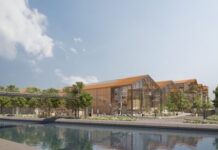







Despite a number of centres of excellence and R&D centres that have recently sprung up on the outskirts of the metropolis, and despite a dynamic spirit and a desire to live life to the full, the city is still in a state of flux. rooted in modernityUntil now, Toulouse has not had a business district as such. As a result, the supply of office space was clearly insufficient. Innovation is the cornerstone of Toulouse's identity, and in recent years the city has seen the development of the Toulouse Aerospace campus, with its flagship building, the B612, innovation centre dedicated to aeronautics and space research, inaugurated in June 2018. In June 2020, a state-of-the-art exhibition and convention centre, the MEETT, will be built within the Airport and aeronautics park.
Other examples of the enterprising spirit of the Occitan capital include the former Francazal air base, which is home to a new campus dedicated to intelligent transport, where Urban Air Mobility, an Airbus subsidiary, is trialling a flying taxi system, while EasyMile is experimenting with autonomous shuttles. Last but not least, the Oncopole cluster, focused on research and development in the field of cancer, has been chosen as the site for a number of projects.ancer researchThe Toulouse research centre, which focuses on gerontology and well-being, boasts more than 2,200 researchers working in eight hospitals and a dozen clinics.
While the research centres have developed almost organically, the tertiary sector clusters have yet to achieve their full potential. emerge from the groundpreferably close to the city centre. "Toulouse has some magnificent old buildings, but they are far too cramped for office space. All the marketing people were asking us for office space.2 and the Matabiau station area was the obvious choice."explains Dominique Faure, vice-president of Toulouse-Métropole in charge of economic development.
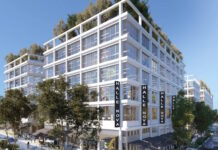
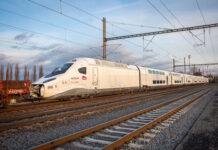
Toulouse station, which will eventually be home to the TGV high-speed train, needed a major overhaul, as did the surrounding area, which was home to insalubrious housing and shops. As a result, the SNCF, which partly owns the land, launched a call for projects on a former postal sorting site. This led to the creation of Toulouse Euro-Sud-Ouest (Teso), which should become the embodiment of the modern business district by the time it is completed in 2030.
From 2022, the Occitania Towera 40-storey skyscraper with 30,000 m2 of office space designed by American architect Daniel Libeskind, will become the emblem of the district. The SNCF will, of course, have its headquarters here, but there will also be services, housing and shops. A large shopping centre, similar to the one at Lyon-Part Dieu, will also be built, with restaurants and coworking spaces. In short, a whole new kind of neighbourhood life.


